
Earache after earbuds is often canal pressure, a trapped seal, or volume—not infection. Learn why in-ear tips hurt, how to ease it, and when fullness or hearing change needs a check.
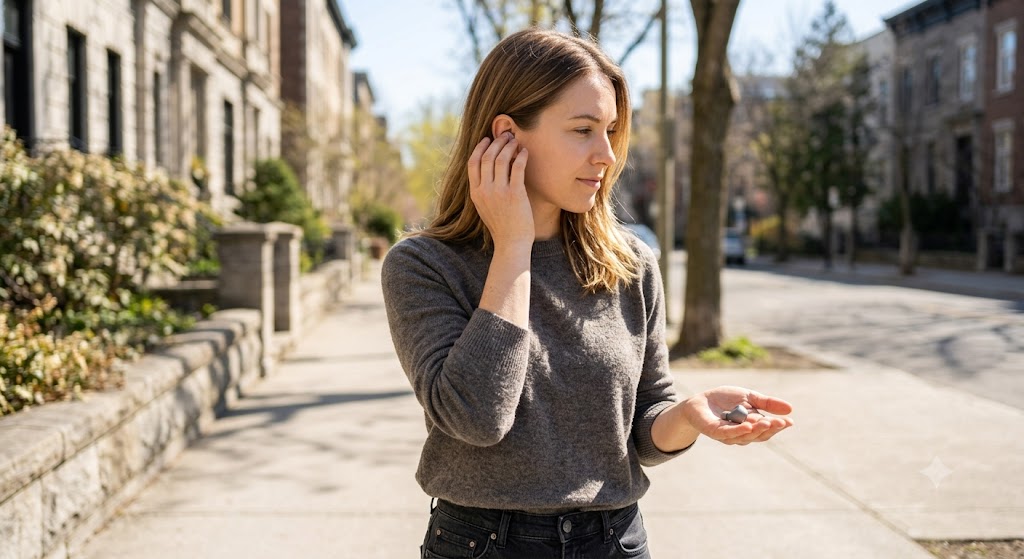
You pull out an earbud after a commute, a workout, or a long call, and the canal feels sore, hot, or oddly full. Sometimes it is a sharp pinch at the entrance. Sometimes it is a dull ache that lasts an hour. Sometimes your own voice sounds booming for a few minutes after the tip comes out.
That pattern is common. An earbud is a small plug sitting in a skin-lined tunnel that was not designed to hold a silicone seal for hours. Most post-earbud ache is mechanical pressure, a trapped air seal, or sound level — not an infection that started in one commute.
What This Symptom Feels Like
People describe several overlapping sensations:
- A tender ring at the entrance of the ear canal where the tip sat
- A deep, dull ache as if something is still wedged inside
- Fullness or a “plugged” feeling after the bud comes out
- Itch that starts after you take the tip out, not while it is in
- Your own voice sounding loud or hollow for a short time (the occlusion effect)
- Mild warmth or redness at the opening, without fever
The ache often eases within minutes to a few hours once the canal is empty and can flex again. Pain that climbs, drains, or changes hearing is a different story.
Why an Earbud Can Hurt a Healthy Ear
The outer ear canal is a skin-lined tube about 2.5 centimeters long. The outer third is cartilage with hair and glands that make cerumen. The inner two-thirds is bone covered by thin, tightly bound skin. Brian H. Senturia’s classic work on the external canal showed how easily that thin skin is irritated by moisture, occlusion, and trauma — the same three ingredients a sealed earbud can deliver.
Three mechanical facts explain most of the sore-after-earbuds pattern.
The tip is a constant indent. A silicone or foam flange that “stays put” is pressing on a small ring of skin and cartilage. Cartilage has limited blood flow. After 30–90 minutes, that ring can feel bruised the way a tight mask strap feels on the nose.
The seal traps humidity. A good seal is good for bass and noise isolation. It is also a mini greenhouse. Sweat, leftover soap, and the ear’s own moisture sit against skin that normally evaporates into open air. Damp, occluded canal skin macerates — it softens and becomes more easily scratched when you twist the tip in or out.
Volume and bass add a second load. Work from Brian J. Fligor and Cory D.F. Portnuff on personal listening devices showed that in-ear monitors can deliver high sound levels with less leakage than over-ear cups. Loud sound does not usually cause a sharp canal ache by itself, but it can leave a temporary dullness, fullness, or ringing that people lump together with the mechanical pinch. Sharon G. Kujawa and M. Charles Liberman’s work on noise and hidden synaptic injury is a reminder that recovered “normal” hearing after a loud session is not proof the session was free.
A fourth, quieter contributor is the occlusion effect. When the canal is sealed, bone-conducted sound from your own voice and chewing has nowhere to escape. Brian C.J. Moore and others have described how that trapped vibration makes your voice boom. After you pull the tip, the boom fades — but the canal can still feel “used.”
Common Causes
A tip that is slightly too large. The size that “doesn’t fall out on a run” is often the size that bruises the cartilaginous entrance.
Wearing time. Two hours of meetings with the same seal is a different load than a 20-minute podcast. Skin and cartilage recover between shorter sessions.
Insertion angle. Twisting a stem until it “clicks” can scrape the thin inner skin. A small abrasion stings later, especially in the shower.
Sweat and gym use. Salt and moisture under a seal are a classic setup for the itch-then-ache pattern Senturia associated with occluded canals.
Shared or dirty tips. Oil, lint, and leftover earwax on the flange act like fine grit against canal skin.
Jaw clenching on calls. The temporomandibular joint sits immediately in front of the ear canal. Tight jaw work during a tense meeting can refer ache to the same place the bud sat, which is why some people blame the earbud when part of the pain is the joint. Related overnight jaw load is covered in why a jaw can wake up sore.
Volume as a co-traveler. If the ache comes with muffled hearing or a hiss that lasts into the next day, sound dose belongs on the list, not only the silicone.
Hidden Triggers
A few less obvious habits make the same earbud suddenly hurt.
Sleeping in them. Side pressure plus a seal is a long indent on cartilage that cannot wriggle away.
One-size “universal” tips after a haircut or weight change. The entrance of the canal is not a fixed ring. Glasses arms, a new helmet, even seasonal swelling can change how a familiar tip sits.
Cleaning with cotton swabs right before insertion. You have already scraped the skin. The tip then sits on raw canal.
Cold outdoor air then a warm sealed tip. The canal skin goes from dry and constricted to warm and damp in minutes.
A recent swim or shower that left water in the canal. A seal over residual water is close to the environment that favors swimmer’s-ear irritation. If the ear instead feels blocked after water exposure, that pattern is unpacked in post-swim blocked-ear fullness.
Weather-related middle-ear pressure. If the ache is deeper and comes with a pop or muffled hearing when the barometer drops, the bud may be incidental. That deeper fullness is closer to weather-change ear fullness than to a pinched canal.
When It Is Usually Harmless
Reassuring features cluster together:
- Pain starts during wear or right after removal
- It is clearly at the entrance or just inside the canal
- It eases after the canal is empty, warm, and dry
- Hearing feels normal once the occlusion boom fades
- There is no fever, drainage, or rapidly worsening swelling
- The other ear is fine, or both ears hurt only where tips sat
That cluster is mechanical irritation until proven otherwise.
When to Worry
Get prompt care — same day if severe — if any of these show up:
- Increasing pain, especially with touch of the outer ear or when you tug the earlobe (classic of an inflamed canal)
- Discharge, crusting, or a foul smell
- Fever, spreading redness, or swelling that closes the entrance
- Sudden hearing drop, spinning vertigo, or facial weakness
- Pain after a very loud session that does not ease, or new persistent ringing — the concert-style warning signs described after loud-sound ringing
- A foreign-body feeling that does not match an empty canal (a torn tip left behind is uncommon but real)
- Pain in only one ear that is deep, throbbing, and unrelated to wear time — that is less “tip bruise” and more middle ear, jaw joint, or referred dental pain
People with diabetes, eczema in the canal, or a history of swimmer’s ear should treat persistent post-earbud pain as worth a look sooner, because macerated canal skin infects more easily.
Myths vs Facts
Myth: If it hurts, you must have an ear infection. Fact: Most post-earbud ache is pressure and damp skin. Infection usually adds rising pain, discharge, and a tender outer ear.
Myth: Deep insertion is safer because the bud “stays.” Fact: The bony inner canal has thinner skin. Deeper is more scrape, not more safety.
Myth: Pain means the volume was too loud. Fact: Volume can add fullness and ringing. The sharp entrance ache is usually the flange, not the decibels. Both can be true on the same commute.
Myth: You should clean the canal with a swab every time you use earbuds. Fact: Cerumen is a barrier. Over-cleaning plus a sealed tip is a reliable way to inflame the skin Senturia described.
Myth: Foam tips cannot bruise because they are soft. Fact: Foam that expands fully can exert a steady hoop stress. Soft and small are not the same thing.
How to Make Earbuds Easier on the Canal
Fit down, not up. Try the next smaller tip that still seals well enough for your use. A slightly leaky seal that you can wear for two hours beats a perfect seal you can wear for twenty minutes.
Limit continuous wear. Take the tips out for a few minutes every hour on long calls. Let the canal evaporate.
Insert without a twist-scrape. Pull the outer ear gently up and back, slide the tip to a shallow seal, and stop. If you need a full corkscrew to stay in, the shape is wrong.
Dry the gym set. Wipe tips after sweat. Let foam dry fully. Swap silicone if it stays tacky.
Keep volume honest. If you cannot hear a nearby voice at arm’s length, the dose is high. Fligor and Portnuff’s listening-device work is easiest to apply as: shorter sessions at a level that still leaves you able to notice the room.
Give the jaw a vote. Unclench on calls. A short rest for the masseter often shrinks “earbud pain” that was partly joint.
Consider a different form factor. Open-ear or over-ear cups remove the canal plug. They trade isolation for skin relief. For many commuters that is the actual fix.
Leave cotton swabs out of the canal. If wax is a problem, ask a clinician rather than mining the tunnel the tip has to sit in.
When to See a Doctor
See a clinician if entrance pain lasts more than a couple of days after you stop using the buds, if the canal looks swollen, if hearing stays muffled, or if you need drops or an exam to rule out otitis externa. An audiology check is reasonable after a loud session that left ringing or dullness that lasts into the next day. Jaw-joint pain that shadows every call belongs with a dentist or TMJ-aware clinician, not only an ear look.
FAQs
Why does only one ear hurt? Tips rarely seat identically. Sleep side, glasses, and a slightly different canal shape make one entrance take more indent.
Is it normal for my voice to sound loud with earbuds in? Yes. That is the occlusion effect from a sealed canal. It should fade when the tip comes out.
Can earbuds cause permanent hearing damage even if the canal does not hurt? Canal pain tracks pressure and skin, not inner-ear dose. Quiet-feeling high volume can still be a problem. Pain is a poor volume meter.
Should I use alcohol or hydrogen peroxide in the canal after earbuds? Not as a routine. Drying agents can help a damp, itchy canal for some people, but they also strip barrier oils. If the skin is already cracked, they sting and delay healing.
Do bone-conduction or open-ear sets avoid this? They avoid the canal plug, so they avoid most of this specific ache. They do not cancel the need to keep volume reasonable.
Can children use the same tips as adults? Usually no. A child’s canal is shorter and more horizontal. Pediatric sizing and shorter wear matter more than brand.
Conclusion
A sore canal after earbuds is usually a small tunnel objecting to a long seal, a tight flange, damp skin, or a rough insertion — not a sudden infection and not automatically a ruined ear. Fit smaller, wear shorter, keep the tips clean and dry, and treat rising pain, drainage, or a real hearing change as something other than “just the buds.” The ear canal evolved to be open to weather, not to host a silicone guest all afternoon.