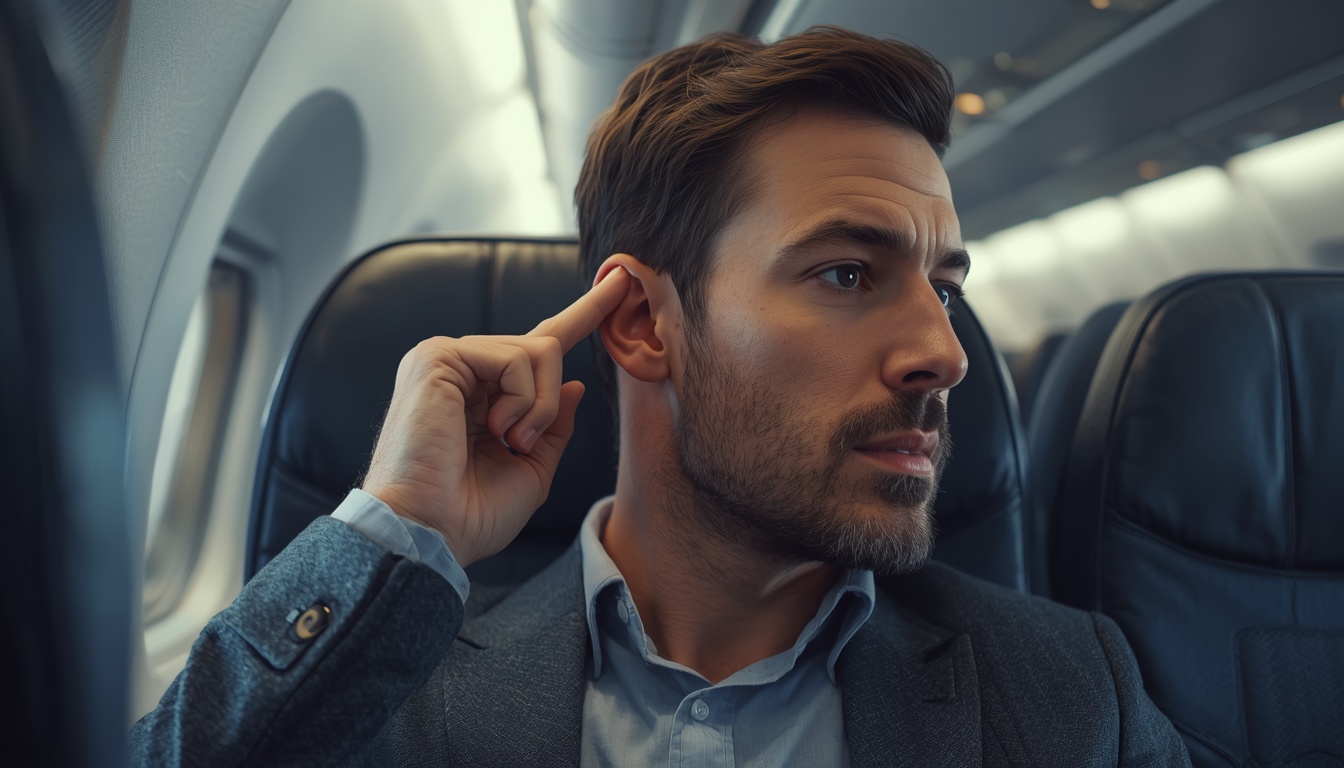
That high ring or muffled hush after a loud show is usually a temporary threshold shift in the cochlea, not a permanent sentence. What hair cells and synapses do overnight, why 4 kHz takes the hit, and when ringing needs a hearing test.
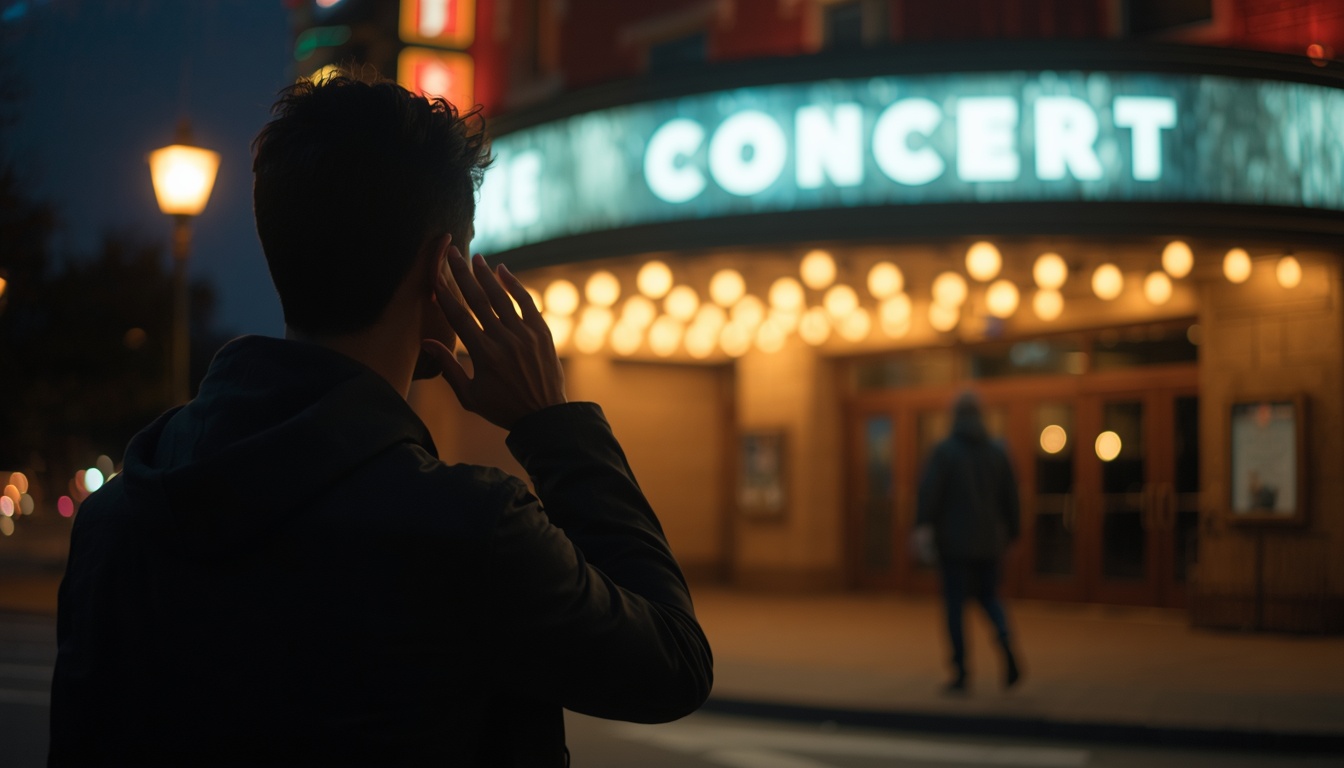
The house lights come up. Your shirt still smells like the room. On the sidewalk the world should be quieter, and it is — except for a thin, high tone that was not there when you arrived. Conversation sounds a little distant. Your own laugh seems wrapped in cotton. By the time you reach the car you are checking whether the ring is in the left ear, the right, or both.
Yes: a ring, buzz, or muffled hush after a loud concert is extremely common. It is usually a temporary threshold shift — a short-lived change in how softly you can hear — plus a burst of tinnitus that fades as the inner ear recovers. It is not automatically permanent hearing loss. It is also not a harmless party souvenir you should ignore forever. The same night that “goes away by morning” is the night researchers use to study how close a healthy cochlea can come to lasting damage.
This is the physiology of that after-show ring: what the hair cells actually do, why the 3–6 kHz region takes the punch, how long recovery usually lasts, and which patterns belong in a clinic instead of a meme.
What This Symptom Feels Like
People use a small, consistent vocabulary:
- A high whistle, hiss, or electric buzz, often more obvious in the quiet of the ride home or the bedroom.
- Sound that seems muffled or “under a blanket,” as if someone turned the treble down.
- A stuffed or full sensation that is not the same as airplane-ear pressure.
- Speech that is harder to pick out against traffic or a crowded lobby.
- Sounds that feel slightly too sharp the next morning (a brief, mild hyperacusis).
The ring is often louder when the room is silent. That is not the ear getting worse at midnight. It is the same signal with less masking from street noise — the same unmasking pattern described in quiet-room tinnitus.
What a Temporary Threshold Shift Actually Is
Hearing threshold is the quietest sound you can just detect at a given pitch. After intense noise, that threshold can rise by several decibels: a tone that used to be audible at 5 dB HL may now need 15 or 25 dB HL before you notice it. When the shift later returns toward baseline, audiologists call it a temporary threshold shift, or TTS. When it does not, they call it a permanent threshold shift, or PTS.
Classic laboratory work by Hallowell Davis, Ira Hirsh, and later W. Dixon Ward mapped how TTS grows with level and time. Two rules still hold:
- Louder sound produces a larger shift, and the growth is not linear at the top end. A few extra decibels near 100–110 dBA cost more than the same step at 80 dBA.
- Duration matters. A two-hour set at 100 dBA is a different dose from a thirty-second blast at the same peak.
Modern concerts sit right in that danger band. David A. Opperman and colleagues measured average levels near 100 dBA at live shows, with peaks well above 120 dBA. In their 2006 field study, most unprotected listeners showed a measurable threshold shift by the end of the night; earplugs cut that risk sharply. A later randomized festival trial published in JAMA Otolaryngology found a temporary shift in about 42 percent of unprotected ears versus about 8 percent of ears wearing earplugs, with new tinnitus far more common in the unprotected group.
So the sidewalk ring is not mysterious. It is the subjective partner of a dose that laboratories have been measuring for eighty years.
Why the Cochlea Rings Instead of Going Quiet
Sound is a traveling wave on the basilar membrane. Outer hair cells amplify quiet motion. Inner hair cells convert motion into nerve spikes. Supporting cells and the stria vascularis keep the chemical batteries charged. Loud sound stresses all of that machinery at once.
Several reversible events pile up during a set:
- Stereocilia — the tiny hair bundles — can be overdriven and temporarily less tidy. Tip links and transduction channels need time to reset.
- Outer hair cells work harder and then work less well for a while, which is why distortion-product otoacoustic emissions (DPOAEs) often dip after a concert even when the audiogram looks only mildly shifted.
- Metabolic stores in the stria run down. The endocochlear potential, the battery that powers transduction, can sag and then rebuild overnight.
- Glutamate at inner-hair-cell synapses can flood the cleft. Some cochlear-nerve terminals swell. Most of that swelling recedes; some synapses may not fully return.
The brain receives a noisier, less precise spike train. In quiet, it may fill the missing band with a phantom tone — tinnitus. That tone is not a new sound in the room. It is the auditory system advertising a temporary gap.
Sharon G. Kujawa and M. Charles Liberman showed why “temporary” is a careful word. In animal work, a noise exposure that produced a TTS which later recovered on the audiogram could still leave a lasting loss of inner-hair-cell synapses — cochlear synaptopathy, sometimes called hidden hearing loss. Thresholds looked normal. The ribbon synapses that encode timing and quiet-in-noise did not all come back. A. F. Ryan, Kujawa, T. Hammill and colleagues later reviewed the same distinction in humans: recovered thresholds do not guarantee an uninjured cochlea.
That does not mean one concert equals hidden hearing loss. It means the ring is a warning light, not a trophy.
Why 4 kHz Takes the Hit
Noise-induced dips classically sit around 3–6 kHz, often centered near 4 kHz. Concert TTS follows the same neighborhood. Several mechanical facts explain the target:
- The ear canal and concha have a resonant boost in the 2–5 kHz range. Sound arriving at the eardrum is already louder there than the meter on the mixing desk implies.
- The basal-to-middle turn of the cochlea, which codes those frequencies, is mechanically vulnerable to intense mid-high energy.
- Many music spectra put a lot of energy in the upper midrange — cymbals, vocals, compressed PA systems — exactly where the canal boost lives.
That is why speech can feel slightly dull the next morning even when you can still hear a bass line fine. Consonants live in the same band the concert bruised.
How Long It Usually Lasts
Most post-concert ringing and muffling ease within hours and are clearly better by the next evening. Many reviews put typical TTS recovery in a 16- to 48-hour window. A very long festival day, a spot next to a stack of speakers, or a second loud night before the first has recovered can stretch that window into several days.
Recovery is not a straight line. The ring often seems worse in bed because the room is quiet. It often seems better in a café because other sound masks it. Neither change proves the cochlea is healing or failing in that hour. The useful clock is whether the symptom is fading across a day or two, not whether Tuesday night is louder than Tuesday afternoon in a silent room.
If thresholds recover on paper but you now struggle in noisy restaurants, that is worth a proper hearing evaluation. Synaptopathy and early outer-hair-cell wear can hide on a standard audiogram and still change real-world listening — the same mismatch a quieter ancestral soundscape never asked the ear to absorb, as laid out in why hearing still expects a quieter world.
Hidden Triggers That Make the Same Show Worse
Two people at the same rail can leave with different ears. Known amplifiers of TTS and tinnitus include:
- Distance to the speakers. Inverse-square law is not a vibe. A few meters can be several decibels.
- Prior noise that week. A loud rehearsal, a club the night before, or all-day headphones leave less reserve.
- No recovery night. Stacking festivals without quiet days is how temporary becomes cumulative.
- Dehydration, fatigue, and illness. They do not invent TTS, but a tired metabolic system recovers more slowly.
- Ototoxic extras. Some antibiotics, high-dose aspirin, and loop diuretics can sensitize the cochlea. Recreational combinations with loud sound are unwise.
- Earplug theater. Foam plugs that are not inserted deeply, or “musician’s plugs” left in a pocket, do not count as protection.
Fullness that is mostly pressure — a pop on swallow, a change with yawning — is a middle-ear story, closer to post-flight ear fullness than to cochlear TTS. Both can coexist after a loud, crowded night. They are not the same mechanism.
When to Worry
Seek prompt care — same day if the drop is sudden and obvious — if you have:
- A clear, one-sided hearing loss that does not start to lift within hours.
- Ringing that is violently loud, or hearing that stays underwater into the next day and the day after.
- New spinning vertigo, facial weakness, or severe ear pain.
- A sudden “blocked” ear with hearing loss that is not improved by swallowing or yawning.
- Ringing that is still prominent after a week, or that returns after every modest night out.
Sudden sensorineural hearing loss is a time-sensitive diagnosis. Do not wait out a truly dead-quiet ear on the theory that “concerts do this.” Concerts usually do a bilateral, fading ring — not a one-sided silence.
Myths vs Facts
Myth: If the ring is gone by morning, the ear is unharmed.
Fact: Recovered thresholds are reassuring, not proof that every synapse returned. Treat the night as a near-miss.
Myth: Standing farther from the stage is enough.
Fact: It helps. Average levels in many halls still sit near 100 dBA in the crowd. Distance is not a substitute for plugs if you go often.
Myth: Cotton or tissue in the ear canal is protection.
Fact: It is almost useless at the frequencies that matter and can irritate the canal.
Myth: Musicians’ ears “get used to it.”
Fact: Some conditioning effects exist in animals. In humans, repeated unprotected shows more often accumulate risk than confer armor. Working musicians who last use protection, in-ear monitors at sane levels, and recovery days.
Myth: If you already have tinnitus, another concert cannot make it worse.
Fact: It can. A new TTS on top of existing tinnitus is a common way a manageable hiss becomes a louder companion.
How to Manage the Night You Already Had
You cannot rewind the set. You can stop adding dose.
- Give the ears a quiet 24–48 hours. Skip clubs, leaf blowers, and loud headphones.
- If you must listen, keep headphone levels conservative. The ear that just took 100 dBA does not need a commute playlist at 90.
- Sleep. Recovery chemistry in the stria and supporting cells is not improved by an all-nighter.
- Avoid poking, candling, or “flushing” the ear. TTS is not wax.
- Do not chase unproven after-the-fact pills as a substitute for quiet. Evidence for last-minute antioxidants in humans is thin; silence is not.
For the next show, well-fitted foam or high-fidelity filtered plugs are the intervention with actual trial data. Insert them before the support act, not after the first chorus already made your ears feel warm.
When to See a Doctor
See a physician or audiologist if ringing or muffling lasts beyond a few days, if one ear is clearly worse, if speech-in-noise is newly hard after repeated shows, or if you work in sound and have never had a baseline audiogram. A standard test plus, when available, otoacoustic emissions and a speech-in-noise measure tell you more than a hallway whisper test.
People who go to loud rooms for a living deserve the same occupational logic factories already use: measure dose, protect, and retest. Recreational noise is still noise.
FAQs
How long should ears ring after a concert?
Most people notice a clear fade within hours and feel close to baseline within one or two days. Lingering ring at one week deserves a hearing check.
Does a post-concert ring mean I have permanent tinnitus now?
Usually no. A brief, fading tone after a single loud night is TTS-related tinnitus. Permanent tinnitus is more likely after repeated unprotected dose, a large PTS, or other ear disease.
Will earplugs ruin the show?
Cheap foam changes the mix. Filtered “musician’s” plugs flatten the level while keeping more of the tonal balance. Either is better than a 4 kHz souvenir.
Why is the ring worse in my quiet bedroom?
Masking. The signal was there on the sidewalk. Traffic covered it. Silence uncovers it. That pattern is expected and not, by itself, a sign of midnight deterioration.
Can I go to another concert this weekend?
If last night’s ears are still muffled or ringing, wait. Stacking TTS on unrecovered TTS is how temporary slides toward permanent.
Is one-sided ringing after a show normal?
A mild asymmetry can happen if one ear was closer to a stack or if you have a baseline difference. A sudden, dense one-sided loss is not “normal concert ear.” Get it examined.
Conclusion
The ring after a concert is the cochlea telling the truth in a language most crowds ignore. Hair cells were overdriven. Thresholds rose. A phantom tone filled a temporarily sloppy map. For most people the map redraws itself in a day or two. That recovery is real — and it is not an invitation to treat 100 dBA as a personality trait.
Protect the next night. Rest this one. If the hush or the whistle does not fade, treat it as hearing news, not as atmosphere. The inner ear is small, finite, and older than the public-address system. It will keep the score even when the set list is forgotten.