Muffled hearing after a concert or loud music is a common temporary threshold shift from overworked inner-ear hair cells. Most people recover within 16 to 48 hours, but repeated exposure can raise long-term risks.
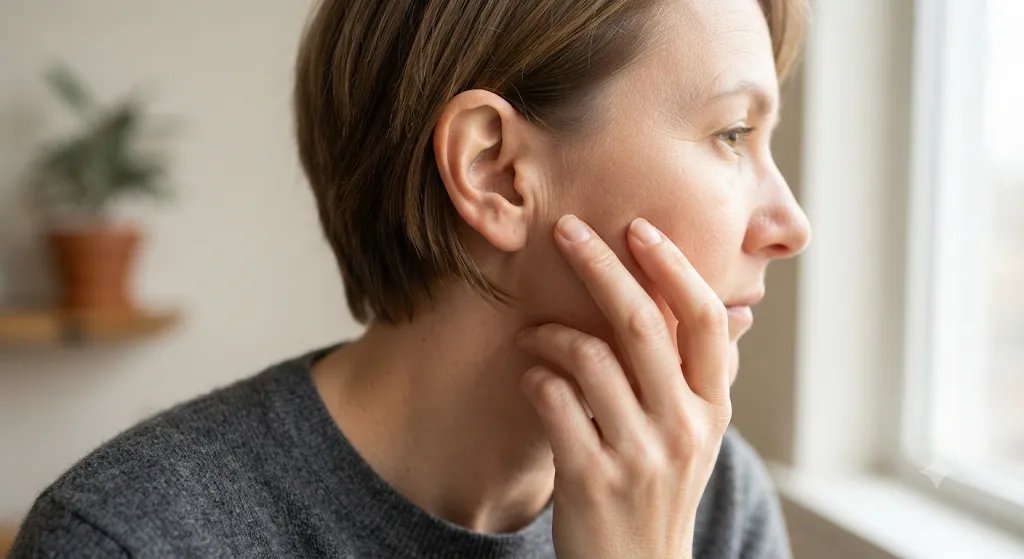
You leave a concert or a loud bar and the world sounds softer, as if someone turned the volume down a few notches. Voices seem distant, high-pitched sounds are harder to catch, and everything feels wrapped in a light cottony haze. For most people this muffled quality fades by the next morning or within a day or two. It is a classic sign of a temporary threshold shift—the ear’s way of saying the hair cells have been working overtime.
What This Feels Like
The sensation is usually bilateral and even. Soft sounds that were easy to hear before the event now require more effort. Music on the way home may sound thinner. Some people notice a slight fullness or pressure alongside the muffling, and many also hear a faint ring or hiss. The change is rarely painful. It is more like a temporary loss of fine detail than total deafness.
Common Causes
The main trigger is prolonged or intense sound above roughly 85 decibels. Concerts, clubs, headphones at high volume, power tools, and even a long session of loud gaming can push the system past its comfortable range. The longer the exposure and the closer you stand to the speakers, the more pronounced the temporary shift tends to be. Individual sensitivity varies; some ears recover faster than others.
Why This Happens
Inside the cochlea, thousands of hair cells convert sound waves into electrical signals. Their delicate stereocilia bend with each vibration. Very loud sound can temporarily over-stimulate or slightly displace these structures, reducing their efficiency. The result is a raised hearing threshold: quieter sounds must be louder before the cells fire normally again. Researchers Sharon Kujawa and Charles Liberman have shown that even when the threshold returns to baseline, some connections between hair cells and the auditory nerve can be damaged—an effect sometimes called hidden hearing loss. Most of the immediate muffling, however, reflects reversible fatigue rather than permanent cell death.
The National Institute on Deafness and Other Communication Disorders notes that temporary hearing changes after loud noise commonly resolve within 16 to 48 hours. In milder cases the improvement is noticeable by the next morning. More intense or longer exposures can take several days.
Less Common but Serious Causes
If the muffling is only in one ear, appears suddenly without a clear loud-noise history, or is accompanied by spinning dizziness, severe pain, or fluid drainage, other explanations become more likely. These include sudden sensorineural hearing loss, middle-ear infection, or acoustic trauma from a very close blast. Wax impaction can also create a muffled feeling, though it is unrelated to the concert itself. A one-sided change that does not improve is worth prompt attention.
Hidden Triggers
Standing near the speakers, removing earplugs for part of the night, or already having mild hearing loss can amplify the effect. Alcohol and fatigue do not directly damage the ear, but they may reduce awareness of how loud the environment has become. Repeated nights of loud exposure without recovery time increase the chance that temporary shifts begin to leave lasting marks.
When to Worry
Most people can safely watch and wait if the muffling is even in both ears, started right after the loud event, and is clearly improving. Contact a doctor or audiologist if:
- The muffled quality is still obvious after 48–72 hours.
- One ear is noticeably worse than the other.
- You also have significant pain, drainage, or balance problems.
- Speech sounds distorted or you struggle to follow conversation in quiet rooms after several days.
Persistent symptoms after the typical recovery window raise the possibility that some of the change is not fully reversing.
Myths vs Facts
Myth: If your hearing comes back, no damage occurred.
Fact: Thresholds can recover while some nerve connections are still lost. Repeated temporary shifts are not harmless.
Myth: Only extremely loud events matter.
Fact: Sustained sound around 85–90 dB for hours can also produce a measurable temporary shift.
Myth: Earplugs ruin the experience.
Fact: Properly fitted high-fidelity plugs lower the level by 15–20 dB while preserving most of the music’s clarity, greatly reducing the chance of a next-day muffled feeling.
How to Manage It
Give your ears quiet time. Avoid headphones, loud environments, and further concerts for at least a day or two. Soft background noise is fine; absolute silence is not required. Stay hydrated and get ordinary sleep—both support general recovery. Over-the-counter pain relief is rarely needed unless there is actual discomfort. If you attend events often, consider carrying earplugs as a routine rather than an afterthought.
Related reading on the site includes how ringing after a concert fits the same temporary threshold picture, why some people notice ringing once the room is quiet, and the different pressure-related fullness that can appear after a flight.
When to See a Doctor
A primary-care visit or direct referral to an audiologist or ENT is reasonable if the muffling has not clearly improved after three days, if it is one-sided, or if you have had multiple episodes and want a baseline hearing test. Early documentation helps track whether any permanent shift is accumulating over years of noise exposure.
FAQs
How long does muffled hearing usually last after a concert?
Most people notice clear improvement within 16 to 48 hours. Mild residual softness can occasionally linger a few extra days, but steady recovery is the expected pattern.
Can one loud concert cause permanent hearing loss?
A single moderate exposure rarely causes lasting threshold elevation, but it can still damage some auditory-nerve connections. Repeated unprotected exposure is the bigger long-term concern.
Will earplugs prevent the muffled feeling?
Yes, for most people. Reducing the sound level by even 15 dB keeps the exposure below the range that typically produces a noticeable temporary threshold shift.
Is it safe to use headphones the next day?
Keep volume low and duration short until normal clarity returns. Further loud input simply delays recovery of the fatigued hair cells.
Why do some people get muffling and others only ringing?
Both symptoms come from the same temporary overload. Individual differences in cochlear sensitivity, prior noise history, and how close someone stood to the speakers explain why the mix of muffling versus tinnitus varies.
Conclusion
Muffled hearing after loud music is a common, usually short-lived response to temporary threshold shift. The ear is resilient, and most people regain their normal clarity within a day or two. Treating the symptom as a useful warning—rather than something to ignore—helps protect long-term hearing. Quiet recovery time and simple protection at the next event are the most practical steps most people need.