Most people only hear about the spleen after a car crash, a case of mono, or a vaccine reminder after it is removed. The rest of the time it sits quietly under the left ribs, filtering blood that never quite looks like the blood of a hunter who just sprinted, dove, or fought a fever.
That quiet is not emptiness. The spleen is the only secondary lymphoid organ found in every jawed vertebrate, and it still runs two jobs that modern indoor life barely asks for: squeeze a reserve of red cells into circulation when oxygen demand spikes, and scan every milliliter of blood for worn-out cells and encapsulated bacteria.
Two Organs in One Capsule
Anatomists have said for decades that the spleen is two organs sharing a capsule.
The red pulp — about four-fifths of the tissue — is a maze of cords and venous sinuses. Blood leaves the arterioles into an open space. Healthy, flexible red cells squeeze back into the circulation. Stiff, old, or antibody-coated cells get trapped and eaten by macrophages. Iron is recycled. About a third of the body’s platelets rest here between jobs.
The white pulp is a miniature lymph node wrapped around the arteries. T cells sit in periarteriolar sheaths. B cells form follicles. Between the two pulps sits a marginal zone packed with specialized macrophages and B cells that see whatever is floating in blood first.
Reviews by Reina Mebius and Georg Kraal, and later work from researchers including Thomas Boehm, describe this red-white split as ancient: filtration plus adaptive immunity, conserved for roughly 500 million years. The liver can take over some red-cell cleanup if the spleen is gone. Encapsulated bacteria are another story. Without a spleen, Streptococcus pneumoniae, Haemophilus influenzae, and Neisseria meningitidis are harder to opsonize and clear.
The Reserve Joseph Barcroft Measured
In the 1920s, Cambridge physiologist Joseph Barcroft showed that a dog’s spleen could halve its volume during exercise and push a meaningful bolus of concentrated red cells into the circulation. Follow-up work by E. W. H. Cruickshank confirmed that the fluid expelled from the pulp was richer in hemoglobin than ordinary venous blood.
Humans do not store a horse-sized reserve. Our capsule has less smooth muscle. Even so, ultrasound and exercise studies keep finding the same pattern: vigorous work, breath-holds, and hypoxia shrink the human spleen by roughly 20 to 40 percent and nudge hematocrit and hemoglobin upward for a short window.
Roy J. Shephard summarized the human response: an early drop in volume during hard exercise, apnea, or hypoxic air, driven mainly by alpha-adrenergic fibers in the splenic nerve. Erika Schagatay and colleagues have mapped the same contraction in trained freedivers and endurance athletes. The extra oxygen-carrying capacity is modest — often a few percent of circulating red-cell mass — but it is real, repeatable, and trainable. People who practice apnea or high-intensity work tend to start with a larger resting spleen and a stronger squeeze.
That is the sprint the organ still expects: a sudden demand for oxygen, a sympathetic jolt, a brief autotransfusion.
The Fever It Still Expects
The other half of the job is quieter and more constant. Every pass of blood is a quality-control line. Red cells live about 120 days. As they age they lose flexibility and the “don’t eat me” signal CD47. The red pulp notices. Inclusions such as Howell-Jolly bodies and Heinz bodies are pitted out. Damaged cells disappear.
The same macrophages watch for opsonized microbes. Marginal-zone B cells can make a fast IgM response to blood-borne polysaccharide capsules — the kind of threat that used to follow a gut infection, a wound, or a childhood fever. The appendix is a biofilm safe house after a diarrheal purge; the spleen is the bloodstream’s equivalent checkpoint. You can read that companion story in Why Your Appendix Still Expects a Microbial Reserve.
Modern life did not delete those threats. It thinned them. Clean water, vaccines, and fewer untreated bacteremias are enormous goods. They also mean the white pulp spends more of its week seeing sterile blood and less of it running a live drill. That is not a reason to seek infection. It is a reason to notice that the organ’s second job now happens mostly in the background.
What Modern Stillness Changes
A spleen that evolved around movement, altitude shifts, diving, and periodic fever now lives with:
- Long seated days and rare all-out efforts
- Climate-controlled air instead of heat, cold, and hypoxia
- Infrequent, well-treated bloodstream infections
- Occasional huge gym sessions instead of daily varied work
The organ does not “atrophy” in a dramatic weekly way. Resting volume is fairly stable. What fades is the regular contraction-and-release cycle and the frequent antigen traffic that kept white pulp busy. After splenectomy, people live full lives with vaccines and awareness. That fact is the best evidence that the spleen is important but not irreplaceable — and that its everyday work is easy to forget until it is gone.
Circulation and temperature contrast still train the vessels that feed every organ, including this one. The broader vascular story sits in Why Your Circulation Still Expects Temperature Contrast.
Hidden Triggers That Make the Left Side Noticeable
Most spleens stay silent. A few situations make people suddenly aware of the left upper abdomen:
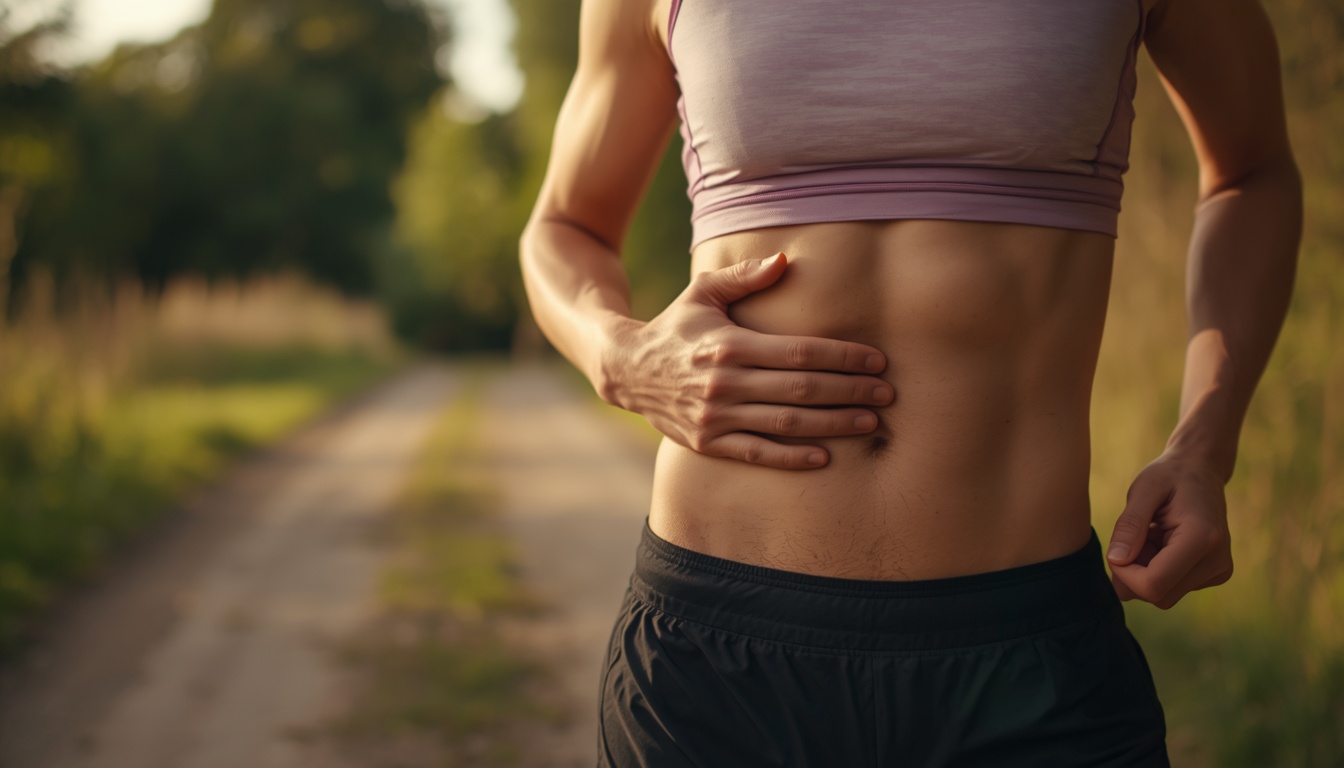
- A hard run, a long apnea session, or a very hot day, followed by a dull ache under the left ribs (often muscle or a side stitch, occasionally a true capsular stretch)
- Infectious mononucleosis, which can swell the spleen and make contact sports unsafe for a stretch
- After a large meal plus a sprint — a crowded left upper quadrant plus a contracting capsule
- Rarely, a wandering or “ptotic” spleen after weight loss or lax ligaments
A side stitch from exercise is usually the diaphragm or peritoneal ligaments, not the spleen itself. That pattern is unpacked in Why You Get a Side Stitch When You Exercise. True splenic pain tends to sit higher and farther left, and it is much less common than a stitch.
When to Worry
Seek care promptly for:
- Sharp left-upper-quadrant pain after a blow to the ribs or a fall
- Left-shoulder tip pain after trauma (Kehr’s sign can mark blood under the diaphragm)
- Fever with a known large spleen, or fever after splenectomy
- Unusual bruising or very low platelets with a big spleen
- Sudden faintness, paleness, or a rigid abdomen
A mild ache after a new hill session is almost never an emergency. A tender, enlarged spleen during a viral illness is a reason to pause contact sport until a clinician clears you.
Myths vs Facts
Myth: The spleen is a leftover with no real job in adults.
Fact: It filters blood, recycles iron, stores platelets, and runs a unique response to encapsulated bacteria.
Myth: Humans cannot contract the spleen the way dogs and horses can.
Fact: The human squeeze is smaller, but ultrasound and hemoglobin data from Barcroft’s lineage through Schagatay and Shephard show a consistent 20–40% volume drop with hard effort, apnea, or hypoxia.
Myth: A stitch under the left ribs during a run means the spleen is tearing.
Fact: Most left-sided exercise pain is a side stitch. Capsular injury is rare and usually follows trauma or marked enlargement.
Myth: After the spleen is removed, nothing changes.
Fact: Most daily life is normal. Lifelong vaccination against encapsulated bacteria and a low threshold for fever remain important.
Myth: You can “detox” the spleen with a juice or a specific stretch.
Fact: The organ detoxifies nothing in the wellness-slogan sense. It phagocytoses worn cells. Walking, sleep, and not ignoring fevers after splenectomy are the useful parts.
How to Give the Spleen the Work It Expects
You do not need a special spleen workout. You need the same stimuli the capsule evolved around, in modern doses.
- Include some efforts that actually raise sympathetic drive: hills, stairs, short intervals, or a swim with brief breath practice if you already swim safely
- Keep walking as the daily baseline so blood keeps moving through every filter, including this one
- Treat vaccines after splenectomy as non-negotiable, not optional
- During mono or another illness with a large spleen, sit out contact and high-impact sport until you are cleared
- Do not chase infection to “train” white pulp. The cost is not worth the drill
A spleen that contracts on a hill and scans quiet blood the rest of the week is doing its job. The mismatch is not that the organ failed. It is that sprints and fevers became rare.
When to See a Doctor
See a clinician if left-upper pain follows trauma, if a viral illness leaves you tender under the left ribs, if you have a fever and no spleen, or if blood counts keep coming back with unexpected Howell-Jolly bodies and no known reason. Imaging and a blood film answer most of those questions quickly.
Frequently Asked Questions
Can I feel my spleen from the outside?
Usually no. A normal adult spleen hides under the left rib cage. You feel it only when it is substantially enlarged, and even then a clinician’s exam is more reliable than self-poking.
Does running make the spleen “drop” or twist?
True torsion of a wandering spleen is rare. Ordinary running does not dislodge a normally ligamented organ. Post-run left-sided ache is far more often muscle or a stitch.
If I had my spleen removed years ago, do I still need extra vaccines?
Yes. Protection against pneumococcus, meningococcus, and Hib remains relevant for life. Ask your clinician which schedule applies to you.
Is a larger spleen in athletes a problem?
Trained apnea and endurance groups sometimes show a larger resting volume and a stronger contraction. That is adaptation, not automatically disease. Enlargement from infection or blood disorders is a different pattern.
Does coffee or a big meal shrink the spleen?
Not in any useful, reliable way. The consistent triggers in research are exercise intensity, apnea, hypoxia, and sympathetic activation — not caffeine or lunch.
Can I live a full life without a spleen?
Yes, with vaccination, awareness of fever, and ordinary care. The liver and the rest of the immune system cover a great deal. The missing piece is mainly fast clearance of certain encapsulated bacteria.
Conclusion
The spleen is not a mysterious leftover. It is a blood filter and a modest emergency reserve that still expects two old events: a sprint that asks for extra red cells, and a bloodstream that sometimes carries a real microbial problem. You cannot recreate a Paleolithic fever season, and you should not try. You can still give the capsule a reason to squeeze — a hill, a hard effort, a cold swim — and you can treat the immune half with the unglamorous tools that actually work: vaccines when the organ is gone, rest when it is swollen, and a calm respect for an organ that does its best work unnoticed.