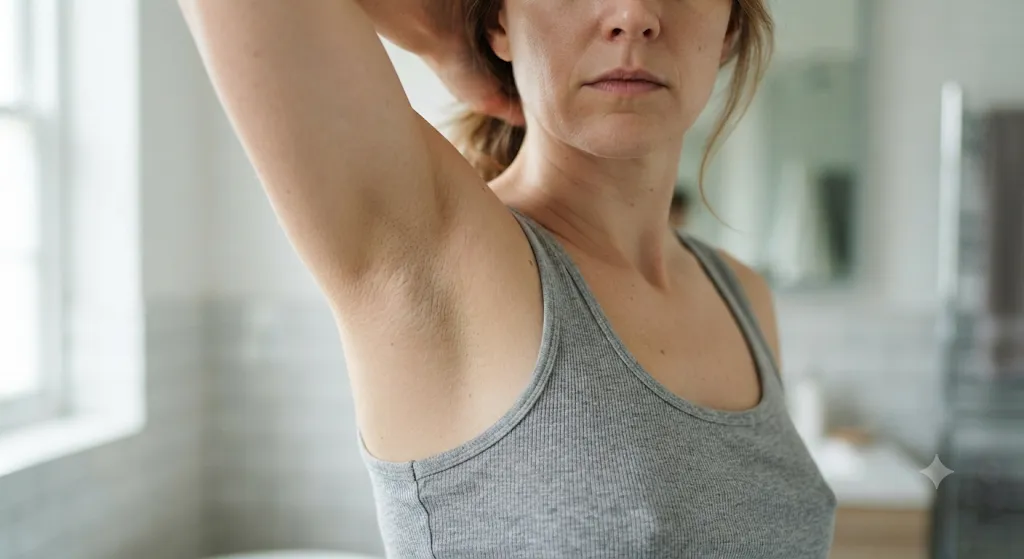
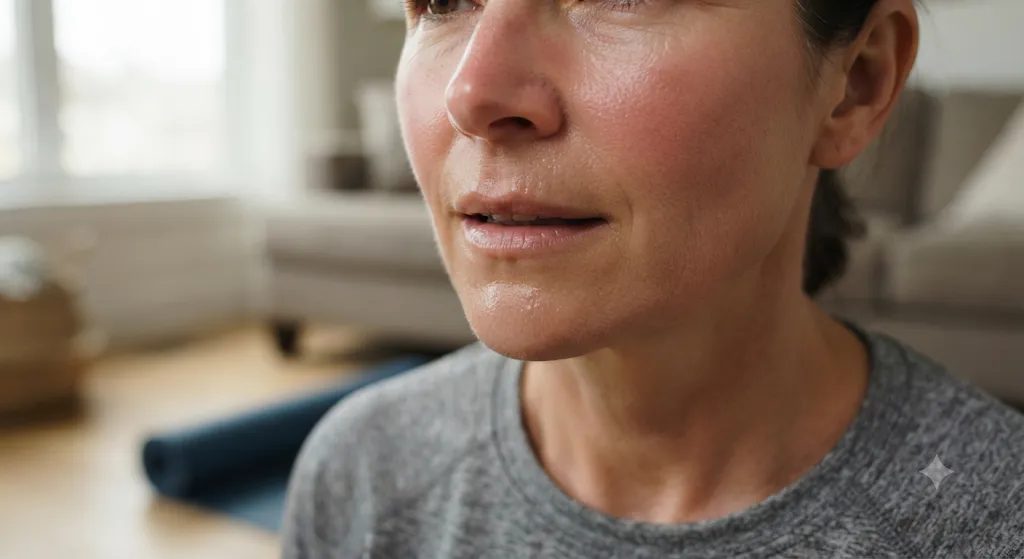
Your skin evolved for days of varied contact with ground, tools, and clothing. Modern smooth surfaces change that pattern. Here is why mild friction still matters and how to restore a lighter version of the old rhythm.
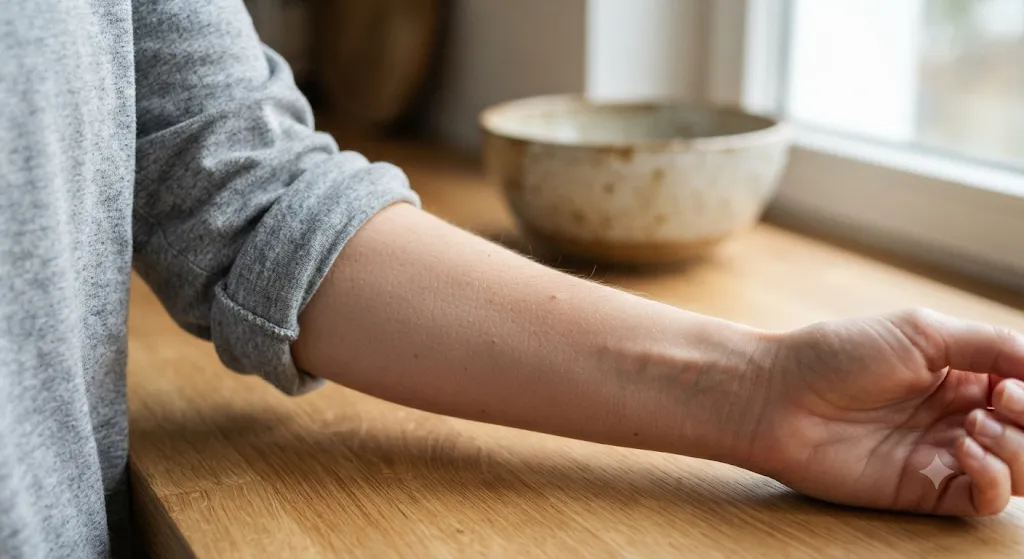
You finish a day of desk work and notice the skin on your forearms or hands feels a little smoother, almost polished, or maybe a bit dry and tight in places. Nothing dramatic. Just the sense that your skin has not met much real resistance today. That quiet observation is not random. Human skin was shaped by thousands of years of contact with uneven ground, rough tools, woven clothing, and the mild abrasion that comes from walking, carrying, and working outdoors. Modern life replaces much of that with soft fabrics, smooth screens, and climate-controlled rooms. The mismatch is subtle, but your skin still carries the expectation of occasional mild friction.
What This Feels Like in Everyday Life
The sensation is rarely dramatic. It might show up as skin that looks a little duller by evening, or hands that feel slightly tighter after hours of typing and minimal contact with anything textured. Some people notice that calluses never form the way they once did, or that a simple walk on a slightly rough path leaves the soles of their feet more aware afterward. Others simply feel that their skin is “softer” than it used to be, without any clear problem. These are ordinary signals of reduced mechanical variety, not signs that something is broken.
Why Skin Was Built for Mild Mechanical Contact
Skin is not a passive covering. The outer layers, especially the stratum corneum, constantly renew themselves. Mild friction helps shed the oldest cells in a gradual way and stimulates the barrier to stay organized. Research on skin tribology shows that friction coefficients change with hydration and surface type; dry skin behaves more like a rough solid, while moist skin shows higher friction that can increase contact area. This is normal physiology, not a flaw.
A striking evolutionary clue comes from work on how land animals adapted their skin to bear weight. In 2025, researchers including Ruonan Di and senior author Ting Chen published findings in Cell identifying the protein SLURP1 as a key part of a mechano-resistance system in weight-bearing skin. The gene is conserved across tetrapods and is especially active in palmoplantar (palm and sole) epidermis. When the protein is missing, ordinary pressure causes abnormal thickening; removing the load reverses the change. The mechanism involves protecting calcium pumps inside the endoplasmic reticulum so cells do not over-respond to mechanical stress. In short, skin evolved specific molecular tools to handle regular contact and load. Those tools still exist, even if modern days give them less varied work.
Fingerprints offer another concrete example. Epidermal ridges help regulate moisture so grip stays reliable in both dry and wet conditions—an adaptation studied in detail for its role in primate manipulation and locomotion. The same principle of tuned contact applies more broadly: skin expects intermittent, moderate mechanical input.
Common Reasons the Pattern Changed
Several ordinary features of contemporary life reduce the mild friction skin once received:
- Long periods of sitting or standing on smooth floors with cushioned shoes.
- Soft, constant clothing that rarely creates varied shear against the skin.
- Frequent contact with glass screens and polished surfaces instead of tools, wood, or ground.
- Indoor environments with stable humidity and temperature that reduce the need for skin to adapt to weather-driven changes in surface feel.
- Less barefoot or minimally shod time on natural or mixed surfaces.
None of these are harmful in isolation. Together they simply lower the mechanical variety the outer skin layers experience day after day.
Hidden Triggers That Make the Mismatch Noticeable
A few everyday factors can amplify the sense that skin is under-stimulated:
- Very frequent washing with strong soaps that strip surface lipids, leaving skin more sensitive to even mild later contact.
- Tight or synthetic clothing that creates constant low-level friction in the same spots rather than varied, intermittent contact.
- Long stretches of indoor work without any outdoor walking or handling of textured objects.
- Dehydration or low indoor humidity that makes the stratum corneum less flexible, so ordinary contact feels sharper.
These are common, not signs of disease. Adjusting one or two of them often restores a more comfortable balance.
When Mild Friction Is Helpful and When It Is Not
Occasional mild friction supports normal desquamation and can keep the barrier responsive. Excessive or repetitive rubbing, however, can raise transepidermal water loss and temporarily weaken the barrier—something shown in studies that measure skin after controlled frictional challenge. The difference is dose and recovery. Ancestral patterns involved varied, intermittent contact with rest periods. Constant high shear in one area (for example, from poorly fitting shoes or aggressive scrubbing) is different from the mixed, moderate input skin expects.
For most people the practical goal is simply to restore a little of that variety rather than to maximize friction. A short walk on mixed surfaces, handling a wooden tool or textured fabric for a few minutes, or spending a little time barefoot on a clean floor or mat can supply the gentle mechanical signal without irritation.
Myths Versus Facts
Myth: Skin needs aggressive exfoliation every day to stay healthy.
Fact: Normal turnover already removes surface cells. Mild everyday contact is usually enough; heavy scrubbing can increase water loss and irritation.
Myth: Softer skin is always better.
Fact: Skin is designed to handle a range of mechanical conditions. Very soft, rarely challenged skin can become more sensitive to ordinary contact later.
Myth: If your hands or feet never form calluses, something is wrong.
Fact: Callus formation depends on repeated load. Many modern routines simply do not supply that load. Absence of calluses is common and not a problem by itself.
Myth: All friction damages the skin barrier.
Fact: Excessive friction can raise water loss temporarily. Moderate, varied contact is part of normal skin maintenance and is well tolerated by healthy skin.
Simple Ways to Give Skin the Contact It Expects
You do not need special equipment or long routines. Small, consistent additions usually work best:
- Spend a few minutes barefoot or in minimal footwear on a clean floor, mat, or outdoor path if the surface is safe and appropriate for you.
- Handle textured objects during the day—wood, cloth, paper, or simple tools—rather than only smooth screens and plastics.
- Choose clothing that allows occasional mild movement against the skin instead of constant tight pressure in the same spots.
- After washing, let skin dry naturally for a short time before applying moisturizer if your barrier is intact; this preserves some of the natural surface feel.
- Include short walks that involve slight changes in surface (sidewalk to grass edge, indoor floor to outdoor step) so the soles and lower legs experience gentle variation.
These steps align with the same principle discussed in articles on why your fingerprints still expect a wet grip and why your skin barrier still expects weather: skin responds best to moderate, intermittent signals rather than constant uniformity or constant stress.
When to See a Doctor
Most changes in how skin feels after a low-friction day are ordinary. Seek medical advice if you notice:
- Persistent redness, cracking, or raw areas that do not improve with reduced irritation and simple moisturizing.
- Rapid thickening, pain, or fissures on the palms or soles that interfere with daily activity.
- Signs of infection such as increasing warmth, swelling, or pus.
- A sudden change in skin sensitivity or barrier function that does not settle within a few days of ordinary care.
These situations are uncommon with simple lifestyle variation, but they deserve professional attention when they appear.
Frequently Asked Questions
Is it normal for my skin to feel smoother or tighter after a long indoor day?
Yes. Reduced mechanical variety and stable indoor conditions commonly leave skin feeling less “worked.” This is an ordinary mismatch, not a sign of damage in most people.
Does mild friction help or hurt the skin barrier?
Moderate, varied contact supports normal shedding and keeps the barrier responsive. Excessive repetitive rubbing can temporarily increase water loss. The key is intermittent rather than constant high shear.
Should I deliberately roughen my skin to match ancestral patterns?
No. The goal is occasional mild variety, not abrasion. Short periods of textured contact or barefoot time on safe surfaces are usually sufficient.
Why do some areas of skin (palms, soles) seem more adapted to pressure?
These regions show specialized molecular adaptations, including the SLURP1 system described by Di, Chen, and colleagues, that help cells tolerate mechanical load. Other skin areas also benefit from moderate contact but are not under the same constant weight-bearing demand.
Can clothing or washing habits make the mismatch worse?
Yes. Constant tight synthetic fabrics or very frequent strong-soap washing can reduce natural surface lipids and create either too little varied contact or too much localized friction. Gentler routines often help.
Is there a connection between less friction and drier-feeling skin?
Indirectly. Lower mechanical stimulation plus indoor dryness can both affect how the outer layer feels. Restoring a little varied contact and maintaining reasonable humidity often improves comfort together.
Conclusion
Your skin still carries molecular and structural expectations shaped by a life of varied, moderate mechanical contact. Modern routines of smooth surfaces, soft clothing, and long indoor stretches simply supply less of that signal. The result is rarely dramatic—just the quiet sense that skin has had an easier, more uniform day than it was built for. Small, ordinary additions of textured contact, short walks on mixed surfaces, and mindful clothing and washing habits usually restore a lighter version of the old pattern without any need for extremes. Skin does not require constant challenge; it simply responds best when the mechanical world is not entirely flat and frictionless.