
The sartorius still expects a high step over uneven ground. Chair days and crossed knees leave the longest thigh muscle short, then a curb or suitcase step pulls from hip to inner knee.
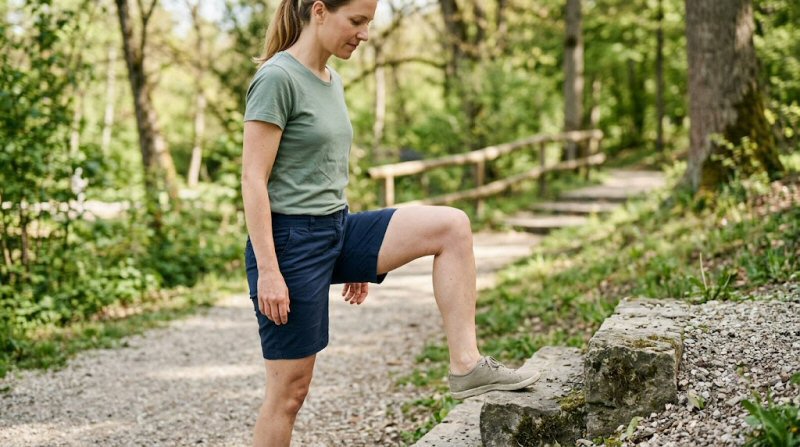
The pull shows up on the first real step of the day that is not a flat hallway. A curb after a long drive. A suitcase lifted onto a train with the knee high. A trail log that asks the foot to clear something instead of sliding past it. The line of discomfort runs from the front of the hip bone, down the inner front of the thigh, and sometimes lands just below the inner knee. That strap is the sartorius, the longest muscle in the body, and it still expects a high step.
The name is a clue. Sartor is Latin for tailor. The old working posture was cross-legged on the floor, hip turned out, knee bent, which is exactly the shape this muscle makes. A modern chair gives the hip a long flexion hold and almost never asks for that high, turned-out step. The muscle stays quiet, then complains when the day finally needs it. That complaint is usually a length and load mismatch, not a torn tendon or a failing hip joint.
What This Thigh Pull Feels Like
People describe a thin ache, not a deep groin grab. It sits on the surface, easy to find if you press just inside the front of the thigh while you lift the knee and turn the foot out. Some feel it only at the top, near the anterior superior iliac spine, where the muscle starts. Others feel it at the bottom, where the tendon joins gracilis and semitendinosus on the pes anserinus, the inner corner of the knee. A few notice a tug when they cross one knee over the other and then uncross after an hour.
It is different from the front-of-hip pinch of a short hip flexor, and different from the inner-groin ache of the adductors. The hip flexors complain on a long stride. The adductors complain on a wide stance. Sartorius sits between those jobs: hip flexion, a little abduction, outward turn of the thigh, and knee flexion at the same time. If the ache tracks that diagonal and eases once you have walked for ten minutes, the tailor’s muscle is the usual suspect.
A true joint problem tends to sit deeper, in the groin crease, and it limits rotation or makes the hip click with a sharp catch. A hamstring strain sits on the back of the thigh. Sartorius is the strap you can roll under a finger on the front.
What the Muscle Was Built to Do
The sartorius starts on the front of the pelvis and runs diagonally across the thigh to the medial tibia. John Basmajian’s electromyography work treated it as a muscle that joins a movement rather than one that powers level walking by itself. In swing, when the foot has to clear the ground, it helps lift the hip and bend the knee. Jacquelin Perry’s gait descriptions put that clearance in early swing, a brief high-knee moment even on flat ground. On a log, a stair, or a rocky path, the moment gets longer.
William Dostal, Gary Soderberg, and later Scott Delp mapped the hip muscles by moment arm, not by nickname. Sartorius is a flexor with an external-rotation component and a small abduction component. Donald Neumann’s kinesiology texts keep the same combined action: it is built for the step that also turns the thigh out, the way you step into a boat or over a low fence. It is not the engine of a straight-ahead march. That job belongs more to iliacus, rectus femoris, and the gluteals. Sartorius is the specialist for the awkward step.
Its lower tendon shares the pes anserinus with gracilis and semitendinosus. That corner is a meeting place of three straps that all cross the knee. A day of still sitting, then a sudden hill, loads the meeting place before any one muscle has warmed.
Why a Chair Is the Wrong Shape
Ancestral days were full of low obstacles. Roots, rocks, stream banks, a child lifted onto a hip, a squat to the ground and back up. Daniel Lieberman’s work on human walking keeps returning to varied terrain, not a treadmill. The high step was ordinary. So was sitting cross-legged or in a deep fold, which lengthens some fibers and shortens others in a mix, then releases them when you stand.
A desk chair freezes one shape. The hip stays bent near ninety degrees. The knee stays bent. The thigh often turns slightly in, especially if the ankles are crossed or the knees are pressed together. Sartorius is held short at the hip and short at the knee for hours, without the brief contractions that clearance steps would have given it. Basmajian’s old EMG point still applies: a muscle that is not asked to fire does not stay ready. When the parking-lot curb arrives, the first high step is a small unpracticed load on a stiff strap.
Crossed-knee sitting is a second trap. It looks like the tailor’s pose, but it is held. The muscle is shortened and compressed under the other thigh, often with a wallet or a phone in the same pocket. Standing up from that pose is when many people first notice the inner-thigh line.
Hidden Triggers
Driving is a long sartorius hold, especially in a low seat with the knee up. A long flight does the same, then the aisle step with a bag is the high step the muscle has not practiced. One-sided habits matter. Always leading with the same foot onto a bus, always crossing the same knee, always carrying a toddler on one hip. The quiet side stays long and unused. The busy side stays short.
Shoes with a stiff sole and no rocker make clearance harder, so the knee has to lift higher than the ankle bend would have allowed. That is a feature the muscle can handle, until it is the only high step of the day. Cold weather adds a layer. Muscles that have been still take longer to accept a sudden stretch. A winter curb after a warm car is a classic first-step tug.
Inner-knee irritation at the pes anserinus can follow the same pattern. The tendon corner gets cranky from the chair-to-hill jump, and the ache is blamed on the knee joint. The joint is often quiet. The straps attaching just below it are not.
Less Common but Serious Causes
A sports tear of the sartorius is uncommon, but it happens in a sprint, a hard kick, or a slip where the hip is forced one way and the knee another. That pain is sudden, with bruising or a hollow along the strap, and it does not fade after a short walk. A stress injury at the pelvic attachment can linger in runners who add hills and speed in the same week.
Deeper groin pain can be a hip labral irritant, a sports hernia, or referred pain from the lumbar spine. Fever, a red swollen inner knee, or pain that wakes you at night and does not care about steps are not a tailor-muscle story. Blood clot pain is usually the calf, not this diagonal, but a hot swollen leg after travel needs urgent care regardless of which muscle you suspect.
When to Worry
Ordinary sartorius ache eases as you walk, is tender on the strap itself, and follows a day of sitting plus one high step. Worry more if the pain is deep in the groin and limits rotation, if the knee locks or gives way, if you cannot bear weight, or if swelling and warmth sit in the joint rather than on the tendon. Numbness down the shin, pain with coughing that grabs the groin, or a new lump are reasons to get examined, not to stretch harder.
Pain after a fall onto the hip, or pain with fever, is a different category. So is inner-thigh pain in pregnancy that is constant rather than step-related. Pelvic girdle pain can involve nearby tissues. A clinician can sort the strap from the joint.
Myths vs Facts
Myth: A pull from hip to inner knee means the hip joint is wearing out. Fact: Joint pain usually sits deeper and limits rotation. A surface diagonal that loosens with walking is more often the sartorius or the pes anserinus tendons.
Myth: Crossing your legs is good because it is the tailor’s pose. Fact: The old pose was a change of position on the ground, not an hour of one knee stacked on the other in a chair. Held shortening is the problem, not the shape itself.
Myth: You should stretch this muscle hard before every walk. Fact: A cold long stretch on a muscle that has been short all day can irritate the tendon corner. A few easy high steps work better than a forceful pull.
Myth: Only runners get this. Fact: Desk days plus one curb are enough. Runners notice it when they add hills. Sitters notice it when they finally step up.
How to Give It the Step It Expects
The useful dose is small and often. Once an hour, stand and march in place with a slightly higher knee, foot turned a little out, for twenty steps. That is the action Basmajian and the gait literature describe, not a gym exercise. On a walk, pick a line on the curb or a low stair and step up and down slowly, leading with each leg. The knee still expects varied terrain for the same reason. Flat hallways never ask for clearance.
Uncross the knees. If you like a crossed shape, switch sides every few minutes and put both feet down in between. On long drives, use a rest stop for ten high steps rather than a deeper stretch against the car. A gentle figure-four on the floor, held only until you feel the front-inner thigh, is enough after the steps, not instead of them.
If the inner knee is tender, ease the hills for a few days and keep the easy marches. Ice is optional. The tendon corner calms faster when the sudden load stops and the regular small load continues. Strength comes from the step itself: slow step-ups, a controlled high knee, and getting up from a low seat without using your hands. Save aggressive stretching for after the muscle is warm.
When to See a Doctor
See someone if the diagonal pain lasts more than two weeks despite easier steps and fewer crossed-knee hours, if the hip locks or the knee gives way, or if walking makes the pain sharply worse instead of better. A sports clinician or physiotherapist can tell a sartorius tendon irritant from a hip joint problem or a lumbar referral. Imaging is rarely the first step for a surface ache that matches the strap.
Go sooner for sudden tearing pain with a limp, a hot swollen knee, groin pain with a cough impulse, or leg swelling after travel. Those are not mismatch stories.
FAQs
Why does the front of my thigh pull when I step onto a curb?
A curb is a high step after a day of almost none. The sartorius helps lift the hip, bend the knee, and turn the thigh out for that clearance. If it has been held short in a chair, the first few curbs tug along the strap from the hip bone toward the inner knee.
Is the sartorius the same as the hip flexor?
It is one hip flexor, not the main one. Iliacus and rectus femoris do more of the straight lift. Sartorius adds outward turn and knee bend. Pain on a long flat stride is often the deeper flexors. Pain on a high, slightly turned step fits the tailor’s muscle better.
Can crossed legs cause inner-knee pain?
They can irritate the shared tendon corner below the inner knee, where sartorius, gracilis, and semitendinosus meet. The pose holds those tendons short and compressed. Switching sides and standing for a few high steps usually matters more than a single long stretch.
Should I foam-roll the inner thigh?
Light pressure along the diagonal can help some people notice the muscle. Hard rolling on a cold tendon corner often flares it. Use the roller after a walk, not before the first step of the day, and stop if the inner knee gets sharper.
Does this mean I need to stop sitting cross-legged on the floor?
No. Floor sitting in more than one shape is closer to what the hip expects. The mismatch is the chair hold, especially one knee stacked for an hour. Change position. Add the high step. Keep the floor option.
How long does a sartorius ache take to settle?
A simple load mismatch often eases within a few days of hourly high steps and fewer held crosses. Tendon-corner irritation can take two to six weeks if the hills and the chair hours both stay the same. Sudden tears or joint pain follow a different timeline and need an exam.
Conclusion
The sartorius is a specialist. It still expects the awkward step: knee up, thigh slightly out, foot clearing a root or a curb. Chairs, crossed knees, and flat floors give it a long hold and almost no practice. The pull from hip bone to inner knee is that gap showing up on the first real step. Give it small high steps through the day, uncross before the hour is up, and let the warm walk do more than a cold stretch. The longest muscle in the thigh does not need a new job. It needs the old one back, briefly and often.


