
Inner-thigh tightness after sitting is not a random quirk. Your adductors evolved for a wide, shifting stance — and hours of knees-together chair life leave them short, grumpy, and easy to strain.
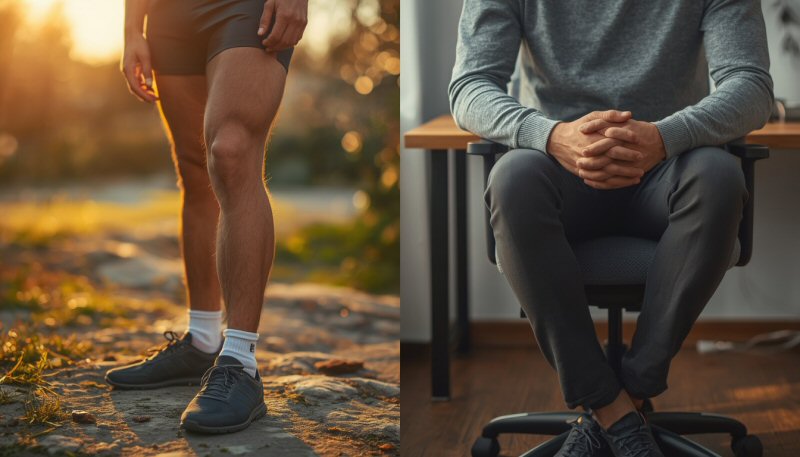
You stand up from a long meeting and the inner thighs feel glued. A side lunge at the gym is a surprise. Getting out of a car after a drive makes the groin complain. None of this means the muscles have failed. It means they have spent the day in a position they were rarely asked to hold for hours.
The adductors — the group that draws the thighs toward the midline — are not decorative. They stabilize the pelvis on one leg, control the last part of a step, help you squat and change direction, and work with the pelvic floor. For most of human history they did that work from a relatively open stance on uneven ground. Modern chairs and narrow walking lanes ask them to live short and quiet instead.
What Tight Inner Thighs Feel Like
The sensation is often a dull pull high on the inner thigh, a pinch when you sit cross-legged, or a sharp twinge when you cut sideways on a court. Some people feel it as “hip tightness” that stretching the outer hip never quite fixes. Others notice that one knee wants to drift inward when they squat, or that a simple split stance stretch is harder than it used to be.
After sitting, the first few steps can feel narrow, as if the legs do not want to leave each other’s company. That is the adductors still holding the chair’s geometry.
The Muscles Built for a Changing Base
There are several adductors: longus, brevis, magnus, plus gracilis and pectineus. Together they attach from the pubic bone and sit bones down the inner femur, and in the case of gracilis all the way past the knee. Adductor magnus is large enough to act as both an adductor and a hamstring-like extender. That dual job is a clue. These muscles were not designed only to squeeze a ball between the knees. They help control the pelvis when one foot is on the ground and the other is moving.
Walking, climbing, carrying, squatting to rest, and stepping over roots all use a stance that is wider and more variable than desk sitting. The feet land slightly apart. The pelvis shifts over the stance leg. The inner thigh lengthens on the moving side and steadies on the standing side. Over a day of that work the tissue stays long enough to allow a squat and strong enough to catch a slip.
A chair reverses the script. Hips stay flexed. Knees stay close. The adductors rest in a shortened inner range for hours. The nervous system learns that this length is “home.” When you later ask for a lateral lunge, a deep squat, or a sudden change of direction, the first available strategy is a protective grab.
Why Modern Life Narrows the Stance
Office chairs, car seats, airplane rows, and many sofas reward knees-together sitting. Tight clothing and social habits do the same. Treadmills and sidewalks are flat and straight, so you rarely need the side-to-side catch that a hillside or a crowded market floor demanded.
Gyms often train the opposite of daily life in one burst: heavy adduction machines, or deep side lunges after zero preparation. Tissue that has been short all day does not love a sudden long stretch under load. That is one reason “groin strains” show up in people who sit all week and then sprint or cut on Saturday.
Pregnancy, cycling in a narrow stance, and sports that live in one plane can add their own version of the same story. The common thread is not weakness as a moral failing. It is a mismatch between the range the adductors expect and the range they get.
Hidden Triggers
Crossing the same leg every time you sit. A wallet or phone in a back pocket that tilts the pelvis. Standing with the feet touching and the knees locked. Sleeping in a tight fetal curl night after night. A sudden return to martial arts, skating, or dance after months of only forward walking. Dehydration and a hard first session after time off, which make muscle more irritable. Shoes with a very narrow base that discourage a natural foot width.
Pelvic floor holding can travel into the inner thigh as well. The tissues share walls and nerves. People who brace the belly all day sometimes find the groin feels as clenched as the jaw.
Less Common but Worth Naming
Not every inner-thigh pain is “tight adductors.” A true muscle tear after a sudden cut needs rest and a gradual rebuild. Hip joint problems, sports hernias, nerve irritation, referred pain from the lumbar spine, and, rarely, stress issues in the pubic bone can mimic adductor tightness. Pain that wakes you, swelling, a pop at the moment of injury, numbness, or pain in the groin that does not change with position deserves a clinician, not another stretch video.
When to Worry
See someone promptly if inner-thigh or groin pain follows trauma, if you cannot bear weight, if there is a visible bulge, fever, or unexplained weight loss, or if pain is severe at rest. Persistent one-sided groin pain in active people should not be stretched aggressively for months without an exam. Most everyday tightness is mechanical and reversible. Red flags are not.
Myths vs Facts
Myth: You should stretch the adductors hard every hour until they surrender.
Fact: Short, frequent gentle length plus strength in the new range works better than forcing a split.
Myth: Strong adductors mean squeezing inward all the time.
Fact: They also need to lengthen under control while you stand on one leg and while you squat.
Myth: Sitting with knees together is “proper.”
Fact: It is a social posture, not a skeletal requirement. A slightly open knee angle is kinder to the inner thigh.
Myth: If yoga splits are impossible, the hips are ruined.
Fact: Splits are a skill and a bone-shape lottery. Daily comfort in walking and squatting matters more.
How to Give the Adductors a Stance Again
Sit with a little space. Let the knees rest apart at a comfortable angle. Uncross the legs when you notice them stacked. A footstool that lets the hips stay a bit higher than the knees can reduce the all-day fold.
Stand and walk with your real foot width. Many people stand with the feet touching because that is how they were taught to “stand up straight.” A stance under the hips, toes roughly forward, is closer to what the pelvis expects.
Use a short lateral step often. While the kettle boils, step one foot out to the side, bend that knee a little, and keep the other leg long. Five slow reps each side is a reminder, not a workout.
Squat to rest when you can. A supported squat — heels down if possible, or heels on a small book — opens the inner thighs in the same shape humans used to rest. Hold the counter. Breathe. Thirty seconds counts.
Strengthen the range you want. Side-lying inner-thigh lifts are fine as a start. More useful for life: slow lateral lunges to a depth you control, standing on one leg while the other traces a small circle, and Copenhagen-style holds only after the tissue is ready. Add load gradually over weeks, not in one enthusiastic evening.
Walk on ground that is not a hallway. A park path, a gentle slope, or a few minutes of stepping over low obstacles asks the adductors to stabilize instead of nap.
Ease, do not yank, after sitting. Before a run or a match, a minute of easy side steps and a gentle frog stretch on the floor is wiser than a ballistic split.
When to See a Doctor or Physio
If tightness came with a sudden pull, if it limits walking after a week of calm activity, or if groin pain is accompanied by hip stiffness, clicking that hurts, or pelvic symptoms, get an assessment. A good clinician will look at how you stand, squat, and cut — not only at whether you can touch the floor in a straddle.
FAQs
Why do my inner thighs cramp at night?
Overnight the hips often stay flexed. Combined with yesterday’s sitting, the adductors can twitch when you roll. A slightly more open sleep position and a short evening walk help more than another late stretch session.
Is the adductor machine at the gym useful?
It can build capacity in one range. It does not replace walking, squatting, and sideways control. Use it as a side dish, not the whole meal.
Can tight adductors cause knee pain?
They can change how the thigh tracks over the foot. They are one piece among hips, feet, and how you load the step. Treating only the inner thigh rarely finishes the story.
Should I foam-roll the groin?
Light pressure that you can breathe through is reasonable. Deep rolling on the upper inner thigh is easy to overdo and sits near vessels and nerves. Gentle is the rule.
Do kids need adductor work too?
Kids who still squat, climb, and play sideways usually get the input free. Long school sitting is the new risk. Recess and floor play are the intervention.
Will stretching alone fix this?
Stretching without using the new range in standing and walking tends to fade by tomorrow. Strength at length is what keeps the change.
Conclusion
Your adductors are not trying to ruin yoga class. They are waiting for a stance that looks a little more like a human on real ground: feet apart, pelvis free to shift, thighs allowed to open and then work. Chairs will not vanish. A wider rest position, a few side steps, and a squat you actually use are enough to remind the inner thigh what it was built to do.