Rhomboid muscles evolved to pull the shoulder blades toward the spine during rowing, reaching back, and carrying. Desk rounding leaves them long and quiet. Here is the job they still expect and how to give it back.
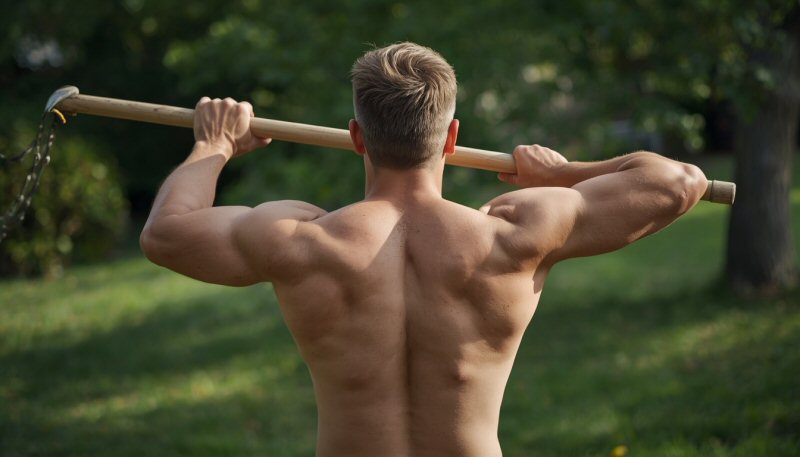
Between the inner edges of your shoulder blades and the spine sit two modest muscles with a loud complaint: the rhomboids. They are the tissues that draw the scapulae toward the midline — the motion of rowing, pulling a branch, hauling a net, or bringing a load back toward the ribcage. A day spent reaching forward to a screen asks them to stay long, thin, and mostly silent. By evening the space between the blades feels tired, itchy, or strangely empty, as if something back there forgot its shift.
People often treat that sensation as a “posture problem” and try to pin the shoulder blades down all day. Pinning is not the job. The rhomboids are meant to work and then rest, to pull the scapula in during a reach-back or a row, then let it glide again. This article is a job description for those small mid-back muscles — what they evolved to do, why desks leave them underemployed, and how to give them a few honest minutes without turning life into a gym class.
What the Rhomboids Are For
Rhomboid major and rhomboid minor run from the spinous processes of the upper thoracic vertebrae to the medial border of the scapula. When they shorten, they retract the shoulder blade and help rotate it downward. In plain language, they slide the blade toward the spine and help it sit flush on the ribcage instead of winging out.
That motion is not decorative. It is how the shoulder girdle creates a stable platform for the arm to pull. Climbing a tree, dragging a hide, paddling, pulling a child toward you, drawing a bow, raking, or hauling a bag from the floor all ask the scapula to come home toward the spine under load. The rhomboids share that work with the middle and lower trapezius. They are a mid-back team, not a single celebrity muscle.
They also help control the scapula when the arm reaches forward. A blade that can retract well can then protract with control. A blade that never retracts parks forward, and the front of the shoulder and the neck take the overtime.
The Ancestral Job Versus the Desk Job
Foraging and tool use filled the day with pulling toward the body: gathering, carrying against the chest then setting down, climbing, paddling, and working with both hands at different distances. The scapulae retracted under load and then released. The thoracic spine extended a little as the chest opened. The mid-back got short, frequent bouts of real work.
The modern default is the opposite shape for hours. Hands live in front of the trunk. The shoulder blades drift apart and tilt forward. The rhomboids sit in a lengthened position with almost no demand to produce force. Length without load is not flexibility training. It is underuse in the range the muscle is already stuck in.
A short gym “row day” cannot fully undo eight hours of the un-rowed position. Heavy pulling with a rounded upper back can even miss the rhomboids and dump work into the upper traps and arms. The mismatch is not “you skipped back day.” It is that daily life stopped including the small rows the shoulder blades were built to do between meals.
Why Quiet Rhomboids Feel Like a Mid-Back Ache
People rarely say “my rhomboids hurt.” They say the spot between the shoulder blades burns after laptop work, that one blade feels farther out than the other, or that a deep breath catches under the shoulder. A scapula that lives parked forward changes the line of the rotator cuff. The upper trapezius shrugs to create room. The chest stays folded. The mid-back tissues that should retract are asked to hold a static stretch they never trained for.
That neighborhood is crowded. Our pieces on scapulae that still expect hanging, a trapezius that still expects a pack, an upper back that still expects reaching and pulling, and pecs that still expect pushing describe the same bargain from different doors. The rhomboids are the small retractors in the middle of that story.
Trigger-point tenderness between the blades is common when those muscles are asked to “sit up straight” all day without ever getting to pull something. Holding a military posture is isometric endurance, not the row they miss.
What “Row” Actually Means Now
You do not need a river. You need the qualities a paddle or a haul used to demand:
- Scapular retraction under a modest load, not just squeezing the blades with empty hands
- Elbows traveling back beside the ribs, not flaring into a shrug
- A chest that can open while the shoulder blades come home
- A release after the pull, so the blade can glide again
- A little variety: one arm, two arms, a rake, a bag, a doorframe row
A grocery bag drawn from the floor to the hip is a row. Pulling a weed with a long arm then bringing the hand to the belt is a row. Sliding a chair toward you, closing a heavy drawer, or pulling a window shut can be a row if you let the shoulder blade participate instead of only bending the elbow.
Hidden Modern Triggers
Some habits make rhomboid underuse louder:
- Laptop work with the screen too low, so the whole girdle rounds forward
- Driving with the seat far back and the arms reaching for the wheel
- Phone use in bed with the shoulders curled
- Carrying a backpack that hangs off the shoulders instead of sitting on the hips, which can overload the upper traps and leave the mid-back still quiet
- Only training chest and arms, so the front of the shoulder wins every hour of the day
- Cueing “pinch your shoulder blades together” for hours, which fatigues the rhomboids without giving them a real pull-and-release cycle
Fatigue, poor sleep, and a stiff thoracic spine make the same region feel more tender. The rhomboids are not always the villain. They are often the undertrained neighbor of a stiff ribcage and short pecs.
Myths vs Facts
Myth: If you sit up straight all day, the rhomboids will get strong.
Fact: Static holding is not the same as retracting under load and then letting go. Strength comes from a changing range, not from a pose.
Myth: Mid-back pain between the blades always means a disc problem.
Fact: Disc issues can refer to that region, but many people have mechanical fatigue from a parked-forward scapula. Red flags matter; most desk-day ache does not start as a surgical problem.
Myth: You should never let the shoulder blades separate.
Fact: Protraction is a normal, useful motion. The issue is living only in protraction.
Myth: Heavy barbell rows fix everything.
Fact: They can help if the scapula actually retracts and the upper back is not rounded into the lift. Light, frequent, honest rows often change daily comfort more than one brutal set.
How to Give the Rhomboids Their Job Back
Think small and often.
The doorway row. Hold both sides of a sturdy doorframe, lean back slightly with long arms, then pull your chest toward the frame by drawing the shoulder blades toward the spine. Pause, then ease out. Ten easy reps once or twice a day is plenty to start.
The bag row. Pick up a modest shopping bag or backpack. Hinge a little at the hips, let the arm hang, then draw the elbow back along the ribs until the blade comes home. Lower with control. Switch sides.
The rake or broom pull. Garden tools and brooms already ask for this pattern. Use both hands and notice the mid-back doing work instead of only the arms.
Hang, then row. A brief hang — even a few seconds from a sturdy bar — lets the scapula glide. Follow it with a few standing rows. Hanging and retracting are partners, as we described for shoulder blades that still expect hanging and lats that still expect a pull-up.
Open the front so the back can work. A short pec that will not lengthen keeps the blade from coming home. A doorway chest opener before a row often makes the rhomboids easier to feel.
Move the screen up. A higher display reduces the hours the girdle spends folded. The muscle still needs a job; better furniture just stops stealing the job all day.
Stop if a movement causes sharp pain, numbness down the arm, or dizziness. Soreness that eases after a day is different from a warning signal.
When to Worry
See a clinician promptly if mid-back or shoulder-blade pain arrives with:
- Chest pressure, shortness of breath, sweating, or pain into the jaw or left arm
- Unexplained weight loss, night pain that steadily worsens, or a history of cancer
- Fever, recent infection, or trauma
- Progressive weakness, numbness, or trouble with coordination in the arms or legs
- Pain after a fall or accident that does not ease
Those patterns are not “tight rhomboids.” Most between-the-blades fatigue after desk days is not an emergency. It is a reminder that the scapula still expects to pull something toward you.
When to See a Doctor or Therapist
A primary care clinician can sort cardiac, pulmonary, and musculoskeletal causes when the story is unclear. A physical therapist who watches you reach, row, and sit is often the most useful next step for stubborn mechanical pain. Imaging is not the first tool for every ache between the blades.
If you already have a diagnosed shoulder or neck condition, ask how retraction work fits that plan rather than adding random rows on top of an irritated joint.
FAQs
Why do I feel a burning spot right between my shoulder blades after computer work?
The scapulae have been parked apart for hours. The rhomboids and mid-traps are either stretched and tired or clamped in a static “sit up” cue. A few easy rows and a chest opener usually change the sensation more than another hour of squeezing.
Should I tape my shoulder blades back?
Tape can be a short-term reminder. It is not a substitute for loading retraction and then letting the blade move again.
Do rows make a rounded upper back worse?
Rows done with a slumped chest can. Rows that let the chest lift a little as the blades come home tend to help the thoracic shape rather than fight it.
Is a massage gun on the rhomboids enough?
It may ease tenderness for a few hours. The muscle still needs a pulling job or the tenderness returns with the next laptop block.
Can one side feel more “winged” than the other?
Yes. Hand dominance, a bag always on one shoulder, or an old injury can leave one scapula less skilled at retraction. Train both sides and give the quieter side a few extra easy reps.
How quickly will this change?
Many people feel a clearer mid-back within a week of short daily rows and a higher screen. Lasting change tracks with how many hours the arms still live only in front of the body.
Conclusion
Your rhomboids are not trying to look like a posture poster. They are trying to pull the shoulder blades toward the spine when you haul, rake, paddle, or draw something toward your ribs. Desks stole the small rows and left the muscles long and unemployed. You do not need a boat. You need a few honest pulls each day, a chest that can open, and a scapula that is allowed to come home and then leave again. That is the job they still expect — and the one modern life forgot to assign.