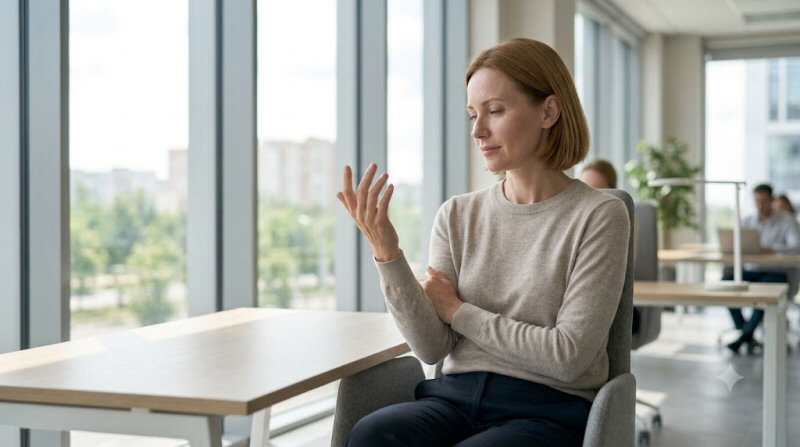
Your pectineus muscle evolved for the small cross-body steps and hip adduction needed for balance and turning. Modern straight-ahead walking and sitting leave it underused. Here's why that matters and what helps.
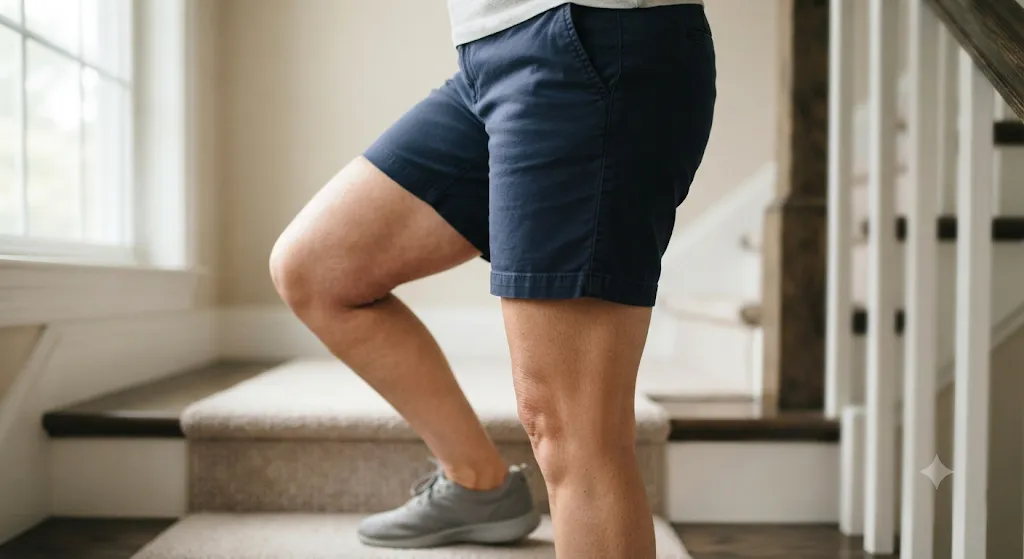
You stand up from your desk, take a few steps to the kitchen, and notice a slight tightness high on the inner thigh. Or you step sideways to avoid something and feel the front of your hip work harder than expected. These small sensations often trace back to a muscle that rarely gets the short, cross-body movements it was built for.
The pectineus sits deep in the front of the hip. It is one of several muscles that help you bring the leg inward and forward. For most of human history it worked regularly during walking on uneven ground, turning, and balancing on one foot. Today many of us move in straight lines on flat floors and spend hours with the legs parallel. The muscle still expects those occasional cross-body steps.
What the Pectineus Actually Does
The pectineus runs from the front of the pubic bone to a ridge on the upper femur. It flexes the hip, adducts the thigh (pulls it toward the midline), and assists a small amount of external rotation. In simple terms, it helps you lift the knee slightly while drawing the leg across the body or stabilizing the hip when you stand on one leg.
During normal walking it is active mainly in the early part of the swing phase and helps control the pelvis. Electromyography studies, including classic work by Basmajian, show it fires when the leg needs both forward and inward control. On uneven or angled surfaces it works more. On a perfectly flat treadmill or office floor it does far less.
Why Modern Movement Leaves It Underloaded
Human gait evolved for variable terrain. Turning to scan the environment, stepping over roots, or shifting weight while carrying something all recruit the adductors and pectineus. Chair sitting keeps the hips in a narrow, parallel position for long stretches. When we do walk, sidewalks and hallways encourage straight-ahead steps with minimal side-to-side or crossing action.
The result is not usually dramatic pain. It is more often a quiet underuse: the muscle shortens a little, loses some endurance, and feels stiff when you finally ask it to cross or stabilize. This is the same mismatch pattern seen in other hip muscles that still expect deeper folds or wider stances. Related reading on why your adductors still expect a wide stance and why your psoas still expects occasional deep hip flexion covers neighboring parts of the same system.
Common Everyday Triggers
- Long periods of sitting with knees close together
- Walking only on flat, predictable surfaces
- Avoiding side steps or cross steps out of habit
- Getting in and out of cars or low chairs without using a small cross-body motion
- Standing with weight shifted mostly to one leg for extended time
None of these are harmful by themselves. Together they simply reduce the small, frequent loads the pectineus is calibrated for.
When the Sensation Needs Attention
Mild tightness that eases with a few gentle movements is common and benign. See a clinician if you notice:
- Sharp pain in the groin or front of the hip that does not settle
- Pain that radiates down the inner thigh or into the knee
- Clicking or catching that is painful rather than just noisy
- Swelling, warmth, or difficulty bearing weight
- Symptoms that follow a fall or sudden twist
These can point to hip joint issues, muscle strain, or referred problems that benefit from proper assessment. Most everyday stiffness does not.
Simple Ways to Give It What It Still Expects
You do not need a special program. A few ordinary movements restore the missing input:
- Take occasional side steps or a short cross-over step when you walk down a hallway.
- When standing, shift weight and let one foot rest lightly across the other for a moment.
- Step sideways onto the first stair rather than always leading with the same foot straight ahead.
- Stand up and do two or three slow, controlled knee lifts with a slight inward angle.
- Break long sitting with a brief walk that includes a turn or a change of direction.
These are small doses. Consistency matters more than intensity. The same principle appears in discussions of why your hips still expect a natural pelvic tilt—varied, everyday loading keeps the system happier than long static positions.
Myths Versus Everyday Reality
Myth: Inner-thigh tightness always means you need aggressive stretching.
Reality: Often the muscle simply needs more frequent, light use rather than long holds. Gentle movement usually works better than forcing range.
Myth: Only athletes or older adults feel this.
Reality: Desk workers and anyone who walks mostly in straight lines notice it. Age is not required.
Myth: If it does not hurt, the muscle is fine.
Reality: Underuse can still reduce coordination and make later demands feel awkward. Small regular inputs prevent that.
Frequently Asked Questions
Is it normal for the front of my hip to feel stiff after sitting?
Yes. The pectineus and nearby hip flexors stay in a shortened position during sitting. A few steps that include a slight cross or side component usually ease the feeling within minutes.
Do I need to strengthen it with special exercises?
Not usually. Ordinary cross-body steps, side steps, and brief standing shifts supply the load it expects. Formal strengthening is helpful only if a clinician finds clear weakness or after an injury.
Can tight shoes or flat feet affect this muscle?
Indirectly. Anything that changes how your foot meets the ground can alter hip muscle timing. The main driver, however, remains the amount of varied hip motion you actually use each day.
Why does it sometimes feel better after a short walk that includes turns?
Turning and changing direction recruit the adductors and pectineus in the exact pattern they are built for. Straight walking on a treadmill does less of that work.
Should I worry if only one side feels tighter?
Mild side-to-side differences are common because most people have a preferred stance leg or turning direction. Persistent one-sided pain or weakness is worth checking; simple stiffness usually is not.
A Quiet Muscle That Still Notices
The pectineus does not announce itself the way larger muscles do. It simply participates in the small corrections that keep walking stable and turning easy. When those corrections disappear from daily life, the muscle stays quieter than it was designed to be. Adding a few cross-body steps and direction changes is usually enough to meet the expectation it never lost.
Most people find the stiffness fades once the missing motions return. The goal is not perfect symmetry or athletic performance. It is simply giving a small, deep hip muscle the occasional work it still recognizes.