
Your palms evolved for gripping branches, tools, and textured surfaces. Modern flat screens and smooth objects leave them under-stimulated — here’s why that matters and what helps.
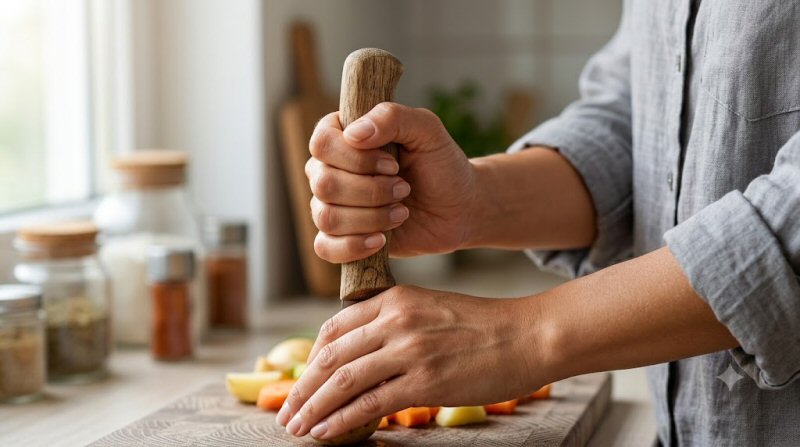
You finish a long day of typing, scrolling, and tapping glass. Your palms feel a little flat, a little unused. Then you pick up a heavy cast-iron pan or a rough wooden tool handle and something in your hands feels more awake. That small difference is not just preference. Your palms spent most of human history in contact with bark, stone, soil, and shaped tools. They still expect occasional real gripping and textured surfaces.
What This Feels Like in Daily Life
Most people do not notice a dramatic symptom. Instead there is a quiet sense that the hands are “not quite working” or that grip feels weaker than it should after hours of phone and keyboard use. Some notice mild stiffness across the palm or a preference for thicker handles. Others simply feel more coordinated when they switch from a touchscreen to a physical object with edges and friction.
These sensations sit alongside related everyday experiences such as why your hands still expect varied everyday grips and the stiffness many feel in the wrists after sustained typing.
Why Your Palms Were Built for Grip and Texture
The human hand is one of the most distinctive features of our lineage. The broad, padded palm, the opposable thumb, and the dense network of mechanoreceptors (especially Meissner and Pacinian corpuscles) evolved to detect friction, slip, and shape while applying force. Evolutionary anthropologists, including work building on ideas from researchers such as Mary Marzke and later syntheses by Daniel Lieberman, have emphasized that tool use and climbing selected for a hand that could generate and sense powerful yet precise grips on irregular surfaces.
Textured or yielding materials give the skin and underlying fascia continuous micro-feedback. That feedback keeps the small muscles of the hand and the sensory map in the brain well-calibrated. Smooth glass and light plastic provide almost none of that friction signal unless you deliberately press harder.
What Changes When Surfaces Stay Smooth and Loads Stay Light
When most of the day is spent on keyboards, phones, and smooth countertops, several things shift:
- Grip strength and endurance can decline simply from lack of practice, even if the muscles are healthy.
- The sensory map of the palm becomes less precise; people sometimes report clumsiness with small objects after long screen days.
- Fascia and skin on the palm stay under-loaded, which can contribute to a feeling of flatness or mild tightness.
- Compensatory tension often appears higher up — in the forearms or neck — because the hands are not sharing the work the way they once did.
These are the same patterns discussed in pieces on why your fingers still expect a slight curl and morning wrist stiffness after inactive nights.
Common Modern Triggers
Hours of smartphone scrolling with the palm mostly open and inactive. Typing on flat keyboards that require little force. Using smooth plastic kitchen tools or lightweight cookware. Driving with a light grip on a padded steering wheel. Even well-intentioned “rest” for the hands can become under-stimulation if textured, loaded gripping never returns.
When the Sensation Is Worth Checking
Occasional flatness or preference for thicker handles is common and usually benign. Seek assessment if you notice:
- True weakness that interferes with opening jars or carrying ordinary objects
- Numbness or tingling that spreads into the fingers, especially at night
- Visible muscle wasting in the hand or thenar eminence
- Pain that wakes you or steadily worsens over weeks
These can point to nerve compression, tendon issues, or other conditions that benefit from professional evaluation rather than more gripping practice alone.
Myths vs Facts
Myth: Hands only need rest after screen use.
Fact: They also need occasional real load and texture to keep sensory and motor maps sharp.
Myth: Grip strength is fixed by age.
Fact: It responds to practice at almost any age when the loading is gradual and varied.
Myth: Any hand exercise is better than none.
Fact: Repetitive high-force gripping without recovery can irritate tendons; variety and recovery matter more than volume.
How to Give Your Palms What They Still Expect
You do not need special equipment. Small, regular exposures help:
- Carry a moderately heavy bag or grocery load with a full-hand grip for a few minutes several times a week.
- Use thicker, textured handles when possible — wooden spoons, garden tools, or a simple towel-wrapped jar for opening practice.
- Spend a few minutes each day on varied grips: a soft ball, a rough cloth, or simply squeezing and releasing a kitchen towel.
- Alternate screen time with short tasks that require friction — chopping vegetables, wiping a counter, or folding laundry with deliberate hand use.
- If you already have wrist or forearm discomfort, start lighter and pair the gripping with the gentle movements described in articles on wrist stiffness.
These are low-cost ways to restore the sensory and loading signals your palms evolved to receive.
FAQs
Is it normal for my hands to feel weaker after a full day of computer work?
Yes. Reduced practice and sustained light postures commonly lower perceived grip strength by the end of the day. A short period of varied gripping often restores the feeling.
Do I need to buy grip strengtheners?
No. Everyday objects with texture and moderate weight already provide useful load. Dedicated devices can help if you enjoy them, but they are optional.
Can textured surfaces help with mild hand stiffness?
Many people notice less stiffness when they regularly use varied grips. If stiffness is pronounced or accompanied by swelling, check with a clinician first.
Why do some people prefer thicker phone cases or tool handles?
Thicker, slightly textured grips better match the palm’s natural resting shape and give clearer friction feedback, reducing the need to over-grip.
Should I avoid gripping if I already have carpal tunnel symptoms?
Not necessarily, but the loading should be light, varied, and paired with neutral wrist positions. Persistent numbness needs medical guidance before adding load.
Conclusion
Your palms are not outdated hardware. They are still tuned for the friction, shape, and moderate force that once filled most of the day. Modern smooth, light, repetitive hand use leaves that system under-stimulated. Occasional real gripping — a heavy pan, a textured handle, a short carry — is usually enough to keep the sensory map and the muscles responsive. The goal is not more exercise for its own sake. It is simply returning a few of the signals your hands still expect.


