The side waist muscles evolved for rotation, side-bending, and carrying a load on one hip. Chairs and straight-line workouts leave them stiff. Here is the job they still expect and how to give it back.
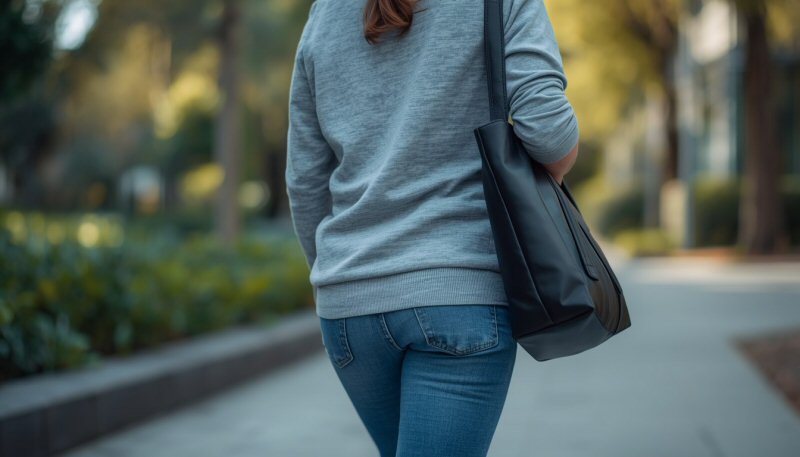
The muscles along the sides of the waist are not a fashion belt. External and internal obliques rotate the trunk, bend it sideways, brace the abdomen when you cough or lift, and keep the pelvis from collapsing when a load hangs on one hip. Human days used to be full of those jobs: looking over a shoulder while walking, passing a child from one arm to the other, dragging a bundle, turning to speak, and carrying water on one side. A chair does almost none of that. Many gym routines do not either. They train a straight-ahead crunch and call the waist finished.
Stiff, quiet obliques often show up as a tight flank, a back that hates getting out of a car, or a core that feels strong only when you are lying on a mat. The tissues are not asking for more sit-ups. They are asking for twist, side-bend, and uneven carry — the loading pattern they were built around.
This article is a job description. Nearby stories already cover the front and back of the same cylinder: the core that still expects you to carry things, the fascia that still expects twist and reach, and the adductors that still expect a wide stance. The obliques sit on the sides of that bargain.
What the Obliques Are For
External obliques run from the lower ribs toward the pelvis in a pocket-diagonal, as if your hands were sliding into front pockets. Internal obliques run the opposite way underneath. Together they form a crossed sling. When the right external and left internal fire together, the trunk rotates. When both sides fire, they squeeze the abdomen and help raise pressure so the spine has a living corset instead of a floppy tube.
They also side-bend. Reaching a berry just off the path, setting a basket on the ground beside you, or sliding out of a low seat all ask one side to shorten and the other to lengthen. That is not an exotic yoga shape. It is ordinary human geometry.
Carrying finishes the job. A load on the left hip asks the right side wall to stay long and strong so you do not tip. A toddler on one arm is an oblique workout whether you planned it or not. So is a grocery bag that you refuse to split into two tidy, symmetrical handles.
The Ancestral Job Versus the Chair Job
Walking on uneven ground with a turning head, reaching across the body for tools, grinding, weaving, hauling, and climbing kept the trunk rotating thousands of small degrees a day. The ribcage and pelvis were not locked facing the same direction for eight hours. Breath expanded the sides of the waist, not only the chest in front of a screen.
The modern default is a long, low-level freeze. Sitting squares the pelvis and ribs. Driving locks both. Even walking is often a straight corridor with the arms barely swinging and the eyes fixed forward. Weekend training then adds planks and crunches in the same unrotated shape. The obliques get endurance in one tiny range and almost no practice in the ranges that used to be free.
That is why a simple twist to grab a seatbelt can feel dramatic. The motion is not dangerous by nature. It is unfamiliar.
Why Quiet Obliques Feel Like a Back or Hip Problem
People rarely point at the flank and name the muscle. They point at the low back after getting out of a car, a pinch when they roll in bed, or a hip that “catches” when they pick something up beside the chair. Rotation that the obliques should share gets dumped onto the lumbar joints and the hip sockets. The lumbar spine can rotate a little. It was never meant to do all of it.
A stiff side wall also changes breathing. If the waist cannot expand, the neck and upper chest take the next breath. That loop shows up in our piece on the breath that was never meant for seated life. The same cylinder is discussed from the front in why your core still expects you to carry things and from the connective-tissue side in why your fascia still expects twist and reach.
Adductors and glutes join the complaint when the pelvis stops sharing load from side to side. A wide stance and a hill still matter; we covered those neighborhoods in the adductor and glute articles.
What “Twist and Carry” Actually Means Now
You do not need a farm. You need the qualities a farm day used to demand:
- Easy rotation through the mid-back and waist while the feet stay quiet
- Side-bending that is smooth, not a sudden collapse
- The ability to carry a modest load on one side for a short walk without hiking the opposite shoulder
- Breath that can still move the sides of the waist
- Getting in and out of a car or off the floor without treating the low back as a hinge alone
Those are daily doses, not a new sport. A bag of rice, a laundry basket held slightly off-center, a look over the shoulder while you walk, and a reach across the body to a high shelf are closer to the original job than a hundred identical crunches.
Hidden Modern Habits That Silence the Sides
A few quiet patterns add up:
- Always carrying the same bag on the same shoulder and never letting the opposite waist work
- Twisting only from the neck to look at a passenger while the ribs stay glued to the seat
- Workouts that train “core” only on the back or only facing the floor
- Belts and tight waistbands that discourage side expansion with breath
- Avoiding the floor so every object is lifted in a perfect two-handed squat and never passed across the body
None of these are moral failures. They are simply a thinner diet of motion than the tissue was calibrated for.
When to Worry
See a clinician if side or back pain follows a sudden pop, if pain shoots down a leg with numbness, if you cannot control the bowel or bladder, if there is fever and unrelenting flank pain, or if pain after a fall is getting worse rather than easing. Those are not “tight obliques.” They are reasons to be examined.
Ordinary morning stiffness that eases as you move, a flank that complains after a long drive, or a first week of gentle rotation that feels unused is a different category. Gradual loading is the usual answer.
Myths vs Facts
Myth: Obliques exist to carve a waistline.
Fact: Their job is rotation, side support, and pressure. Appearance is a side effect, not the specification.
Myth: Twisting is inherently bad for the spine.
Fact: Unprepared twisting under a heavy, awkward load can be unwise. Daily unloaded rotation is how the joints stay fed. Cartilage and discs like motion; we wrote about that bargain in why your joints still expect motion, not rest.
Myth: More sit-ups will fix a stiff side body.
Fact: Sit-ups train a short, forward range. The missing work is usually rotation, side-bend, and carry.
Myth: You must keep loads perfectly even on both sides.
Fact: Life is uneven. Training only the even version leaves you unprepared for the version you actually live.
How to Give the Obliques Their Job Back
Keep the doses small and frequent:
- While walking, let the opposite arm swing and occasionally look toward a sound so the ribs turn a few degrees
- Carry one grocery bag for part of the trip, then switch sides, instead of always using a backpack or a cart
- Sit tall and slowly turn to look behind each shoulder without lifting the hips off the chair
- Stand and side-reach one arm overhead as if picking fruit just off to the side, then switch
- Practice a gentle open-book rotation lying on your side if getting to the floor is available
- Breathe sideways into your waist against a light hand or a scarf for a few breaths after sitting
- Get in and out of the car as a slow rotation rather than a sudden yank
Stop any drill that creates sharp pain, tingling, or a catch that does not ease when you slow down. Soreness that feels like unused muscle after a new carry is different from nerve-type symptoms.
If you already lift, add a suitcase carry — a weight in one hand, tall ribs, easy walk — before you add more crunches. The carry is closer to the original contract.
When to See a Doctor
Primary care, physiotherapy, or a spine-aware clinician can sort muscular stiffness from disc, hip, or organ pain that happens to sit near the waist. Bring the pattern: what direction hurts, what eases it, whether a cough reproduces it, and whether walking or carrying changes it. That story is more useful than a generic request to “strengthen the core.”
Imaging is not the first step for a typical stiff flank after years of sitting. A good exam usually is.
FAQs
Are love handles the same as weak obliques?
No. Fat storage on the sides is not a strength test. You can have a soft waist and still rotate well, or a lean waist that cannot turn.
Can I twist if I have a disc problem?
That depends on your specific diagnosis. Many people still need some rotation in daily life. Let a clinician set the range rather than freezing forever or forcing a deep stretch.
Why does getting out of a car hurt the side of my waist?
The car asks for rotation plus a side-shift from a low seat — exactly the motion sitting all day deleted. Slow the exit and turn the chest toward the door first.
Do waist trainers help obliques?
They squeeze. They do not teach rotation or carry. Temporary shape is not the same as function.
Is a side plank enough?
It is a useful isometric. It is not a substitute for turning and walking with a load.
Should both sides feel identical?
Almost nobody is perfectly even. A large, sudden difference after injury is worth checking. A mild preferred side is human.
Conclusion
Your obliques still expect a world that turns. They expect a look over the shoulder, a child shifted from left to right, a basket on one hip, and a breath that can swell the waist. Chairs and straight-line workouts did not delete those muscles. They just stopped sending the mail.
You do not have to live in a twisting class. A few honest carries, a few easy turns, and a waist that is allowed to move when you stand up from the car are often enough to remind the sides what they are for. The cylinder works best when the front, back, and sides all remember the same day.