
Stiff fingers after a long day of typing are common. Learn why prolonged keyboard use can leave your hands feeling tight, what usually causes it, and when the sensation is worth checking.
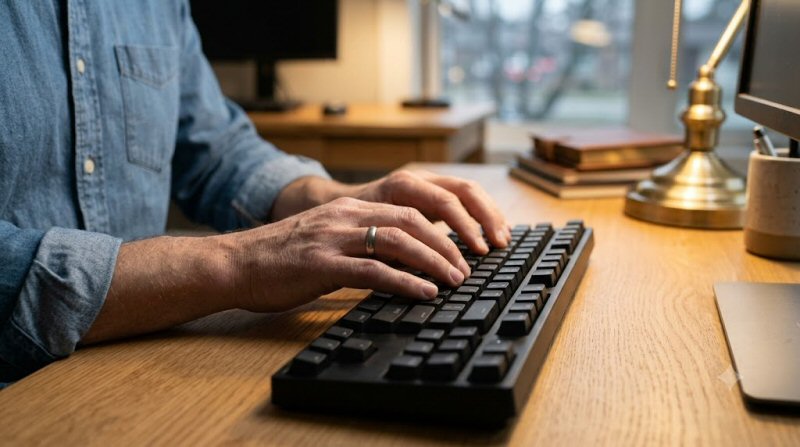
You finish a long stretch at the computer and notice your fingers feel stiff, a little swollen, or slow to open and close fully. The sensation is mild, but it is noticeable when you reach for a mug or try to make a tight fist. For most people who type for hours, this is a familiar end-of-day complaint.
What This Sensation Feels Like
The stiffness is usually worst in the last hour of work or right after you stand up from the desk. Fingers may feel tight across the knuckles, slower to flex, or mildly puffy. Some people describe a rubbery or resistant quality when they try to spread their hands. The feeling often eases within 20–40 minutes of stopping and moving the hands, though it can linger longer on colder days or after especially long sessions.
Common Causes
Prolonged static postures are the main driver. When your hands stay in a similar position for hours, the small muscles of the forearm and the intrinsic muscles of the hand stay partially contracted. Blood flow through the fingers slows slightly, and the synovial fluid inside the finger joints thickens a little with reduced movement. Mild swelling in the soft tissues around the tendons can add to the tight feeling.
Cool indoor air, low humidity, and limited water intake can make the tissues feel stiffer. People who type with their wrists extended or their shoulders elevated often notice more finger stiffness because those postures increase tension upstream. Stress that keeps the hands in a low-level grip (even without realizing it) has the same effect.
Why This Happens
Human hands evolved for varied grips, carrying, and tool use that involved frequent changes of position. Modern keyboard work asks the same small muscles and tendons to stay in a narrow range of motion for long periods. The flexor and extensor tendons that control the fingers run through tight tunnels in the palm and wrist; when they are not regularly sliding through their full range, the surrounding tissue can feel less pliable by the end of the day.
Researchers studying repetitive hand use, including work by Armstrong and Chaffin on occupational hand postures, have long noted that sustained positions reduce tissue tolerance over hours even when the load itself is light. The result is not usually injury, but a temporary reduction in ease of movement until the hands are used in other ways again.
Less Common but Serious Causes
Persistent stiffness that does not ease with rest, or stiffness accompanied by true numbness, weakness, color changes, or joint swelling that lasts into the next morning, deserves attention. Inflammatory arthritis, carpal tunnel syndrome, or thyroid-related tissue changes can present with finger stiffness, though they usually include additional signs beyond an end-of-workday tightness. A sudden inability to straighten a finger can signal a tendon issue that needs prompt evaluation.
Hidden Triggers
- Typing with the keyboard too high, so the wrists stay bent backward
- Keeping the mouse far to the side, which adds shoulder and forearm tension
- Holding the phone or a pen in a tight grip between typing sessions
- Skipping any hand or forearm movement during the day
- Cold hands from air conditioning or poor circulation at the desk
When to Worry
See a clinician if the stiffness is present every morning for weeks, if you wake up needing to “work” the fingers open, if numbness or tingling is frequent, if grip strength is clearly reduced, or if one or more fingers stay bent. Also check in if the stiffness is joined by joint redness, warmth, or swelling that does not settle overnight.
Myths vs Facts
Myth: Stiff fingers after typing mean you are developing arthritis.
Fact: Temporary stiffness from sustained posture is far more common and usually resolves with movement. Arthritis tends to include morning stiffness lasting more than 30–60 minutes and other joint signs.
Myth: You should stop using keyboards entirely.
Fact: Most people improve by changing how and how long they type, not by avoiding computers.
How to Manage It
Take short movement breaks every 30–45 minutes. Open and close the hands fully, spread the fingers, and gently stretch the wrists into flexion and extension. Stand and let the arms hang for a minute so the shoulders and forearms can relax. Keep the keyboard at a height that allows the wrists to stay roughly neutral. A light self-massage of the palms and forearms at the end of the day often helps the tissues feel more pliable. Staying hydrated and keeping the workspace from becoming too cold reduces the sense of stiffness for many people.
If you also notice wrist ache, the same posture adjustments that help finger stiffness often reduce that discomfort as well. Related everyday issues such as wrist discomfort after long typing sessions or the expectation of a neutral wrist position are covered in more detail elsewhere on the site.
When to See a Doctor
Make an appointment if the stiffness is worsening week by week, if it is accompanied by clear weakness or persistent numbness, or if you have other symptoms such as unexplained fatigue, joint pain in multiple places, or skin changes. A clinician can distinguish simple postural stiffness from conditions that benefit from specific treatment.
FAQs
Does finger stiffness after typing mean I have carpal tunnel syndrome?
Not by itself. Carpal tunnel more often involves numbness or tingling in the thumb, index, and middle fingers, especially at night. Stiffness alone is usually from muscle and tendon fatigue.
Will wearing a wrist brace while typing help?
A brace can keep the wrist neutral, which some people find useful, but it is not necessary for everyone. Improving keyboard height and taking movement breaks is usually more effective long-term.
Why do my fingers feel worse on cold days?
Cooler temperatures make synovial fluid thicker and reduce blood flow to the hands, so the same amount of typing produces more noticeable stiffness.
Is it better to type faster or slower?
Speed matters less than posture and breaks. Even slow typing with sustained wrist extension or no movement breaks can leave the hands stiff.
Can strengthening exercises reduce this?
Light forearm and grip work can help some people, but the bigger gains usually come from reducing continuous static positions rather than adding more load.
Conclusion
Stiff fingers after a full day of typing are a common response to sustained hand postures. For most people the feeling is temporary and improves once the hands are used in varied ways and given short breaks. Paying attention to wrist position, taking regular movement pauses, and noticing when the stiffness does not settle are the practical steps that keep the sensation in the everyday range rather than something that needs medical attention.


