
Tight hamstrings after sitting are often a length-and-use problem, not a failure to stretch. These muscles evolved to fold you toward the ground and control a long stride — chairs keep them short and quiet.
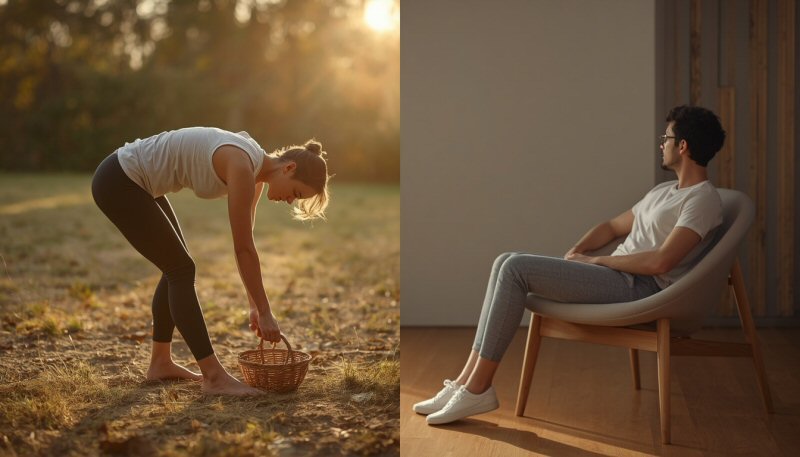
You reach for a sock on the floor and the back of the thigh draws a hard line. A forward fold in a class feels like a locked gate. After a long drive the first steps are stiff behind the knees. Stretching for thirty seconds in the doorway rarely changes the story for more than an hour. That is not because you lack willpower. It is because the hamstrings are waiting for a job they used to do all day: folding the body toward the ground and controlling a long walking stride.
For most of human history, people picked things up from the earth dozens of times a day. They hinged at the hips, squatted, lifted children, firewood, water, and tools. The back of the thigh lengthened under modest load and then shortened to help stand up. Modern chairs reverse that. Hips stay flexed. The trunk stays upright. The hamstrings sit in a shortened, under-loaded range until you suddenly ask them to touch the floor.
What Tight Hamstrings Feel Like
The usual report is a pull behind the thigh when you bend forward with relatively straight legs, a tug behind the knee when you sit tall and reach for your toes, or a “short” feeling when you try to straighten the knee while the hip is flexed — as in a seated desk stretch. Some people feel it as low-back tightness that never quite lives in the spine. Others notice that their stride has shortened and that the heel does not want to land far in front of the body.
After sitting, the first few minutes of walking can feel as if the legs will not fully unfold. That is the nervous system still treating the chair’s hip angle as home.
The Muscles Built to Fold and Swing
The hamstrings are three muscles on the back of the thigh: biceps femoris, semitendinosus, and semimembranosus. They attach on the sit bone and run past the knee. That two-joint design is the point. They help extend the hip when you stand up or push off, and they help flex and control the knee. When you pick something up with a hip hinge, they lengthen at the hip while staying active. When you walk with a decent stride, they control the swing of the lower leg and help decelerate the shin before the foot lands.
Ancestral days were full of those two tasks. Foraging, farming, childcare, and camp work meant repeated hinging. Walking on varied ground meant a longer, more variable stride than a short office shuffle. The tissue stayed both long enough to fold and strong enough to stand back up.
A chair keeps the hip flexed and the trunk supported. The hamstrings are neither lengthened through a hinge nor loaded through a lift. Over months the system learns a shorter “safe” length. A sudden yoga fold, a deadlift video, or a weekend of gardening then meets a muscle-tendon unit that has not practiced that range under control.
This pairs with other modern mismatches. Hip flexors that no longer see a long stride and hours of chair sitting both change the geometry the hamstrings have to work in. Tightness in the back of the thigh is often a team problem, not a single muscle that refused to stretch.
Why Stretching Alone Often Disappoints
A brief static stretch tells the nervous system the position is allowed for a moment. It does not rebuild the strength at the new length, and it does not restore the hinge pattern you use when you actually pick something up. That is why the same people can touch their toes after a class and lose the range by Tuesday afternoon at a desk.
Hamstrings also guard when they do not trust the spine or the hip. If the low back has been the only thing that bends, the thighs will tighten as a brake. Forcing a straight-leg fold then loads the spine more than the hamstrings. The body is not being stubborn. It is being conservative.
Hidden Triggers
Sitting on the edge of a chair with the pelvis tucked under, which shortens the sit-bone attachment. Driving with the seat too close, so the knees stay high. Stretching only the calves and never practicing a hip hinge. Jumping into straight-leg deadlifts after months of no lifting from the floor. Sleeping with the knees bent hard all night. High heels or shoes that keep the ankle from helping the stride. A sudden return to running with a long stride after a winter of short indoor walks.
People who “stand all day” but never pick anything up off the ground can be just as short in the hamstrings as people who sit. Standing still is not hinging.
Less Common but Worth Naming
Not every pull in the back of the thigh is “tight hamstrings.” A true strain after a sprint or a sudden stretch needs a different plan than more folding. Sciatic nerve irritation can feel like a hamstring that will not lengthen; the nerve does not love being yanked. Proximal hamstring tendinopathy — pain high on the sit bone that worsens with sitting and with aggressive stretching — is a loading problem, not a flexibility contest. Referred pain from the lumbar spine, and, less often, vascular or systemic issues, can mimic the same line of discomfort.
Pain that follows a pop, bruising, or an inability to walk normally is an injury until proven otherwise. Numbness, foot drop, or pain that wakes you deserves a clinician, not another toe-touch challenge.
When to Worry
Get checked if back-of-thigh pain came on suddenly during sport, if you cannot sit on the sit bone, if there is swelling or a gap in the muscle, or if tightness is paired with bowel or bladder changes, fever, or unexplained weight loss. Most everyday “I can’t touch my toes” stories are mechanical and reversible. Red flags are not a stretching assignment.
Myths vs Facts
Myth: Tight hamstrings always mean you should stretch them harder and longer.
Fact: Many people need strength at longer lengths and a better hip hinge more than they need a deeper passive fold.
Myth: If you cannot palm the floor, your hamstrings have failed.
Fact: Bone shape, nerve tension, and training history all set the range. Daily hinging and walking matter more than a party trick.
Myth: Sitting with perfectly straight legs under the desk will lengthen them.
Fact: Passive hanging in a chair is not the same as a loaded hinge from standing.
Myth: Runners should always have long hamstrings.
Fact: Runners often have strong, short-feeling hamstrings because they train one range. They still need some floor work.
How to Give the Hamstrings Their Old Job
Practice picking things up. A shopping bag, a laundry basket, a grandchild’s toy. Soften the knees, send the hips back, keep a long spine, stand up. That is the ancestral pattern in modern clothes. Five to ten slow hinges a day do more than one heroic stretch session.
Walk with a slightly longer, unhurried stride when it is safe to do so. Let the heel meet the ground in front of you instead of shuffling from the chair to the kettle. Hills and gentle declines give the hamstrings a controlling job they recognize.
Strengthen the end range instead of only stretching into it. A Romanian deadlift with a light weight, a single-leg hinge with a hand on a wall, or a bridge that you slowly lower are all versions of “be strong while long.” Stop before the low back takes over.
If a seated hamstring stretch is the only tool you like, bend the knee a little, hinge from the hip, and breathe. Thirty gentle seconds, a few times a day, plus actual lifting from the floor, beats a forced two-minute yank.
Stand up from the chair before the thighs go quiet. A two-minute walk every half hour is not a wellness slogan here. It is how you keep the sit-bone attachment from treating flexion as the only legal position. This sits well next to morning stiffness from overnight stillness and joints that still expect motion.
When to See a Doctor or a Skilled Therapist
See a professional if sit-bone pain lasts through weeks of easier sitting and kinder loading, if a stretch always reproduces electric pain into the foot, or if you are returning from a tear. A good exam can tell hamstring tissue from nerve tension from lumbar referral. That distinction saves months of the wrong homework.
FAQs
Should I stretch every morning?
A short, easy hinge after you are warm is useful. Cold, aggressive toe-touches first thing are a common way to irritate the sit-bone tendon.
Are standing desks enough?
They help the hip angle. They do not replace picking things up. You still need a fold toward the floor.
Why do my hamstrings feel tighter after I run?
They have been working to control the swing of the leg. Tightness after work is not always a request for more stretch. Easy walking and a light hinge often settle them better.
Can I keep doing yoga folds?
Yes, if the fold comes from the hips and the spine stays relatively long. If the lower back rounds into a C and the thighs barely change, you are stretching the back more than the hamstrings.
Do foam rollers fix this?
They can reduce the day’s guarding for a short time. They do not teach the hinge or rebuild strength at length.
Is this worse with age?
Range can narrow if you stop using it. People who keep hinging, walking, and getting off the floor often keep usable hamstring length well into later decades.
Conclusion
Your hamstrings are not relics that failed the modern flexibility test. They are two-joint muscles that still expect to fold you toward the ground and to help a real stride. Chairs removed the fold. Short indoor walks removed the swing. The tissue got conservative.
You do not need to live on a farm to give them that job back. Pick things up on purpose. Hinge a little every day. Walk as if the ground is still worth covering. Strength at a longer length beats a war with your own thighs — and the floor becomes ordinary again, which is exactly what these muscles were built for.