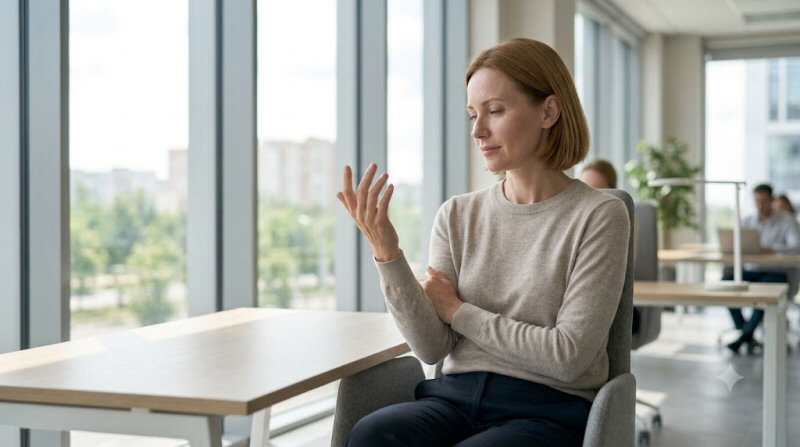
Your gluteus maximus was built for deep hip flexion and rising from the ground. Modern chair life leaves it underloaded—here’s what that mismatch means and how to give it what it still expects.
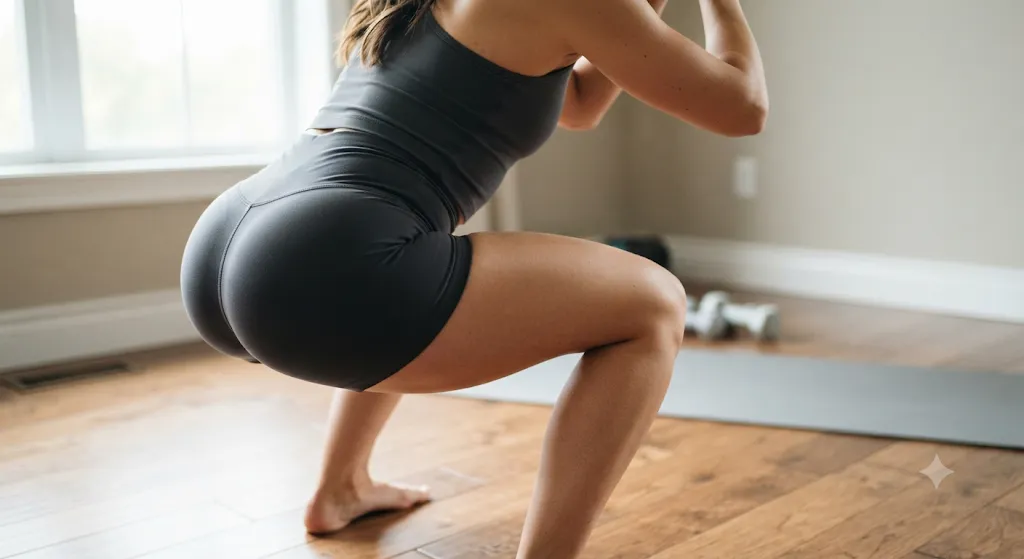
Most of us spend the day sitting in chairs with hips bent at roughly ninety degrees. Getting up requires little more than a gentle push. For the gluteus maximus—the largest muscle in the human body—that is a very different job from the one it evolved to do. Deep squatting, kneeling, and rising from the ground were everyday postures for most of human history. Those movements loaded the glutes through a large range of hip flexion and demanded real force to stand back up. Today the muscle often spends hours nearly silent, then gets asked for a few minutes of work at the gym. The result is a familiar evolutionary mismatch: a powerful muscle that rarely gets the deep, varied loading it still expects.
What Deep Squatting and Floor Sitting Actually Do to the Glutes
When you lower into a deep squat or sit on the floor with hips fully flexed, the gluteus maximus is lengthened under load. Rising from that position requires it to generate substantial hip-extension torque. Research on hunter-gatherer groups such as the Hadza shows that much of their “resting” time is spent in squatting or kneeling postures that keep lower-limb muscles more active than chair sitting does. David Raichlen and colleagues documented that these “active rest” postures produce higher muscle activity than the passive chair sit common in modern life. The gluteus maximus, in particular, contributes meaningfully when you stand up from a deep squat—something chair height largely eliminates.
Electromyography studies confirm that the muscle is relatively quiet during ordinary walking and standing, yet becomes far more active when the hip must extend from a deeply flexed position. That pattern matches what evolutionary biologist Daniel Lieberman and others have described as a mismatch between the postures our bodies still expect and the furniture we actually use. If you already notice tight hips after long desk days, the same mismatch shows up in related articles on why your hips still expect a deep fold and why your quadriceps still expect stair climbing.
Why Modern Chair Life Leaves the Glutes Underloaded
Standard chair and desk heights keep the hips near ninety degrees. From that angle the gluteus maximus is not lengthened much, and the force needed to stand is modest. Over years the muscle can become both weaker through its full range and less coordinated with the rest of the hip complex. People often compensate with the lower back or the hamstrings, which can contribute to the low-back discomfort that appears after long sitting. The muscle is not “turned off,” but it is rarely asked for the deep, loaded extension that once happened dozens of times a day—rising from a squat to tend a fire, pick up a child, or simply rest on the ground.
The same pattern appears in other large muscles. Your calves still expect hills and stairs; your quadriceps still expect the floor. The gluteus maximus is simply the largest example of a muscle whose daily loading has quietly changed.
When the Mismatch Becomes Noticeable
Most people feel the gap as mild hip stiffness, a sense that the glutes are hard to “find” during exercise, or low-back fatigue after sitting. Occasional soreness after trying deep squats is common and usually settles within a day or two. Persistent pain deep in the buttock, pain that radiates down the leg, or sharp pain at the front of the hip during deep flexion are different signals. Those can involve the sciatic nerve, the hip joint itself, or other structures and deserve a proper evaluation rather than more stretching.
Red flags include sudden weakness, numbness or tingling that does not resolve quickly, pain that wakes you at night, or any loss of bowel or bladder control. Those are reasons to seek care promptly. Ordinary stiffness after a day in a chair is not one of them.
Myths Versus Facts
Myth: You need heavy barbell squats to keep the glutes healthy.
Fact: Occasional unloaded deep squats, floor sitting, and simply rising from the ground several times a day already restore a large part of the missing stimulus. Strength training helps, but the daily posture is the bigger modern change.
Myth: Sitting is the only problem; standing desks solve it.
Fact: Standing still also leaves the gluteus maximus relatively quiet. The muscle responds to movement through a large range and to the act of rising from a deep position. Changing postures frequently matters more than any single static position.
Myth: Tight glutes mean you should stretch them more.
Fact: Many people who feel “tight” actually have underloaded glutes that are simply not used to deep hip flexion. Gentle, progressive loading through the range is usually more useful than aggressive stretching.
Practical Ways to Give the Glutes What They Still Expect
You do not need a gym membership or perfect mobility. Small, frequent exposures work well:
- Spend a few minutes each day sitting on the floor while watching something or reading. Shift positions often—cross-legged, side-sit, long-sit, or a supported squat.
- Practice rising from the floor without using your hands a few times a day. If that is currently difficult, use a low stool or a hand on a chair and gradually reduce the help.
- Add a couple of slow body-weight squats to the bottom of your range, pausing briefly at the bottom before standing. Depth is individual; go only as far as you can control without pain.
- When you stand up from a chair, do it slowly and notice the glutes. Occasionally stand from a lower surface such as a couch or a step.
- Walk on varied terrain when you can. Hills and uneven ground recruit the glutes more than flat indoor floors.
Start gently. If deep flexion feels restricted, a few weeks of consistent practice usually improves range more effectively than forcing it. People with existing hip or back conditions should check with a clinician before adding loaded deep squats.
When to See a Doctor or Physical Therapist
See a professional if pain is sharp, persistent, or accompanied by swelling, clicking that is painful, or any neurological symptoms. A physical therapist can assess whether the limitation is muscular, joint-related, or something else, and can guide a safe progression. Most everyday stiffness related to chair life improves with the simple loading described above and does not require medical treatment.
Frequently Asked Questions
Is it safe to squat deeply if my knees crack?
Painless crepitus is common and usually harmless. Pain, swelling, or a sense of the knee giving way are reasons to have the joint checked before adding deep squats.
How long does it take for the glutes to feel stronger from floor sitting?
Many people notice easier rising from low surfaces within two to four weeks of daily practice. Strength gains take longer and depend on consistency and progressive challenge.
Can I get the same benefit from the gym if I never sit on the floor?
Gym work helps, but it usually occurs for short periods. The evolutionary pattern was frequent, low-level loading throughout the day. Combining both is ideal; relying only on workouts leaves long stretches of underloading.
Does sitting on the floor hurt the lower back?
For most people it does not, provided you change positions often and avoid forcing a rigid posture. If floor sitting increases back pain, a supported position or a physical-therapy assessment is wiser than pushing through it.
Are there people who should avoid deep squats?
Yes—those with certain hip impingements, recent joint replacements, or acute back pain may need modified ranges. A clinician can help find the depth that is safe and still useful.
Conclusion
The gluteus maximus is a large, powerful muscle shaped by a life that included deep hip flexion and frequent rising from the ground. Modern chair heights and flat floors have quietly removed most of that stimulus. Occasional deep squats, floor sitting, and simply getting up from lower surfaces restore a portion of what the muscle still expects. The change does not require dramatic workouts; it requires remembering that the body was built for more varied resting postures than a ninety-degree chair. Small daily habits close the mismatch more effectively than occasional intense sessions alone.