
Glute muscles evolved to push you up hills, off the ground, and through a long walking day. Chair height and flat sidewalks quietly retire them. Here is why the backside goes quiet, and how to wake it without a gym overhaul.
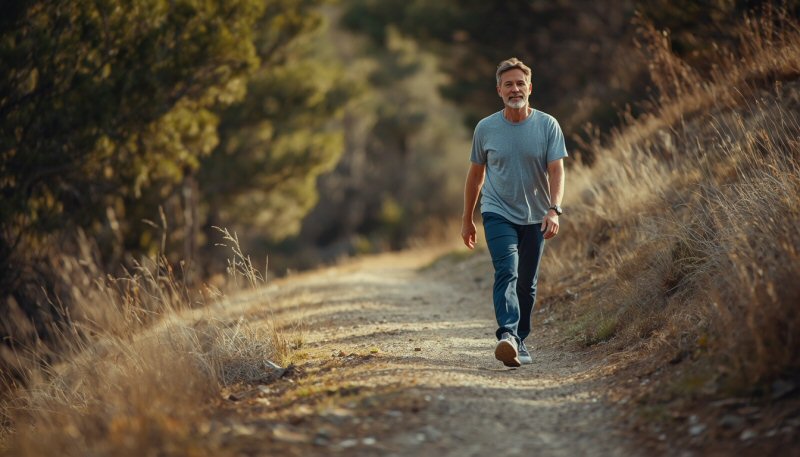
You can sit for hours, stand up, and feel as if the backs of your hips never quite came online. Stairs feel heavier than they should. A long walk on flat pavement leaves the front of the thighs working and the backside oddly uninvolved. Later, the low back or the front of the hip complains on behalf of muscles that were supposed to share the job.
That quiet backside is not a character flaw. The gluteal muscles — especially gluteus maximus, the large hip extender, and the smaller gluteus medius and minimus that steady the pelvis — spent most of human history pushing people up slopes, off the ground, and through carrying and climbing. Modern chairs, car seats, and level sidewalks ask them to do far less. The anatomy is still there. The daily cue is not.
What Glutes Were Built to Do
Gluteus maximus is one of the signature human muscles. Compared with other apes, humans have a large, thick hip extensor that helps keep the trunk upright, power a step uphill, and control the descent when you sit, squat, or step down. The mid and small glutes keep the pelvis from dropping every time you stand on one leg — which is most of walking.
On ancestral terrain this work was ordinary. Hills, riverbanks, getting up from the ground many times a day, carrying children or loads, and walking for hours asked the hips to extend against gravity and to stabilize sideways. Hips that still expect a deep fold and a core that still expects carrying work with those same muscles. When the fold and the carry disappear, the glutes lose their rehearsal.
Why Modern Life Quietly Retires Them
Chair height does the standing-up for you. Rising from the floor or a low squat is a full hip-extension job. Rising from a standard chair is a much shorter arc. The quads and the momentum of leaning forward can finish the movement with little help from the backside. Do that hundreds of times a week and the nervous system stops recruiting the glutes first.
Flat, even ground removes the uphill cue. Walking on a slope or a stair asks the trailing hip to extend and the stance hip to hold the pelvis level. A level sidewalk or treadmill can be covered mostly by the calves and quads. Knees that still expect varied terrain and ankles that still expect uneven ground notice the same missing variety.
Long sitting lengthens and quiets the hip extensors. Hours in flexion put the glute maximus in a stretched, low-demand position. Blood flow and neural drive drop. When you finally stand, the hip flexors in front often feel tighter than the muscles behind feel strong. The pelvis tips, the low back takes extra load, and people decide they have a “weak core” when part of the story is a quiet hip.
The gym hour cannot fully replace the all-day job. A few sets of bridges or hip thrusts help. They do not recreate the thousands of small extensions and single-leg stabilizations a walking, floor-using day provided. Muscles that still expect all-day variety adapt to what you repeat, not to what you intend.
What Quiet Glutes Feel Like
- Low-back tightness after sitting, walking, or standing in one place
- The front of the hips feeling stiff while the backside feels sleepy
- Knees tracking inward on stairs or when you stand from a chair
- One hip hiking or the opposite hip dropping when you walk or stand on one leg
- Hamstrings doing extra work and feeling “tight” all the time
- Difficulty getting off the floor without using hands or a piece of furniture
Common Causes
- Most of the day spent in chairs, car seats, and sofas
- Walking only on flat pavement in cushioned shoes
- Avoiding stairs and hills when they are available
- Sleeping in a tightly curled side position without any hip-extension time during the day
- Training only machines that lock the hips in a short range
Hidden Triggers
- A wallet or phone in the back pocket that tilts the pelvis on one side
- Crossing the same leg every time you sit
- Standing with most of your weight on one hip, locked knee
- Always holding a child or bag on the same side
- Stretching hamstrings aggressively while never asking the glutes to shorten and work
Less Common but Serious
True nerve compression, hip joint disease, and referred pain from the lumbar spine can mimic “dead glutes.” Pain that shoots below the knee, progressive weakness, unexplained weight loss, fever, or a hip that cannot bear weight is not a posture story. After a fall onto the side of the hip, new inability to walk needs urgent care.
Pregnancy, postpartum recovery, and some hip surgeries change pelvic control for good reasons. Those chapters deserve guided rehab, not a generic “just squeeze your glutes” slogan.
When to Worry
- Sudden inability to lift the leg or bear weight
- Pain with numbness, tingling, or foot drop
- Night pain that does not change with position
- A hip that locks, catches, or gives way repeatedly
- Symptoms after trauma, or with fever or unexplained fatigue
Myths vs Facts
Myth: If you sit a lot, your glutes are permanently “switched off.”
Fact: Recruitment can get rusty. It usually returns with repeated, well-timed work — standing up from lower surfaces, hills, and single-leg balance — not with a mystical on/off switch.
Myth: You need heavy hip thrusts to have working glutes.
Fact: Load helps. Daily extension against gravity — stairs, getting off the floor, a loaded carry — is the pattern the muscle evolved around.
Myth: Tight hip flexors are a separate problem from quiet glutes.
Fact: They often travel together. A day of flexion plus no extension leaves the front short and the back underused.
Myth: Low-back pain always means the back is the weak link.
Fact: The back often works overtime when the hips do not extend and stabilize. Treat the chain, not only the sore segment.
How to Give Glutes the Job They Still Expect
Get off the floor on purpose. Sit on the floor for part of a meal, a phone call, or stretching. Stand up without using your hands if you can do it smoothly. That single pattern is a concentrated dose of hip extension.
Take the hill or the stairs when they appear. A few flights, a gentle slope on a walk, or a parking spot farther from the elevator reintroduces the uphill cue. Slow down enough that the trailing hip actually extends instead of the low back arching.
Stand up from the chair as a mini-practice. Slide to the front of the seat, plant both feet, and stand by pushing the floor away rather than throwing the chest forward. Repeat a few times when you remember, not as a workout identity.
Use single-leg moments. Put socks on standing. Wait for the kettle on one leg. Step onto a low curb and pause. Glute medius wakes up when the pelvis has to stay level.
Carry something. A grocery bag, a child, a backpack worn well — load that the trunk and hips share — is closer to ancestral work than an isolated machine. Combine it with the walking your lymph and veins also expect.
Keep the range honest. A deep squat or a lunge that lets the hip fold and then open is more useful than a tiny pulse in a short range. Hips that still expect a fold need the close and the open, not only one.
A Simple Daily Pattern
- Morning: two or three floor-to-stand rises after you get out of bed
- Day: choose stairs or a slope once, even if it is short
- Work blocks: stand from the chair by pushing the floor, not by yanking with the back
- Evening: two minutes of easy single-leg balance while brushing teeth
None of this needs to look athletic. Consistency beats intensity for a muscle group that evolved to work all day at a moderate demand.
When to See a Doctor
See a clinician if hip or back pain is worsening, if a leg is getting weaker, if you have bowel or bladder changes with back pain, or if you cannot get off a chair or the floor without severe pain. A physical therapist can sort true joint limits from simple deconditioning and give you a loading plan that respects tendons that still expect gradual loading.
FAQs
Can I “activate” glutes by squeezing them at a red light?
A brief squeeze reminds the brain the muscle exists. It is not a substitute for actually extending the hip against gravity.
Why do my hamstrings cramp when I try to use my glutes?
Hamstrings also extend the hip. If they have been doing the glutes’ job, they may grab first. Slow the movement, think of pushing the floor away, and use a range you can control.
Do glute bands fix this?
They can help you feel the mid-glute. They do not replace walking uphill, standing from the floor, or carrying.
Is this different after pregnancy?
Yes. Pelvic shape, ligament laxity, and infant carrying change the demand. Rebuild gradually and get help if there is pain, heaviness, or leaking.
Will sitting ruin my hips no matter what?
Sitting is a position, not a destiny. The problem is sitting without the opposing jobs — standing from low surfaces, hills, and single-leg work — in the same day.
Conclusion
Your glutes are not a vanity muscle group. They are the engine that used to lift you off the ground and drive you up the next rise of land. Chairs and flat floors did not delete that design. They only stopped rehearsing it.
Give the hips a daily reason to extend and steady the pelvis — a slope, a stair, a rise from the floor, a bag in your hand — and the backside often returns to work without drama. The low back and the fronts of the hips usually notice first.