
The flexor digitorum superficialis powers independent finger flexion for everyday grips. Modern keyboards and mice underuse its ancestral loading patterns.
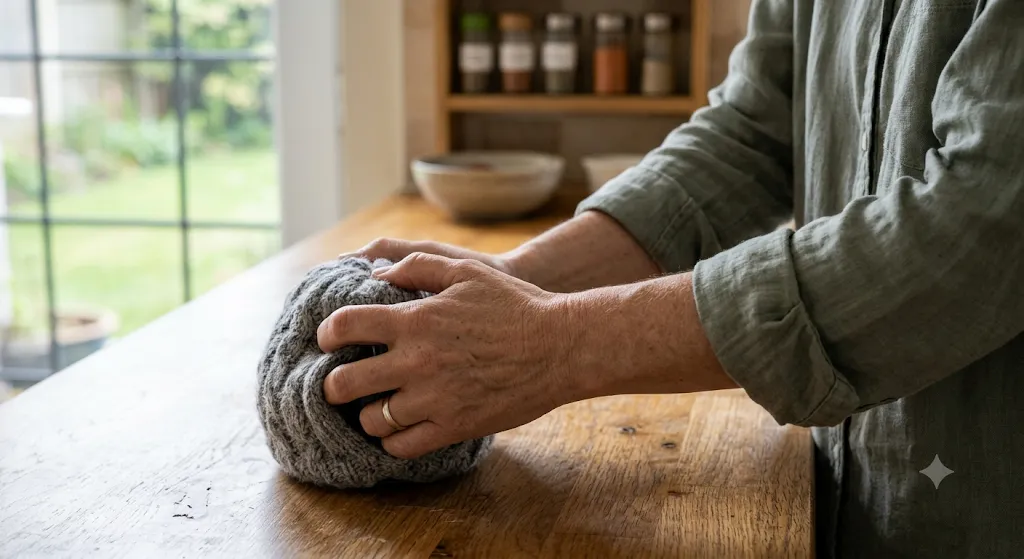
Your fingers have spent most of the day either hovering over a keyboard or curled loosely around a phone. The muscles that once powered strong, varied grips for tools and food now mostly make small, repetitive taps. One of those muscles is the flexor digitorum superficialis, the main engine for bending the middle joints of your fingers.
When this muscle gets little of the loading it was shaped for, the forearm can feel tired, tight, or oddly weak by late afternoon—even if you never lifted anything heavy. That quiet mismatch is common, and it is usually not a sign that something is broken.
What This Muscle Actually Does
The flexor digitorum superficialis sits in the middle layer of the forearm. It starts near the elbow and radius, splits into four separate tendons, and inserts on the middle bones of the four fingers. Because each slip can work on its own, you can curl one finger while keeping the others relatively straight.
Its main job is flexion at the proximal interphalangeal joints—the middle knuckles. It also helps bend the fingers at the base and assists the wrist. Classic hand anatomy work by Ibrahim Adalbert Kapandji showed how these independent slips give the hand both power and precision. Electromyography studies in the tradition of John Basmajian confirmed that the muscle fires strongly during resisted finger curls and during the downward phase of a keystroke.
In short, it is built for repeated, somewhat forceful curling of the fingers against resistance—exactly the pattern used when grasping a branch, a tool handle, or a piece of food.
Why Modern Life Under-Loads It
Ancestral hands spent large parts of the day in varied grips: climbing, carrying, preparing food, making things. Those tasks repeatedly loaded the flexor digitorum superficialis through a wide range of finger positions and force levels.
Today the same muscle mostly sees light, high-frequency tapping. Keyboard studies measuring surface EMG of the flexor digitorum superficialis show low-level activity that continues for hours. The muscle rarely reaches the higher percentages of maximum voluntary contraction that once occurred during ordinary manual work. Over time the tissue adapts to the lower demand: the independent slips become less practiced, and the forearm can feel stiff or fatigued after a day of mouse and keyboard use.
Related articles on the site explore similar patterns: why your hands lost their daily workout and why your finger flexors still expect occasional curled grips.
Common Everyday Triggers
Several modern habits keep the muscle in a narrow band of activity:
- Hours of light key tapping without occasional stronger grips
- Holding a phone with a loose or pinch grip for long periods
- Using a mouse that requires constant low-level finger tension
- Rarely practicing independent finger curls against resistance
- Cold hands or desk posture that reduces blood flow to the forearm
None of these are harmful in isolation. Together they simply leave the muscle under-stimulated relative to the demands it still carries genetically.
When the Mismatch Becomes Noticeable
Most people notice a dull ache or tightness along the volar (palm-side) forearm after a long desk day, or a sense that the fingers tire quickly when they do need to grip something firmly. Morning stiffness that eases after a few minutes of movement is also common. These sensations usually settle with simple loading and rest cycles.
True warning signs are less common and worth checking: sharp pain that radiates into the hand, persistent numbness or tingling in the thumb and index finger (median nerve territory), sudden weakness that makes it hard to make a fist, or swelling and warmth that does not improve in a day or two. Those patterns can point to nerve irritation, tendon issues, or other problems that benefit from professional assessment.
Myths Versus Facts
Myth: Forearm tightness after typing means you have damaged the muscle.
Fact: Low-level repetitive activity can produce fatigue and temporary tightness without tissue injury. Gentle, varied loading usually restores comfort.
Myth: You need heavy weights to keep finger flexors healthy.
Fact: Brief periods of moderate resistance—squeezing a soft ball, curling fingers against a rubber band, or simply carrying a grocery bag with a firm grip—are enough to remind the muscle of its older job.
Myth: Only the deep flexor digitorum profundus matters for grip.
Fact: The superficialis is the primary driver of the middle finger joints and provides the independent control that makes precise gripping possible. Both layers work together.
Practical Ways to Reintroduce the Expected Load
You do not need a gym. A few short practices scattered through the day are sufficient:
- Once or twice a day, curl all four fingers firmly into a fist and hold for 5–10 seconds, then open fully. Repeat 8–10 times.
- Practice independent curls: keep three fingers straight on a table and curl one finger against light resistance (a rubber band or just gravity). Switch fingers.
- When carrying bags, use a firm but relaxed grip rather than hooking only with the fingertips.
- Take a 30-second break every hour to open the hands wide and gently shake the forearms.
- If your hands feel cold, warm them first—circulation supports muscle recovery.
These small doses restore the range and force variety the muscle still expects without adding meaningful injury risk for healthy adults.
When to See a Doctor
Most desk-related forearm tightness improves within a week of varied loading and short movement breaks. Seek medical advice if you notice progressive weakness, night-time numbness that wakes you, pain that worsens despite rest, or symptoms that spread up the arm or into the neck. Early evaluation can rule out nerve compression or other treatable issues.
Frequently Asked Questions
Is it normal for my forearm to ache after a day of typing?
Yes. Low-level continuous activity in the flexor digitorum superficialis commonly produces temporary fatigue and tightness. It usually eases with movement and brief rest.
Should I stretch my finger flexors every day?
Gentle opening of the hand is useful, but the muscle also needs occasional loaded curling. Stretching alone does not replace the loading it expects.
Can phone use alone under-stimulate this muscle?
Phone grips are often light and sustained. Adding a few firm curls or carrying tasks during the day keeps the independent slips more practiced.
Does this muscle recover quickly?
In healthy people the tissue adapts within days to modest increases in varied loading. Persistent or worsening symptoms deserve a professional check.
Is there a connection to carpal tunnel symptoms?
The tendons of the flexor digitorum superficialis pass through the carpal tunnel. Swelling or overuse can contribute to pressure on the median nerve in some people, but simple forearm fatigue is far more common than true nerve compression.
Conclusion
The flexor digitorum superficialis still carries the design for independent, moderately forceful finger curls that once filled ordinary days. Modern keyboards and phones ask it for long stretches of light tapping instead. The resulting tightness is usually a signal of under-use rather than damage. Brief, deliberate curled grips scattered through the day are enough to give the muscle the variety it continues to expect.


