
Your finger flexors evolved for frequent curled grips on tools, branches, and objects. Modern flat-screen swiping and light typing leave them under-stimulated and prone to stiffness or weakness.
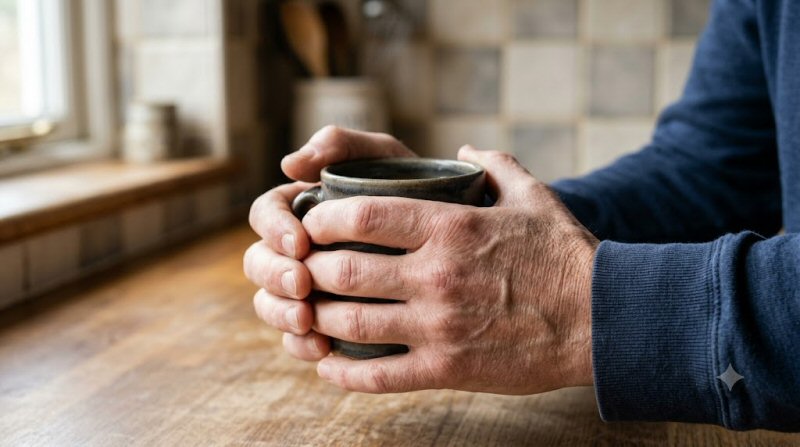
Your fingers spend most of the day either hovering over a keyboard or sliding across a glass screen. The deep and superficial flexors that curl those fingers into a strong, secure grip get far less of the varied, sustained work they were shaped for. The result is often a quiet stiffness in the morning, a feeling that the hands “aren’t as strong as they used to be,” or a mild ache after a long day of light, repetitive finger work.
This is not a failure of your hands. It is a mismatch between the mechanical environment the finger flexors still expect and the mostly flat, low-resistance world most of us now inhabit.
What This Mismatch Feels Like
People notice it in small, everyday ways. Rings feel tighter in the evening even when the fingers do not look dramatically swollen. Opening a stubborn jar takes more effort than it did a few years ago. After hours of typing or scrolling, the fingers feel “locked” for a moment when you first try to make a fist. Some people describe a dull ache along the forearm or a sense that the grip is less confident when carrying grocery bags.
These sensations are usually the quiet consequence of under-loaded flexor tendons and muscles rather than injury. The tissues remain healthy; they simply receive less of the intermittent high-load and varied-length work that keeps them resilient.
Why Your Finger Flexors Still Expect Curled Grips
The flexor digitorum superficialis and flexor digitorum profundus, together with the intrinsic hand muscles, evolved to produce controlled, powerful curling of the fingers. For most of human history this curling was frequent and mechanically rich. People gripped branches while climbing, held stone tools for long periods, carried loads with a hooked or power grip, and manipulated rough, irregular objects that required constant micro-adjustments of finger position.
Anthropologist John Napier’s classic work on the evolution of the hand emphasized that the human power grip and precision grip are both specialized adaptations. The power grip, in particular, depends on the flexors wrapping the fingers around an object and generating sustained force. That pattern of loading—intermittent but often high, with varying joint angles—stimulates tendon collagen turnover, maintains synovial fluid movement within the flexor sheaths, and keeps the muscles’ length-tension relationships efficient.
In modern life the dominant hand postures are very different. Typing keeps the fingers in a relatively extended or only lightly flexed position with tiny, low-force keystrokes. Smartphone use involves even lighter swipes and taps. Even carrying bags is often done with a hook grip that loads only part of the flexor group. The deep, fully curled, high-force grips that once occurred many times a day have become rare.
Common Modern Triggers That Highlight the Gap
Several everyday habits make the under-stimulation more noticeable:
- Long stretches of keyboard or touchscreen work with the wrists slightly extended and fingers mostly extended.
- Avoiding heavier household tasks (opening jars, carrying heavy pots, wringing cloths) because tools or appliances have replaced them.
- Sleeping with the fingers loosely flexed inside a fist or under a pillow, which can leave the flexor tendons temporarily “gelling” overnight.
- Cold indoor environments that increase the viscosity of synovial fluid around the tendons, making the first few curls of the day feel stiffer.
None of these are pathological on their own. They simply remove the mechanical signals the flexors still interpret as normal.
Less Common but Worth Noting
True flexor tendon injuries, trigger finger (stenosing tenosynovitis), or early carpal tunnel symptoms can produce similar stiffness or weakness. These usually come with more specific signs: a finger that catches and then snaps straight, numbness that follows a clear median-nerve pattern, or pain that worsens with particular resisted movements. If stiffness is accompanied by visible swelling, warmth, or progressive loss of motion, a clinician should evaluate it. For the large majority of people who simply feel their hands are “not as grippy,” the explanation is mechanical under-use rather than disease.
Hidden Triggers
A few less obvious factors amplify the mismatch:
- High caffeine intake or mild dehydration can increase the perception of muscle tightness.
- Desk setups that force the wrists into prolonged extension increase passive tension on the flexors even while the muscles themselves stay quiet.
- Reduced overall daily walking and carrying means the whole upper limb experiences less incidental loading.
Addressing only the fingers while leaving the rest of the daily movement pattern unchanged usually produces limited improvement.
When to Worry
Seek medical advice if you notice:
- A finger that locks in flexion and requires the other hand to straighten it.
- Progressive weakness that makes it hard to hold ordinary objects.
- Numbness or tingling that wakes you at night or spreads beyond the fingertips.
- Sudden swelling, redness, or pain after a specific injury.
Isolated morning stiffness that eases within minutes of moving the hands, or a general sense that grip feels less robust after a desk day, is almost always benign.
Myths vs Facts
Myth: Finger stiffness always means arthritis is starting.
Fact: Mild stiffness from under-loaded flexors is common and reversible with restored mechanical variety. True inflammatory arthritis usually includes joint swelling, warmth, and morning stiffness lasting more than an hour.
Myth: You need heavy weight training to keep the flexors healthy.
Fact: Frequent, moderate curled grips—opening jars, carrying grocery bags by the handles, squeezing a soft ball, or simply making a full fist and releasing it throughout the day—provide the necessary stimulus for most people.
Myth: Stretching the fingers backward is the best remedy.
Fact: Gentle extension stretches can feel good, but the flexors also need occasional loaded shortening (curling against resistance) to maintain tendon health and strength.
How to Give Your Finger Flexors What They Still Expect
You do not need a gym. Small, repeated additions of curled-grip work are enough:
- Several times a day, make a firm fist, hold for 5–10 seconds, then fully open the hand. Do this while waiting for the kettle or between emails.
- Carry one grocery bag or a laptop bag with a proper hook or power grip rather than always using a shoulder strap.
- Open jars by hand when practical instead of immediately reaching for a tool.
- Use a soft stress ball or a rolled towel for 1–2 minutes of gentle squeezing while watching something in the evening.
- Keep the wrists in a more neutral position during typing so the flexors are not held in constant passive stretch.
These habits restore the intermittent loading pattern the flexors were built for without adding significant time to the day.
When to See a Doctor
If simple grip practice and position changes do not ease the stiffness within a couple of weeks, or if any of the red-flag signs listed above appear, a primary-care clinician or hand therapist can rule out trigger finger, early nerve compression, or inflammatory conditions. Most people never need that step.
FAQs
Why do my fingers feel stiffer in the morning even if I didn’t do anything strenuous?
Overnight the flexor tendons experience reduced movement and synovial fluid becomes more viscous. The first curls of the day re-distribute that fluid; the sensation usually fades within minutes once the hands are active.
Can typing all day actually weaken my grip?
Typing itself does not damage the flexors, but it replaces higher-load curled grips with very low-force, mostly extended postures. Over months or years the flexors can lose some of their capacity for strong, sustained contraction simply from lack of practice.
Is it helpful to wear a wrist brace at night?
A neutral-wrist brace can reduce overnight flexor tension for some people who wake with stiff or tingling hands. It is not necessary for everyone and should not replace daytime grip variety.
Will these exercises make my fingers bigger or more veiny?
Occasional moderate gripping improves tendon and muscle resilience; it does not produce the hypertrophy seen with heavy resistance training. Most people simply regain a more confident, less stiff grip.
How is this different from the stiffness some people feel after typing?
Typing-related finger fullness is often more about fluid shifts and sustained low-level tension. The flexor under-loading described here is a longer-term reduction in the mechanical variety the tendons and muscles receive. Both can coexist. Related reading: Is It Normal for Your Fingers to Swell After Typing All Day? and Why Your Finger Extensors Still Expect Occasional Full Opening.
Conclusion
Your finger flexors are still calibrated for a world of tools, branches, and carried loads that required frequent, firm curling of the fingers. Modern screens and keyboards ask far less of them. Restoring a few minutes of deliberate curled-grip work each day—opening jars, carrying a bag by the handles, simply making and releasing a fist—gives those muscles and tendons the mechanical signals they continue to expect. The hands usually respond with less morning stiffness and a more reliable grip, without any need for dramatic changes to daily life.


