
Your extensor carpi ulnaris is designed for dynamic wrist extension and ulnar-side stability during climbing, carrying, and tool use. Desk work and phone scrolling often leave it underloaded or held in static positions.
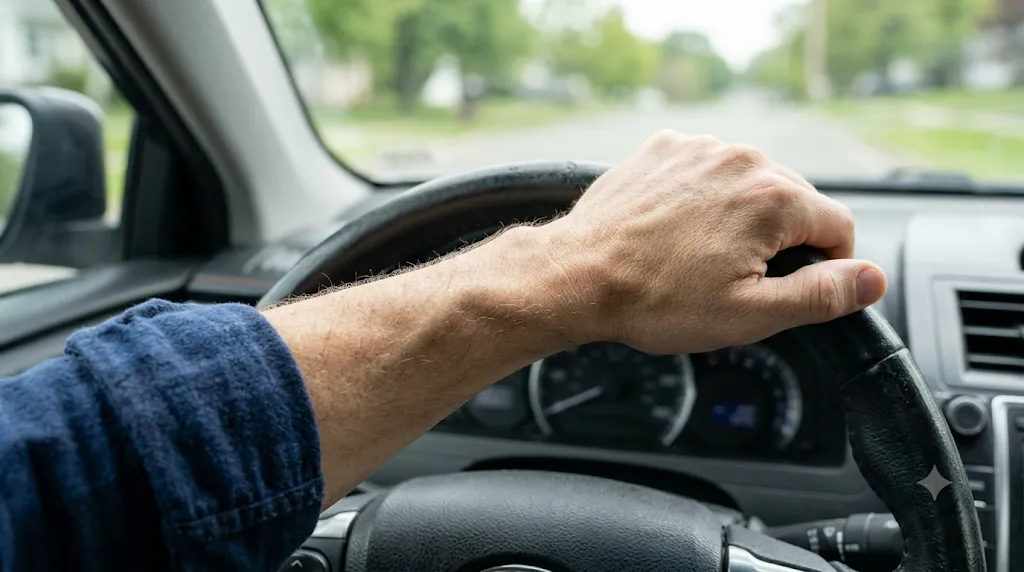
After hours of typing or holding your phone, the outer edge of your forearm and wrist can feel oddly tight or tired even though you have not done anything that feels like a workout. That sensation often comes from the extensor carpi ulnaris, a muscle that still expects occasional strong, dynamic loading rather than the low-level static positions of modern desk and screen life.
What This Muscle Actually Does
The extensor carpi ulnaris (ECU) runs along the back and outer side of your forearm. It originates from the common extensor tendon at the lateral epicondyle of the humerus and from the posterior border of the ulna, then inserts on the base of the fifth metacarpal. Its main jobs are wrist extension and ulnar deviation (bending the wrist toward the pinky side). It also helps stabilize the ulnar side of the wrist during grip and when the hand is loaded.
Electromyography work by researchers such as John V. Basmajian showed that the ECU is most active during these combined extension and ulnar-deviation movements, especially when the wrist has to resist a load or control a tool. In everyday ancestral tasks—climbing a branch, swinging a stick, carrying a heavy object at your side, or working with hand tools—the ECU repeatedly lengthens and shortens under varying tension. That repeated, varied loading keeps the muscle and its tendon healthy and coordinated with the other wrist extensors and flexors.
Why Modern Life Leaves It Underused
Most people now spend large parts of the day with the wrist in a near-neutral or slightly flexed position while typing, scrolling, or driving. These postures rarely demand the full extension-plus-ulnar-deviation pattern that strongly recruits the ECU. The muscle still receives some low-level activation for postural support, but it misses the higher-force, end-range, and eccentric (lengthening) work it evolved to handle.
Over weeks and months this can show up as a feeling of tightness along the outer forearm, mild ache after prolonged computer use, or a sense that the wrist is less stable when you suddenly need to grip or lift something. Related habits such as fingers feeling stiff after scrolling or the opposing pull of the flexor carpi radialis can amplify the imbalance.
Common Everyday Triggers
- Long stretches of keyboard or mouse work with the wrist slightly extended or neutral and little active movement
- Phone use with the wrist cocked or held still while the fingers do all the work
- Driving with a fixed grip on the wheel that keeps the forearm in one position
- Carrying bags only on the shoulder or in a way that never loads the ulnar side of the wrist
- Sudden return to a sport or hobby (tennis, climbing, gardening) after months of underuse
Less Common but Important Causes
True ECU tendinopathy, subluxation of the tendon out of its groove, or irritation after a fall onto the hand can produce sharper pain, snapping, or weakness. These are less common than simple underuse stiffness, but they do occur, especially in people who play racquet sports or who have had prior wrist injuries. Inflammatory conditions or nerve irritation higher in the arm can also refer symptoms to the same area.
Hidden Triggers
Poor overall shoulder and scapular stability can change how the forearm muscles are recruited. Chronic stress and shallow breathing sometimes increase general muscle tension in the upper limb. Dehydration or low magnesium can make any forearm muscle more prone to cramping or tightness. Even the way you sleep—wrists flexed under a pillow—can leave the ECU feeling stiff in the morning.
When to Worry
Mild outer-forearm tightness that eases with movement and gentle stretching is usually the expected result of underuse. Seek professional assessment if you notice:
- Pain that wakes you at night or is present at rest
- A clear snapping or popping sensation on the outer wrist when you rotate the forearm
- Noticeable weakness in grip or difficulty extending the wrist against even light resistance
- Swelling, warmth, or bruising after a specific injury
- Symptoms that spread into the hand or are accompanied by numbness
Myths vs Facts
Myth: Outer-forearm tightness always means you need more stretching.
Fact: The ECU often needs controlled strengthening and varied loading more than passive stretching alone.
Myth: Keyboard work is “hard on the extensors.”
Fact: Prolonged low-load static positions tend to under-stimulate the ECU relative to the demands it is built for; the problem is usually too little dynamic work, not too much.
Myth: If it doesn’t hurt, the muscle is fine.
Fact: Gradual loss of coordination and endurance can appear before frank pain.
How to Give It What It Still Expects
You do not need a gym membership. A few minutes of intentional loading most days is enough to remind the muscle of its normal range.
- Wrist-extension holds: rest the forearm on a table with the hand hanging off the edge, palm down, and slowly lift the hand toward the ceiling, holding 5–10 seconds. Add a light water bottle for resistance once it feels easy.
- Ulnar-deviation emphasis: from the same position, move the hand sideways toward the pinky while keeping the forearm still.
- Loaded carries: hold a moderately heavy bag or kettlebell at your side for short walks so the ECU helps stabilize the wrist.
- Everyday variety: occasionally open jars, use hand tools, or climb (even on a playground structure) so the wrist moves through extension under load.
- Balance the opposite side: gentle wrist-flexion stretches and the kind of loaded flexion described in related articles keep the whole forearm coordinated.
Start with low volume and increase gradually. The goal is occasional meaningful loading, not constant fatigue.
When to See a Doctor
If pain, snapping, or weakness persists beyond a couple of weeks of simple activity changes, or if symptoms followed an injury, a clinician can check for tendinopathy, tendon subluxation, or other structural issues. Early assessment prevents a minor underuse problem from becoming a longer-term irritation.
FAQs
Is outer-wrist tightness after typing normal?
Yes for many people. It usually reflects the ECU receiving too little varied loading rather than an acute injury. Movement and light strengthening often help.
Can weak ECU contribute to tennis elbow?
It can be part of the picture. Lateral epicondylalgia often involves the common extensor origin, and restoring balanced wrist-extensor endurance is a common part of recovery.
Should I wear a wrist brace?
A brace can calm acute pain, but long-term reliance may further reduce the loading the muscle needs. Use it short-term while you restore movement.
Does phone scrolling specifically strain the ECU?
Scrolling itself uses the fingers more than the wrist extensors. The bigger issue is the static wrist posture that accompanies long phone sessions.
How quickly can I expect improvement?
Many people notice less tightness within one to two weeks of adding a few minutes of loaded extension and ulnar deviation most days.
Is this the same as carpal tunnel?
No. Carpal tunnel involves the median nerve on the palm side. ECU issues stay on the back and outer forearm and wrist and do not typically cause the classic median-nerve finger numbness.
Conclusion
Your extensor carpi ulnaris still expects the occasional strong wrist extension and ulnar-side stability that climbing, carrying, and tool use once provided. Modern desk and phone habits rarely supply that stimulus, so a little intentional loading restores the balance the muscle is built for and keeps everyday wrist comfort higher.


