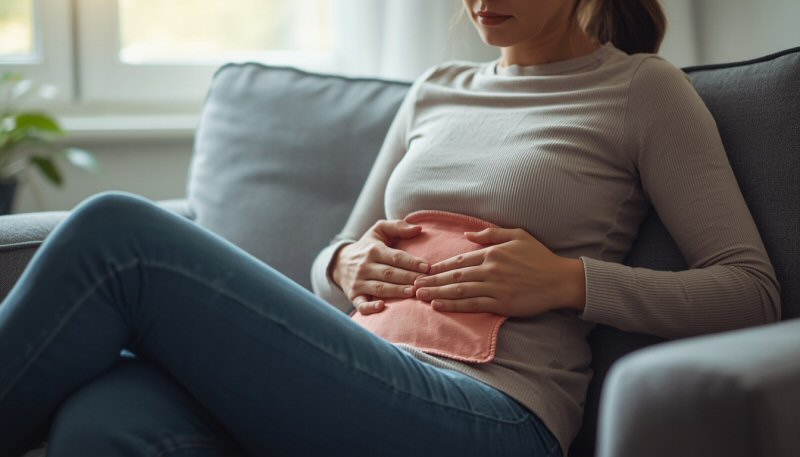
Estradiol still treats impact and outdoor light as part of its bone and mood brief. Sitting, indoor days and long cycle years change the signal without changing the receptor.

Estradiol is often described as if it were a calendar hormone — something that rises, falls, and then vanishes at menopause. That is half the story. In bone, brain and vessels, estrogen is also a context hormone. It reads whether the skeleton was loaded today, whether skin saw real daylight, whether energy was scarce, and whether the night was dark enough for the rest of the endocrine night shift to run.
The receptors did not change when desks replaced hills and windows replaced sky. What changed is the brief those receptors still expect.
What This Hormone Is Actually Doing
17β-estradiol is the main circulating estrogen of the reproductive years. It is made in ovarian granulosa cells from androgen precursors, with smaller contributions from fat, brain and bone. It binds nuclear receptors ERα and ERβ and faster membrane receptors that alter local signaling within minutes.
In bone, that binding is not decoration. Osteoblasts, osteocytes and osteoclasts all carry estrogen receptors. Estradiol slows the birth of osteoclasts, shortens their working life, and keeps the remodeling unit from chewing more bone than it replaces. When estradiol falls — at the luteal-to-menses drop, after childbirth in some women, during hypothalamic amenorrhea, or after menopause — the remodeling space opens. More units fire at once. For a while the skeleton looks busy. Then the ledger goes negative.
Sundeep Khosla’s group at Mayo Clinic and Juliet Compston’s work in Cambridge mapped this clearly: the menopausal acceleration of bone loss is not a mysterious vanishing of calcium. It is a rise in remodeling rate once the estrogen brake comes off. Ego Seeman has described the same pattern as a temporary widening of the remodeling space — more holes open before they refill.
That brake evolved beside two other cues the modern indoor day rarely sends: mechanical strain and ultraviolet-linked vitamin D.
The Skeleton Estrogen Still Assumes You Have
Harold Frost’s mechanostat idea is still the cleanest frame. Bone is not a static rod. It is a strain-seeking tissue. Osteocytes buried in the matrix sense fluid shear when you walk, hop, carry or change direction. Below a threshold, the tissue resorbs. Above it, it holds or adds. Lance Lanyon and Clinton Rubin showed that unusual, relatively brief strain — not endless identical steps — is what the cells notice. Charles Turner’s strain-rate work made the same point: bone is more interested in a novel impact than in another hour of sitting punctuated by a gentle walk to the kettle.
Estrogen and strain talk to each other. Adequate estradiol makes the mechanostat more efficient: the same hop protects more bone. Low estradiol makes the same skeleton need a higher strain to hold what it has. That is one reason adolescent girls who lose cycles to under-fueling can lose bone even if they still “exercise,” and why early menopause is not only a hot-flush story. The receptor is still waiting for both the hormone and the load.
A related article on this site, Why Your Bones Still Expect Impact, follows the strain side of that partnership. Estrogen is the chemical half of the same brief.
The Light Estrogen Still Assumes You See
Daylight does not make estradiol the way ovaries do. It changes the setting in which estradiol works.
Skin exposed to UVB makes previtamin D3. Michael Holick’s work on the vitamin D endocrine system showed how that photoproduct becomes 25-hydroxyvitamin D and then the active hormone that helps the gut absorb calcium. Estradiol and vitamin D are not interchangeable, but they share a construction project. Bone matrix is collagen plus mineral. Collagen still needs load and ascorbate, which is why Why Your Collagen Still Expects Load and Vitamin C belongs in the same conversation. Mineral still needs calcium, phosphate and a vitamin D signal that outdoor living used to supply without a supplement aisle.
Light also times the rest of the month. The hypothalamic pulse generator that drives GnRH — and therefore FSH, LH and ovarian estradiol — is sensitive to sleep, energy and circadian light. A dim indoor day plus a bright evening screen is not a neutral backdrop. It is a photoperiod the reproductive axis did not train on. Jerilynn Prior has argued for years that menstrual cycles are an energy-and-stress instrument, not only a fertility calendar. When fuel, sleep or light are off, luteal progesterone often falls first. Estradiol can look “normal” on a single blood test while the month as a whole is quieter than it should be.
Outdoor morning light is not a folk cure for hormones. It is one of the few remaining cues that still looks like the environment those receptors evolved inside. The skin-and-clock version of that argument lives in Why Your Skin Still Expects the Sun.
Why Modern Life Changes the Brief Without Changing the Receptor
Three mismatches stack.
First, load. Most adult days are chair days. The femoral neck and lumbar spine — the sites that break later — receive far fewer odd, high-rate strains than a foraging or farming day. Gym hours help if they include impact, direction change and axial load. They do not fully replace a day that never sits still. Barbara Drinkwater’s classic work on amenorrheic athletes, and Anne Loucks’s energy-availability studies, showed that you can be “active” and still under-fuel the axis that makes estradiol. The skeleton then loses both the hormone brake and some of the strain signal it was counting on.
Second, light. Indoor illuminance is often a few hundred lux. Outdoor daylight is tens of thousands. Vitamin D status tracks that difference more than it tracks latitude slogans. Evening electric light further delays the night hormones that help sleep, which is when bone lining cells and marrow clocks do part of their housekeeping.
Third, cycle count. Rose Frisch, Roger Short, Beverly Strassmann and others documented how late menarche, long lactation and earlier last birth once kept lifetime ovulations far below the 350–450 cycles common in industrial populations. More cycles means more months of high estradiol — which has benefits — and more months of the withdrawal bleed and the remodeling flicker that follows it. The ovaries article on this site, Why Your Ovaries Still Expect Fewer Cycles, covers that arithmetic. Estrogen’s bone brief has to live inside it.
What Low or Erratic Estradiol Feels Like in Ordinary Life
Not every low-estrogen state is menopause. Hypothalamic amenorrhea from under-eating, over-training or high psychological load can drop estradiol in the twenties. Perimenopause can swing it wildly for years before the last period. Postpartum and lactation shift the mix toward prolactin and away from cyclic estradiol. Some hormonal contraceptives flatten the native peak by design.
Common, non-diagnostic clues that the context is off — not proof of a number:
- Cycles that space out, go silent, or become much lighter after a diet, a new training block or a brutal work season
- Aches at the heel or shin in a newly impact-heavy program without a matching rise in fuel
- Hot flashes or night sweats well before midlife when sleep and energy are poor
- A winter mood slump that tracks indoor weeks more than the calendar date
- A DEXA or fracture history that looks older than the rest of the person
None of those replace a clinician. They are the body’s way of saying the brief and the receptor are no longer in the same room.
Less Common but Serious
Primary ovarian insufficiency before 40, untreated celiac disease, anorexia nervosa, hyperprolactinemia, premature surgical menopause without a plan for bone, and long high-dose glucocorticoids all change estradiol or its downstream effects enough to raise fracture risk. Aromatase inhibitors used in some breast-cancer protocols are supposed to drop estradiol; bone then needs its own explicit plan. These are not “take a walk in the morning” problems. They are medical ones that happen to sit on the same pathway.
Myths vs Facts
Myth: Estrogen is only a reproductive hormone.
Fact: Bone, vessels, skin, brain thermoregulation and parts of mood circuitry all carry estrogen receptors. Reproduction is the headline, not the whole job.
Myth: If you lift weights, daylight and vitamin D do not matter for bone.
Fact: Strain is necessary and not sufficient. Mineral supply, vitamin D status and the estrogen (or replacement) environment still set how much of that strain is kept.
Myth: A normal period means bone is safe.
Fact: Bleeding can persist with a thin luteal phase and lower-than-ideal estradiol exposure across the month. Prior’s point stands: the quality of the cycle is not identical to the fact of a bleed.
Myth: After menopause, load no longer matters.
Fact: The mechanostat still works. It is less efficient without estradiol, which is why impact, balance and resistance training remain among the few non-drug tools that consistently help older bone — and why they work better when vitamin D and protein are not left to chance.
Myth: More estrogen is always better for bone.
Fact: Dose, route, age at start, clot and breast-cancer history all matter. The evolutionary brief is “enough estradiol plus load plus light,” not “the highest patch you can find.”
How to Give the Receptor a Brief It Recognizes
You cannot recreate a foraging year. You can send three signals the pathway still reads.
Load the sites that break. Walking is the baseline. Add brief odd strain: stairs, hills, hopping if joints allow, carrying groceries on one side then the other, a twice-weekly resistance session that includes squat or hinge patterns. Novelty matters more than a perfect step count. The goal is strain the femoral neck and spine notice, not a calorie dump.
Fuel the axis that makes the hormone. Loucks’s energy-availability work is blunt. If intake minus exercise energy leaves too little for the rest of the body, GnRH pulses slow and estradiol falls. Bone then loses the brake. This is especially relevant for women who stack fasting, high volume and a demanding job and call the combination discipline.
See morning outdoor light, then protect the night. Ten to thirty minutes of actual outdoor light early in the day is a circadian and vitamin D cue indoor bulbs do not copy. Evening dimness helps the sleep that bone remodeling partly uses. Sunscreen on long midday exposure is still wise for skin; it does not cancel the value of being outside.
Do not treat a silent cycle as a training badge. Three missing periods in a row in a premenopausal woman who is not pregnant is a reason to see someone, not a sign the program is “working.”
Measure when the story is off. A DEXA is not required for every adult. It is reasonable when there are fragility fractures, early menopause, long amenorrhea, eating-disorder history, or medications that thin bone. A single estradiol blood draw mid-cycle is a snapshot, not a biography.
When to See a Doctor
Seek care rather than another lifestyle tweak if periods stop for three months or more, if you have a fracture from a fall that should not have broken bone, if hot flashes and sleep collapse arrive before 45 with no explanation, if you are on an aromatase inhibitor or long steroids without a bone plan, or if weight loss and missed cycles travel together. Those are not failures of will. They are the receptor asking for a different room.
FAQs
Does walking outside replace hormone therapy after menopause?
No. Walking and daylight help the mechanostat and vitamin D status. They do not restore premenopausal estradiol. Whether menopausal hormone therapy is appropriate is a separate, individual medical decision based on age, time since menopause, clot and cancer history, and symptoms.
Can I “boost estrogen” with foods?
Some plants contain weak estrogen-like compounds. They are not a substitute for ovarian estradiol or prescribed replacement. Diet matters for energy availability, protein and micronutrients. It does not recreate a follicular-phase peak.
Why do some athletes lose bone even though they train hard?
Because strain without fuel still drops GnRH and estradiol. Drinkwater and Loucks showed the combination of high output and low intake is what the axis reads as famine, not fitness. Impact on a low-estrogen skeleton is also a stress-fracture setup.
Is vitamin D the same thing as daylight for this pathway?
Vitamin D is one downstream product of UVB on skin. Daylight also sets circadian timing, mood circuitry and the behavior of going outside, which usually includes walking. A supplement can correct a lab number. It does not fully copy the outdoor brief.
Do hormonal contraceptives ruin bone?
Most combined pills are not a bone-stripping drug in well-nourished adults. Some progestin-only methods and very low-dose or hypothalamic-suppressing situations need more care, especially in adolescents who have not finished peak bone mass. The issue is less “the pill” as a category and more whether the person is also under-fueled, indoor and unloaded.
What about men — do they have an estrogen-and-bone story?
Yes. Men aromatize testosterone to estradiol, and male bone also needs that estradiol. This article focuses on the ovarian and menopausal version of the brief because that is where the modern mismatch is loudest. The strain and daylight half of the story still applies.
Conclusion
Estradiol did not evolve as a tablet looking for a swallow. It evolved as a signal in a body that walked odd ground, saw the sky, ate enough to ovulate, and remodeled bone between a loaded day and a dark night. The receptors are still on that assignment. Chairs, indoor lux and long silent or crowded cycle histories changed the incoming mail, not the address.
You do not need a Paleolithic calendar. You need enough fuel to keep the pulse generator honest, enough odd load for osteocytes to notice, and enough real morning light that vitamin D and the clock are not running on rumor. The hormone will not become a different molecule. It will, if the brief improves, have a skeleton and a day it still knows how to use.