
First-day period cramps are usually primary dysmenorrhea from endometrial prostaglandins, not a character test. How Pickles, Chan, Dawood and Iacovides mapped the ache — and when pain is asking for a different diagnosis.
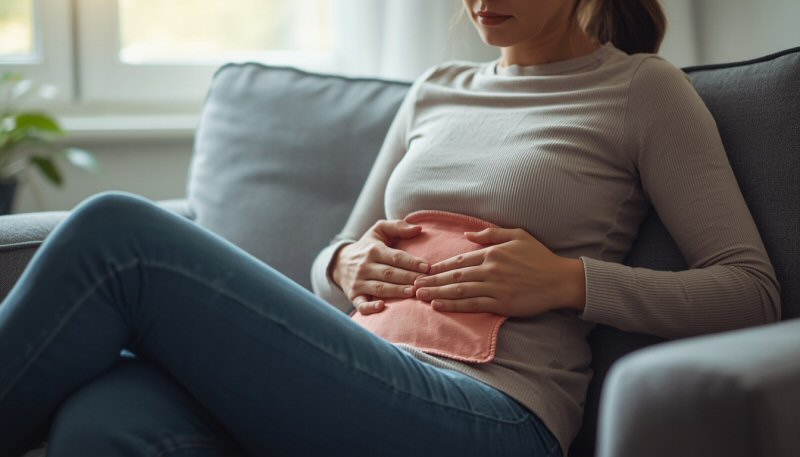
The first day of a period has a reputation that does not match most other ordinary biology. People expect a little spotting, a little fatigue, maybe a heavier pad. What they often get instead is a deep, gripping ache low in the pelvis that can radiate into the low back or the tops of the thighs, arrive with loose stools or nausea, and make standing upright feel like a negotiation. The question that follows is almost always the same: is this normal, or is something wrong with the uterus?
For a large share of people who menstruate, especially in the years after menarche and before a first birth, first-day cramps are not a mysterious defect. They are the predictable result of a chemical briefing the lining of the uterus sends to the muscle wall just as that lining begins to shed. The briefing is useful. It is also, in a modern indoor life with little movement and a high expectation of uninterrupted work, often louder than anyone warned you it would be.
What First-Day Cramps Actually Feel Like
Primary dysmenorrhea — period pain without an underlying disease such as endometriosis or adenomyosis — has a fairly consistent script.
The ache is usually midline, low, and cramping rather than sharp and one-sided. It often starts a few hours before bleeding is obvious, or within the first day of flow, and eases after the heaviest hours. Many people also notice:
- a dull low-back ache that travels with the pelvic grip
- pressure or heaviness rather than a stab
- nausea, loose stools, or a sudden need for the bathroom
- fatigue, headache, or a flushed, vaguely flu-like feeling
- pain that improves with heat, movement, or an anti-inflammatory medicine taken early
The accompanying gut symptoms are not random. The same prostaglandin family that contracts the uterus also acts on the gut and on blood vessels. That is why first-day cramps so often arrive as a package deal rather than a single local twinge.
Pain that starts mid-cycle, is always one-sided, worsens year after year after a previously easy period, or is accompanied by pain with sex, bowel movements, or urination throughout the month is a different conversation. Those patterns can still be common. They are not the default first-day script.
The Chemical Briefing: Prostaglandins, Not “Just Hormones”
In the 1950s and 1960s, the British physiologist V. R. Pickles proposed that menstrual fluid contained a substance that made smooth muscle contract, and that this substance — later identified as prostaglandins — explained period pain. That was not folk wisdom. It was a testable claim about a lipid signal made in the endometrium as progesterone falls at the end of an ovulatory cycle.
When an ovulatory cycle ends and the corpus luteum fades, progesterone withdrawal changes the endometrium. Cells there increase production of prostaglandins, especially prostaglandin F2α (PGF2α) and, to a lesser extent, prostaglandin E2. PGF2α binds receptors on the myometrium — the muscle of the uterus — and causes it to contract. The contractions help expel the shed lining. They also raise intrauterine pressure and can briefly reduce blood flow through the uterine wall. Muscle that is working harder on less blood produces the ischemic, gripping quality people recognize as a cramp.
W. Y. Chan and M. Yusoff Dawood, working through the 1970s and 1980s, measured those prostaglandins in menstrual fluid and showed that people with more severe primary dysmenorrhea tend to have higher PGF2α levels. Dawood’s clinical work also helped establish why nonsteroidal anti-inflammatory drugs (NSAIDs) taken at the first hint of flow or pain work better than the same tablet taken after the cramp has already peaked: they interrupt prostaglandin synthesis before the briefing has fully landed.
This is why anovulatory cycles — cycles without ovulation and without a full progesterone rise and fall — are often lighter on cramps even when bleeding still happens. The prostaglandin surge is tied more tightly to an ovulatory endocrine sequence than to bleeding itself.
Why the First Day Is Usually the Loudest
Two clocks line up on day one.
The first is endometrial. Prostaglandin production and release are highest as the lining begins to break down. Once a substantial amount of tissue has shed and the local chemical load falls, contractions usually quiet.
The second is vascular and sensory. Early flow is often the time of strongest myometrial activity. Uterine muscle is not a single coordinated heartbeat. It is a thick wall generating waves of pressure. When those waves are frequent and strong, intrauterine pressure can exceed the pressure in the small arteries feeding the wall. That mismatch is felt as cramp, not as a polite squeeze.
Referred pain explains the back and thigh radiation. Karen Berkley’s work on visceral pain made a point that still gets lost in casual advice: pelvic organs share spinal segments with the low back, hips, and upper thighs. The brain does not always draw a tidy map that says “uterus only.” It reports a region. That is why a first-day cramp can feel like a belt rather than a pinpoint.
Why Some People Barely Notice and Others Cancel the Day
Severity is not a moral ranking. It is a mix of chemistry, anatomy, nervous-system gain, and context.
People with heavier flow often have more endometrial tissue to shed and a larger local prostaglandin load. A uterus that has not yet completed a full-term pregnancy tends to have a tighter internal os and a less “practiced” expulsion path; primary dysmenorrhea commonly eases after a first birth, though that is not a treatment plan and it is not guaranteed.
Nervous-system gain matters as much as the uterus. Sleep loss, chronic stress, and a history of other pain conditions can turn up the volume on a normal prostaglandin signal. Stella Iacovides, Alison Bentley, and Fiona Baker, among others, have reviewed how exercise, sleep, and central pain processing change the experience of dysmenorrhea — not by inventing the prostaglandins, but by changing how loudly the spinal cord and brain report them.
There is also a straightforward mechanical mismatch with modern life. Sitting still at a desk while the uterus is contracting gives the muscle nowhere to work against and gives the pelvic floor no walking rhythm. Heat and a walk are not folklore. They change local blood flow and sensory gating.
This sits in a larger pattern described in why women’s bodies pay a higher price for modern living: a reproductive system that still runs an ovulatory, prostaglandin-timed cycle inside a culture that treats the first day of bleeding as an ordinary workday with no recovery margin.
Hidden Triggers That Make a Normal Cramp Feel Worse
The prostaglandin briefing is the main act. Several smaller cues make the same briefing harder to ignore.
- Waiting to treat. An NSAID taken after two hours of peak pain is playing catch-up. The enzymes have already made much of the day’s PGF2α.
- A very heavy first day. More tissue, more local lipid signal, more pressure waves.
- Caffeine swings and skipped meals. Low blood sugar and adenosine rebound do not cause uterine cramps, but they add headache and irritability to the same morning. The combination feels like a worse period even when the uterus is doing the usual thing.
- Dehydration and salt-heavy meals the day before. Fluid shifts change how bloated and heavy the pelvis feels. They do not rewrite prostaglandin chemistry, but they change the sensory background.
- Constipation or a full rectum. A full bowel shares space and spinal segments with the uterus. The same contraction then reports as a larger event.
- A quiet pelvic floor and a day of sitting. Walking, gentle hip opening, and heat are not substitutes for medical care when disease is present. They are part of how a normal first-day uterus was historically allowed to work. The pelvic floor still expects that kind of loading, which is why walking and a squat still matter to pelvic mechanics even on a bleeding day.
- Gut-brain volume. Nausea and loose stools on day one are prostaglandin effects. Anxiety can add a second layer of motility change that feels like the period “hit the stomach.” That overlap is the same gut-brain channel described in nervous stomach flutter, only this time the chemical start is endometrial rather than purely anticipatory.
When Cramps Are Not “Just a Period”
Primary dysmenorrhea is common. It is not the only cause of cyclic pelvic pain.
Secondary dysmenorrhea means pain driven by a structural or inflammatory condition. Patterns that raise that possibility include:
- pain that starts well before bleeding and lasts days after flow ends
- pain that has clearly worsened over several years after previously manageable periods
- pain with deep sex, bowel movements, or urination outside the bleeding window
- very heavy flow with clots, flooding, or anemia symptoms
- a new severe pattern after age 25, after a procedure, or after a pregnancy
- a family history of endometriosis plus absenteeism from school or work every cycle
- fever, one-sided sharp pain, fainting, or pain so severe that standing is impossible
Endometriosis, adenomyosis, fibroids, ovarian cysts, pelvic inflammatory disease, and, rarely, outflow obstruction in adolescents can all use the period as a spotlight. The spotlight does not mean the first-day ache is imaginary. It means the ache has company that deserves imaging, a skilled pelvic exam, or a referral rather than another year of “everyone gets this.”
Adolescents who miss school every month are not being dramatic. Early, severe primary dysmenorrhea that does not respond to well-timed NSAIDs and, when appropriate, hormonal suppression, is a reason to look further — not a reason to wait until someone is 30 and exhausted.
Myths vs Facts
Myth: Strong first-day cramps mean you have a low pain tolerance. Fact: Menstrual fluid PGF2α and intrauterine pressure can be objectively higher in people with severe primary dysmenorrhea. The signal can be larger, not just the complaint.
Myth: If heat or a walk helps, the pain was not real. Fact: Heat and movement change local blood flow and sensory processing. Real ischemic muscle pain often responds to both.
Myth: You should wait until bleeding is heavy before taking anything. Fact: For prostaglandin-driven cramps, earlier dosing of an appropriate NSAID — unless you have a reason you cannot take one — usually works better than late rescue.
Myth: Pregnancy is the treatment. Fact: Some people notice easier periods after a birth. That is an observation about uterine change, not a prescription.
Myth: Hormonal contraception “causes” cramps if you still bleed. Fact: Combined methods and many progestin methods reduce endometrial growth and prostaglandin load for a large share of users. Breakthrough or scheduled bleeding can still cramp. The mechanism is not a mystery toxin in the pill; it is leftover lining and leftover signal.
Myth: If an ultrasound is “normal,” the pain is in your head. Fact: Ultrasound can miss endometriosis and does not measure prostaglandin load. A normal scan rules out some secondary causes. It does not prove the uterus is quiet.
How to Make a Normal First Day Less of a Siege
None of this requires treating menstruation as a disease. It requires treating the prostaglandin briefing as biology that can be paced.
- Treat early if you use NSAIDs and they are safe for you. The goal is to blunt synthesis, not to heroically endure the first two hours. Follow dosing on the label or from your clinician. People with ulcers, kidney disease, certain asthma patterns, or anticoagulant use need a different plan.
- Use heat on the lower abdomen or low back. Local warmth is one of the few non-drug tools with a repeatable effect on this specific pain.
- Walk. Even a short indoor loop beats motionless curling if you can do it. Motion helps referred back pain and gives the pelvic floor a rhythm.
- Do not skip food and do not lean only on coffee. A small meal with protein and some carbohydrate keeps the rest of the day from stacking a hunger headache on a uterine cramp.
- Empty the bowel if you are backed up. A full rectum makes every contraction feel larger.
- Track three cycles. Note start time of pain, start of flow, what helped, and whether pain exists outside bleeding days. That record is more useful than memory when you finally see a clinician.
- Consider hormonal options if pain regularly costs school, work, or sleep. Suppressing ovulation and thinning the lining reduces the briefing at its source for many people. That is a medical conversation, not a personality change.
If pain is secondary, these steps may take the edge off and still leave a problem that needs diagnosis. Relief is data. It is not always a complete answer.
When to See a Doctor
Seek care promptly if period pain is new and severe, if you could be pregnant and have one-sided pain or fainting, if there is fever with pelvic pain, or if bleeding soaks through protection hourly.
See a clinician in a planned visit if first-day cramps regularly keep you from school or work, if NSAIDs and heat do not touch the pain, if pain lives outside the bleeding window, if sex or bowel movements hurt, or if flow is heavy enough to cause dizziness or short breath.
Bring the three-cycle notes. Ask directly whether the pattern sounds like primary dysmenorrhea or whether endometriosis, adenomyosis, or another secondary cause should be on the list. “Normal period pain” is a diagnosis of pattern, not a command to stop asking.
FAQs
Is it normal for period cramps to start before bleeding? Yes. Prostaglandin release and myometrial activity often begin as the lining becomes unstable, hours before flow is obvious. Pain that starts a full week before and lasts long after flow is less typical of simple primary dysmenorrhea.
Why do I also get diarrhea on the first day? PGF2α and related prostaglandins act on gut smooth muscle as well as uterine muscle. Loose stools on day one are a common companion, not proof of food poisoning.
Can teenagers have “real” dysmenorrhea, or do they just need to get used to it? Adolescents have real prostaglandin-driven pain, and severe monthly absenteeism deserves treatment and, if needed, evaluation for secondary causes. Waiting for someone to “grow out of it” without a plan is not conservative care. It is delayed care.
Do exercise and heat actually change the uterus, or do they only distract me? They do not erase PGF2α. They improve local blood flow, reduce muscle guarding, and change how the nervous system gates visceral signals. For primary dysmenorrhea that is often enough to move a day from unusable to usable.
If the pill stops my cramps, did I have a hormone problem? Not necessarily. Many hormonal methods thin the endometrium and prevent the ovulatory progesterone rise-and-fall that sets up the prostaglandin surge. Less lining and less briefing can mean less pain even when the underlying capacity of the uterus was ordinary.
Can period cramps be dangerous? Uncomplicated primary dysmenorrhea is miserable and still usually not dangerous. Danger lives in the exceptions: possible pregnancy with severe pain, infection, sudden one-sided pain, fainting, or a pattern that points to endometriosis, adenomyosis, or another secondary cause that can damage fertility or organs if ignored for years.
Conclusion
First-day period cramps are, for a great many people, the sound of an ovulatory endometrium briefing the myometrium with prostaglandins so the lining can leave. Pickles named the signal. Chan and Dawood measured it. Later clinicians mapped why early anti-inflammatories, heat, movement, and, when needed, hormonal suppression change the day.
Normal does not mean obligatory suffering, and common does not mean every severe cycle is primary. If the ache follows the first-day script, treats like prostaglandin pain, and stays inside the bleeding window, you are allowed to believe your uterus. If the script keeps changing, spreading, or costing whole weeks, you are allowed to ask for a different explanation. The goal is not to admire the chemistry. It is to let a predictable briefing stay a briefing — and not become the whole plot of the month.