
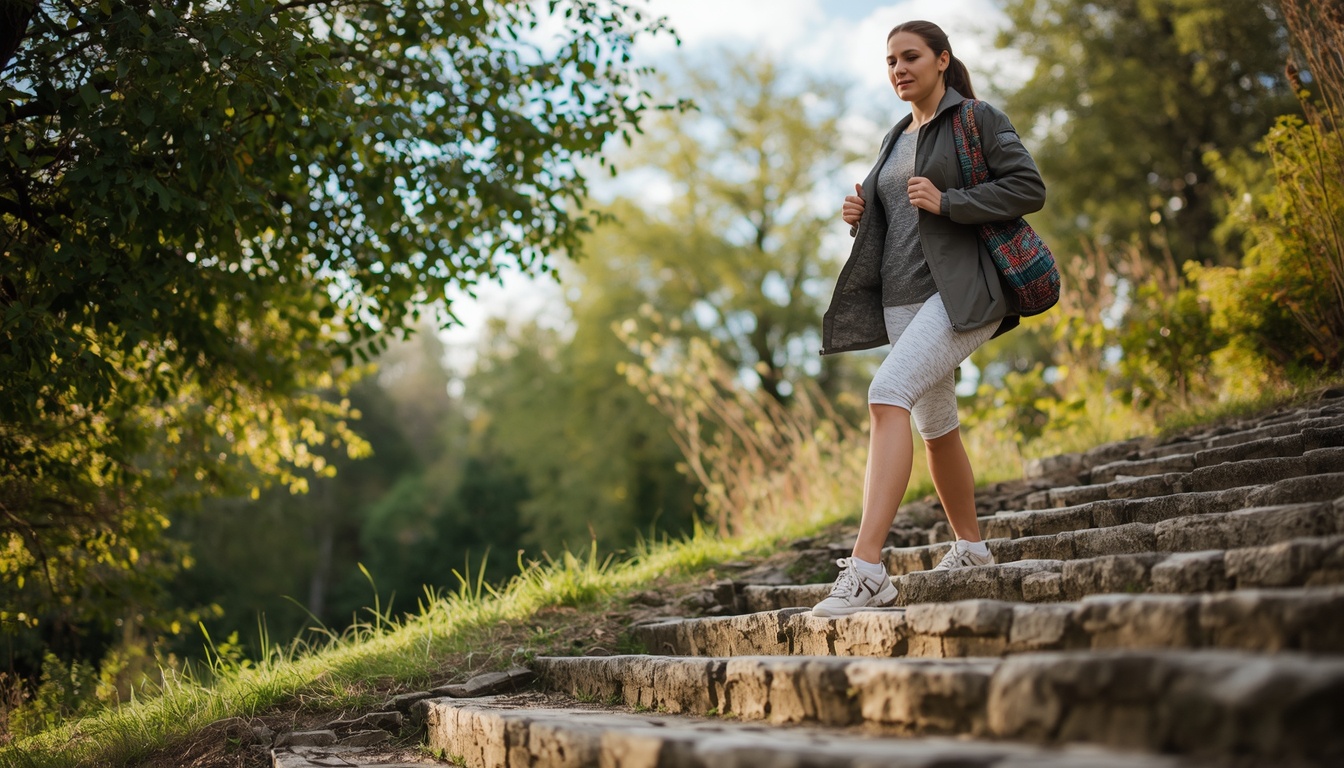
Modern life is remarkably flat. Elevators, ramps, office carpets, and even “walking” that happens on a treadmill at zero incline ask very little of the two muscles that used to finish almost every step: the gastrocnemius and soleus, together with the Achilles tendon that stores their spring.
Those tissues did not evolve for a life spent seated, then standing in one place, then walking on level pavement. They evolved for slopes, sudden rises, long days on the move, and the small hop of getting onto a rock or a stair. When that work disappears, calves feel tight, ankles lose range, and the pump that helps blood leave the lower legs gets quieter. The problem is not that calves are obsolete. It is that the landscape they were built for is now optional.
What Underused Calves Feel Like
People describe a tight band behind the lower leg that never quite loosens, even after stretching. Heels may not reach the floor in a squat. Walking up a modest hill or a flight of stairs feels disproportionately hard. Some notice evening heaviness in the lower legs, night cramps, or a first-step stiffness that eases after a few minutes.
Others have no “calf complaint” at all and still show the pattern: limited ankle dorsiflexion, a tendency to turn the feet out, or knees that take extra load because the ankle cannot fold enough. Calves that never get a hill or a stair are easy to miss because they do not always hurt. They just stop doing their old jobs well.
What Calves Were Built to Do
The calf complex is both a motor and a spring. Soleus, the deeper muscle, is rich in slow fibers and works almost continuously in standing and walking to keep you from folding at the ankle. Gastrocnemius, which crosses the knee as well, adds power when you push off, climb, or change speed. The Achilles tendon stores and returns elastic energy with each step, so walking and running cost less than they would if muscle alone did all the work.
Hills and stairs change the demand. Going up shortens the muscle under load and asks for more push-off. Going down asks the same tissues to lengthen under control — an eccentric job that builds tendon capacity and teaches the ankle to accept force. Ancestral days included both, many times, without anyone calling it “calf training.”
The same muscles are the engine of the calf muscle pump. Each contraction squeezes deep veins and sends blood toward the heart. Flat, motionless standing and long sitting remove that pulse. Heaviness and swelling are not only a vein problem. They are often a missing-pump problem.
The Modern Mismatch
Most indoor floors are level by design. Many people take fewer than two or three flights of real stairs on a typical day. Sitting keeps the knee bent and the ankle in a modest point, a position that lets the calf rest short. Cushioned shoes and raised heels add another few degrees of chronic shortening. Over months and years the tendon and muscle adapt to the range they actually use.
Then a weekend hike, a sudden set of stadium steps, or a new running plan arrives. Tendons that still expect gradual loading get a spike instead. That is a common path to Achilles irritation — not because hills are dangerous, but because the calf-tendon unit was deconditioned by flatness first.
Glutes that still expect hills and getting off the floor share the same missing landscape. So do ankles that still expect uneven ground and knees that still expect varied terrain. The lower limb is one system. Take away slope and you change every joint above and below the calf.
Common Causes of Tight or Tired Calves
- Days spent sitting with knees bent and feet unchallenged
- Walking only on level pavement or a flat treadmill
- Elevators and escalators replacing ordinary stairs
- Heeled or heavily cushioned shoes that let the heel sit high
- Sudden hills or speed work after weeks of flat, easy walking
- Dehydration and long stillness, which also set the stage for night cramps
Hidden Triggers
- Standing still in a queue — the pump needs a change of length, not just upright posture
- Driving with the ankle held in one angle for an hour
- Sleeping with pointed toes under tight covers, which keeps the calf short all night
- Only stretching the calf while never loading it through a hill or a slow heel raise
- A narrow toe box that blunts the spread-and-grip job of the toes, so push-off becomes a calf-only event instead of a foot-and-calf event
Why Stretching Alone Rarely Fixes It
A wall stretch can feel good. It does not rebuild the spring. Tendon and muscle adapt to the loads they see. A brief stretch lengthens sensation more than structure. What calves miss is repeated, modest work through a larger ankle range: walking up a slope, descending with control, slow heel raises, and stairs taken on purpose rather than avoided.
People who stretch daily and still feel “tight calves” are often describing stiffness from underloading, not a muscle that is too long and needs more pulling. Load, then the tissue usually becomes both stronger and more willing to lengthen.
Less Common but Serious
Sudden, severe calf pain after a push-off can be a tendon tear or a muscle strain and deserves prompt assessment. Swelling, heat, and tenderness in one calf — especially with recent travel, immobility, or hormone-related clot risk — can be a deep-vein thrombosis. That is a medical problem, not a tight-muscle problem.
Progressive weakness, numbness, or calf pain that is reliably brought on by walking a fixed distance and eased by stopping can point to circulation limits and should be checked rather than stretched.
When to Worry
- One-sided swelling, warmth, or sudden girth change
- A pop at the moment of injury, or an inability to rise onto the toes
- Calf pain with chest symptoms or unexplained breathlessness
- Night pain that is getting worse rather than tracking activity
- Numbness, foot drop, or rapidly changing strength
Myths vs Facts
Myth: Tight calves always mean you need more stretching.
Fact: Many tight-feeling calves are underloaded and shortened by sitting and flat ground. They need hills, stairs, and slow strength, not only a longer stretch hold.
Myth: Stairs are bad for aging knees and should be avoided.
Fact: Avoiding stairs deconditions the exact tissues that make stairs feel easier. Gradual, controlled stair use is training, not punishment, for most people without an acute injury.
Myth: A cushioned shoe protects the Achilles.
Fact: Cushion and a raised heel can be useful during a flare. As a lifelong default they reduce the spring work the tendon is built for.
Myth: If you go to the gym, your calves get enough work.
Fact: Isolated machine work a few times a week does not replace hundreds of slope and stair cycles the calf used to see in ordinary life. Muscles still expect all-day variety, not one isolated session.
How to Give Your Calves the Landscape They Expect
You do not need alpine training. You need slope and stairs back in the week in doses the tendon can accept.
- Take real stairs when the flight is short enough to stay conversational. Descend as carefully as you climb; the lowering phase is valuable.
- Once or twice a week, walk a gentle hill or a long ramp for ten to twenty minutes. Ease into steeper grades over weeks, not days.
- Practice slow heel raises: rise in two seconds, lower in three, first with both feet, later on one if it feels solid. Straight-knee and slightly bent-knee versions share the work between gastrocnemius and soleus.
- Let heels find the floor in daily squats and when you pick things up. Ankle range returns faster when the calf is loaded at end range rather than only stretched there.
- Unpoint the feet at night. A loose blanket and a neutral ankle beat eight hours of forced plantarflexion.
- On long sitting days, stand and take a short flight or a hallway of toe-and-heel walking every hour. The pump cares about frequent small cycles.
Bones that still expect impact also benefit from the same modest hills. The point is not to collect fitness badges. It is to restore a stimulus the lower leg has been missing.
When to See a Doctor
See a clinician promptly for one-sided swelling, a sudden pop, inability to walk, or pain that does not track a clear training change. Recurring night cramps with muscle weakness, swelling, or color change also deserve a look. A physical therapist can measure ankle range and help you rebuild slope capacity without jumping from sofa to summit.
FAQs
Why do my calves ache the day after a hike when I walk a lot already?
Level walking and uphill walking are different jobs. The hike added incline, extra push-off, and eccentric lowering your weekday pavement never asked for.
Do standing desks fix tight calves?
Standing is better than sitting for the pump, but still standing on a flat floor is not a hill. You still need changing ankle angles.
Are calf stretches before a run a good idea?
A short, gentle stretch is fine if it feels good. A long aggressive stretch on a cold tendon is not a substitute for a gradual warm-up walk, including a little incline if you have it.
Can weak calves cause back or knee pain?
They can change how the foot and knee share load. They are rarely the only cause, but restoring calf capacity often makes the whole chain feel less brittle.
How fast should I add stairs if I have avoided them for years?
Start with one or two flights, once or twice a day, and add a flight every few days if there is no next-morning spike in tendon pain. Soreness that fades in a day or two is information. Sharp or worsening Achilles pain is a signal to slow down.
Do I need special shoes?
Not to start. A shoe that lets the heel sit closer to the ground and the toes spread is a long-term ally. Sudden drops in heel height can irritate the Achilles if you change overnight.
Conclusion
Your calves are not asking for a specialty gym. They are asking for the ordinary slopes and steps that used to come with getting through a day. Flat floors and chairs did not ruin them. They simply stopped sending the mail those tissues were built to read.
Put a few flights and a gentle hill back into the week. Lower slowly. Let the heel find the floor. The spring returns in the same quiet way it faded — a little more each time the ground is no longer perfectly level.