
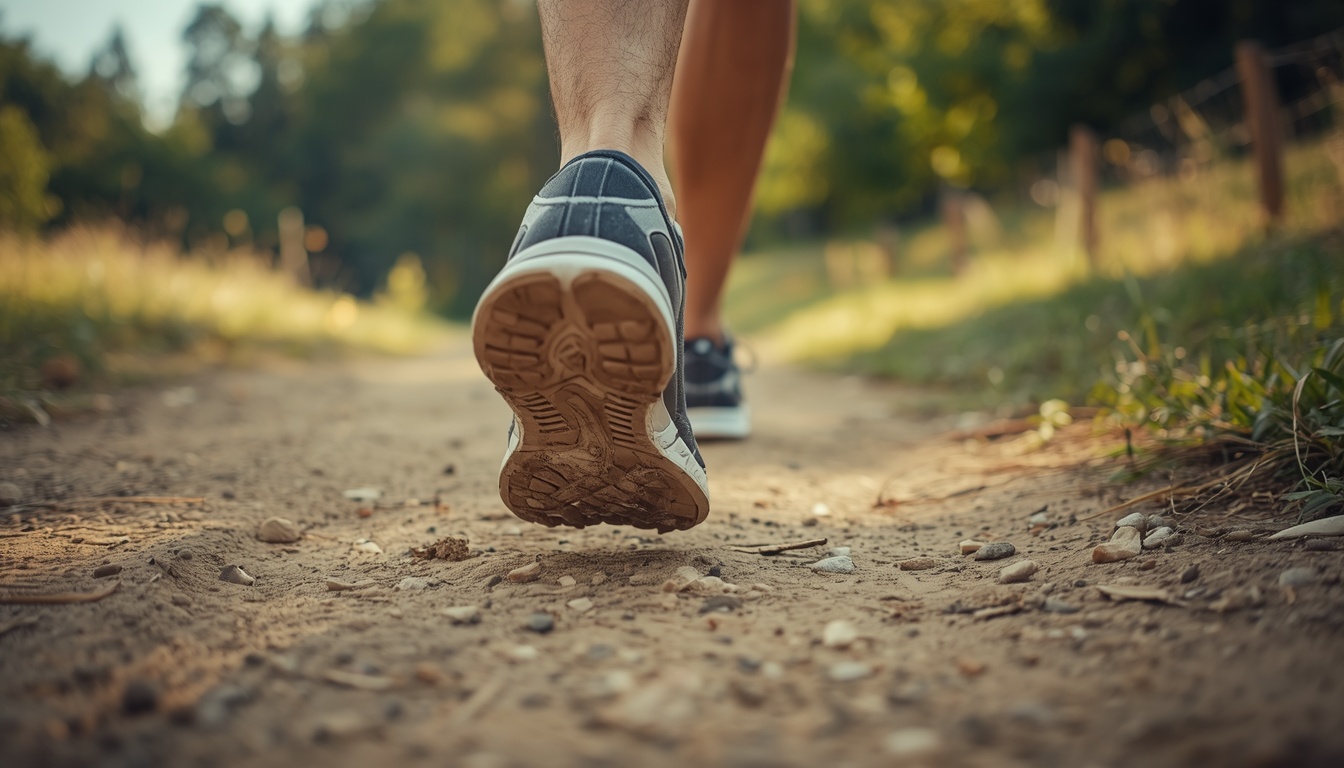
Watch a healthy bare foot leave the ground. The heel lifts. The arch tightens. Then the big toe — the hallux — bends upward and presses down as if it were a small lever launching the body forward. That last press is not decoration. It is how human walking finishes a step.
Modern shoes, short indoor strides, and stiff soles often skip that finale. The joint still expects it. When it does not get it, the toe can feel stiff, the ball of the foot can ache, and the push that should come from the hallux gets dumped onto smaller toes or the outside of the foot.
What the Big Toe Was Built For
The first metatarsophalangeal joint (where the long bone of the forefoot meets the big toe) is built to dorsiflex — to bend the toe up toward the shin — as the heel rises. At the same time the plantar fascia winds tight and the arch shortens. Clinicians call this the windlass mechanism. It turns a flexible landing foot into a rigid lever for push-off.
That job evolved under mixed terrain:
- Long walking days on dirt, grass, and packed earth
- Hills that demanded a stronger final press
- Barefoot or thin-soled contact so the toe could feel the ground and grip
- Room for the toe to sit in line with the first metatarsal, not squeezed inward
The hallux is the largest toe for a reason. It takes a large share of the force in late stance. Ancestors did not need a gym for this. They needed another thousand steps.
The Modern Mismatch
A typical indoor day asks the big toe for almost none of that work:
- Cushioned, stiff-soled shoes that rock you over the forefoot so the toe never has to bend fully
- Narrow toe boxes that park the hallux in a slight valgus (inward) angle
- Short, shuffling strides between desk, kitchen, and car
- Hard flat floors that remove the little hills and texture that used to demand a grip
- Long sitting, so the first time the toe is asked to work hard is a weekend walk or a sudden run
The tissues that notice first are predictable:
- The joint capsule on top of the big-toe joint, which shortens when the toe rarely extends
- The sesamoid bones under the first metatarsal head, which take extra pressure when push-off is clumsy
- The smaller toes, which claw or overwork when the hallux does not lead
- The plantar fascia, which loses a clean windlass and tugs more at the heel
This is the same family of problems as arches that never get a springy step and toes that never get to spread. The big toe is the last chapter of that story.
How the Strain Usually Feels
People describe a handful of patterns:
- A stiff, “stuck” feeling in the big-toe joint when you rise onto the ball of the foot
- A dull ache under the ball of the foot after a day in dress shoes
- A bunion bump that seems to worsen with narrow footwear (the bump is bone and joint changing angle, not a mysterious growth)
- Pain when you push off a hill or climb stairs barefoot after weeks in stiff shoes
- A sense that you “roll off the outside” of the foot instead of through the big toe
Mild stiffness after a long static day is common. Sharp locking, a hot red joint, or sudden inability to walk on that side is not “just shoes” and deserves a look.
Why Push-Off Matters More Than People Think
Late-stance power is not only about the calf. The calf lifts the heel. The big toe and the windlass finish the job. When that finish is muted:
- The calf and Achilles work in a shorter, less elastic range
- The hip and glute get a slightly poorer signal to extend
- Balance in single-leg stance gets sloppier because the foot cannot make a rigid lever
- The smaller toes flex harder, which can feed hammertoe-type postures over years
You do not need a dramatic injury for this to add up. You need years of unfinished steps.
Hidden Triggers
A few habits steal hallux work without looking like “foot problems”:
- Always choosing the most cushioned shoe as default, even for short indoor walks
- Treadmills with a short, quick stride that never lets the heel lift fully
- Tight socks that hold the big toe against the second toe
- Crossing the same ankle over the opposite knee for hours, which can bias the foot inward
- Sudden barefoot running after months of rigid soles — too much, too fast, on a joint that has been idle
- Ignoring early bunion irritation and buying a tighter pair “just for the event”
None of these are moral failures. They are loading choices stacked on anatomy that still expects a press.
When to Worry
See a clinician promptly if you have:
- A hot, swollen big-toe joint (gout and infection live here)
- Sudden pain after a stub or a forced bend
- Numbness, wounds, or color change in the toe if you have diabetes or poor circulation
- A toe that will not move and a foot you cannot load
Gradual stiffness that eases when you walk more in roomy shoes is a different, usually slower story.
Myths vs Facts
Myth: Bunions are only inherited and shoes do not matter.
Fact: Family anatomy sets the stage. Narrow, heeled, or stiff footwear influences how fast the angle changes.
Myth: A very stiff sole “protects” a sore big toe forever.
Fact: A stiff sole can calm an angry joint in the short term. Long term, the joint still needs some controlled extension if the goal is walking, not immobilization.
Myth: Orthotics replace the need for the toe to work.
Fact: A good insole can share load. It cannot permanently do the windlass job for a healthy joint.
Myth: You must go fully barefoot to restore the hallux.
Fact: Roomier shoes, shorter sessions of barefoot walking on safe ground, and hills beat an all-or-nothing switch.
Myth: Pain under the ball of the foot is always a “stone bruise.”
Fact: It is often sesamoid or metatarsal overload from a toe that is not sharing push-off.
How to Give the Big Toe the Job It Expects
Think variety and gradual dose, not a heroic barefoot week.
Make room. Choose a toe box where the hallux can sit straight. If the shoe prints a crease that forces the toe inward, it is arguing with your anatomy.
Finish some steps. On a safe walk, let the heel rise and feel the big toe press. You do not need a sprint. You need a complete stride.
Use hills and stairs. A gentle incline asks the hallux to extend and push. That is closer to ancestral terrain than a flat corridor.
Wake the windlass. In sitting or standing, keep the heel down and lift the big toe, then press the pad down. Slow, pain-free range is the point.
Share the work with the rest of the foot. Toes that can spread and an arch that can spring make the hallux’s job easier. Stiff, squeezed feet dump everything onto one joint.
Respect flare-ups. If the joint is hot or sharply painful, calm it first. Load is medicine after the fire is down, not during it.
A few minutes of this most days beats a rare, aggressive stretch.
How This Connects to the Rest of the Chain
The big toe is not a lonely part. It talks to:
- The arch and plantar fascia on every step
- The ankle, which must allow the shin to travel forward so the heel can lift
- The calf and Achilles, which store and return energy
- The hip, which finishes extension after the foot launches you
When one chapter is skipped, the others write around it. That is why a “toe problem” can show up as a tight calf or an awkward stride, and why a stiff shoe can quietly change how the whole leg works.
When to See a Doctor or a Foot Specialist
Go sooner rather than later if pain limits walking, a bunion is rapidly changing shape, or you have numbness, swelling, or a history of gout or diabetes. Imaging and a simple gait look often clarify whether you are dealing with hallux limitus (a stiff joint), sesamoid irritation, or something that needs a different plan.
Physical therapists and clinicians who watch you walk are often more useful than another pair of mystery inserts bought without an exam.
FAQs
Is it normal for the big toe to feel stiff in the morning?
A little stiffness after a still night is common. It should ease as you walk. Persistent locking is not something to ignore.
Do I need minimalist shoes?
Not necessarily. You need a sole that bends enough for the toe to work and a toe box that does not crush the hallux. Some people do well in thinner shoes; others need a slower transition.
Can I reverse a bunion with exercises?
Exercises and roomy shoes can improve comfort and slow irritation. They do not reliably “unscrew” an established bony angle. Expectations should stay honest.
Why does my second toe hurt if the problem is the big toe?
The second toe often overworks when the hallux will not take its share of push-off.
Is walking on sand good for this?
Soft sand can be a useful, higher-demand surface in small doses. Too much, too soon, on a stiff joint can flare the sesamoids. Start with short walks.
Should I stretch the toe up or down?
Both ranges matter if they are calm. The missing motion in stiff shoes is usually upward bend during push-off.
Does this apply if I sit all day?
Especially then. The joint never gets the motion it was built to repeat, so the first long walk of the week feels like a surprise exam.
Conclusion
Your big toe is a launch pad, not a passenger. It evolved to extend and press at the end of a step so the arch could tighten and the body could move forward. Cushioned, narrow, indoor life often cancels that last press. The joint does not forget. Give it room, a complete stride, and a little hill or stair work, and many feet feel less cramped without a dramatic overhaul. If the joint is hot, locked, or suddenly painful, get it checked. For the everyday stiff hallux, the prescription is older than footwear: finish the step.