
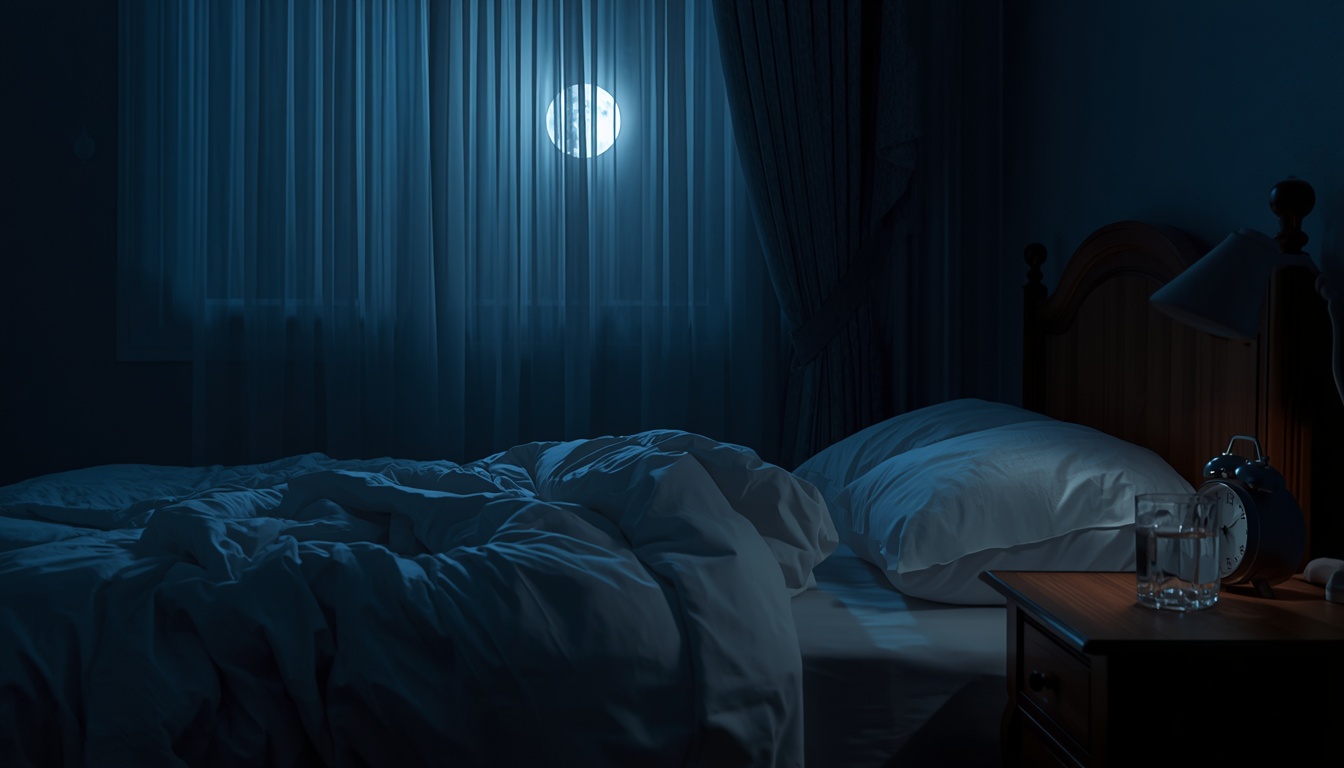
The clock says 3:17. The house is quiet. Your mind is not. You replay a conversation, plan tomorrow, or lie there calculating how many hours are left before the alarm.
Waking once in the night is not a broken sleep system. Human sleep was never one solid block for everyone, every night. What turns a normal dip into a miserable pattern is what happens next: light, worry, and the decision that this waking is an emergency.
What This Kind of Waking Feels Like
People describe a similar script. Sleep comes at a reasonable hour. Then, somewhere between 2 and 4 AM, they surface — sometimes after a dream, sometimes for no clear reason. The body may feel warm. The mind may feel oddly alert. Getting back to sleep can take 20 minutes or two hours.
This is different from never falling asleep at bedtime, and different from waking every hour all night. A single early-morning waking, especially if you can resettle, is often a circadian story more than a disease story.
Why the Small Hours Are a Fragile Window
Sleep is not one state. It cycles through lighter and deeper stages, with more REM toward morning. In the second half of the night, sleep is naturally lighter. Body temperature is near its daily low. Stress hormones such as cortisol begin their slow rise to help you wake later. Melatonin is still present but starting to ease.
That combination means a sound, a full bladder, a hot room, or a spike of worry is more likely to finish the job and bring you fully awake. In ancestral conditions, a brief night waking was ordinary. People often slept in two shifts with a calm waking in between. The modern problem is that we treat that waking as failure, turn on a phone, and teach the brain that 3 AM is thinking time.
Common Causes You Can Actually Work With
- Light at night, especially screens. Even a short burst tells the clock that day has started.
- Alcohol in the evening. It can help you drop off and then fragment the second half of the night.
- Late heavy meals or reflux. Lying flat plus a full stomach is a classic 2 AM combination.
- A bedroom that is too warm. Core temperature needs to stay a little low for sleep to hold.
- Caffeine later than your body can clear it. For many adults that means after early afternoon.
- Inconsistent wake time. Weekend sleep-ins shift the clock and make weekday small hours more fragile.
- Stress that has no daytime landing place. The quietest hour is when unfinished thoughts get a microphone.
Hormones can play a role too. Perimenopause brings night sweats and lighter sleep. Pregnancy changes bladder and breathing. These are real, and they still improve when the basics — cool dark room, less evening alcohol, a wind-down — are in place.
Hidden Triggers
Some 3 AM patterns hide in ordinary habits:
- Checking the time, which turns a waking into a math problem
- A pet that stirs at the same hour
- Street noise or a neighbor’s early schedule that you have half-adapted to
- Blood sugar dips in people who eat very little at dinner or drink only alcohol after a skipped meal
- Evening workouts so intense that the nervous system is still “on”
- Napping late in the day so night sleep is not deep enough to hold
None of these make you a poor sleeper by nature. They make a light part of the night easier to break.
When Early Waking Is Not “Just Stress”
See a clinician if you have:
- Loud snoring, gasping, or witnessed pauses in breathing
- Persistent early waking with low mood, loss of interest, or hopelessness — classic in some depressions
- Night sweats with weight loss, fever, or a new severe headache
- Chest pain, severe shortness of breath, or a racing heart that does not settle
- Pain that reliably splits the night and does not respond to simple measures
- A need to urinate many times that is new or worsening
Sleep apnea, thyroid problems, reflux disease, and mood disorders all deserve proper care. A 3 AM waking can be the first clue, not the whole diagnosis.
Myths vs Facts
Myth: Healthy people never wake at night.
Fact: Brief awakenings are normal. The skill is returning to sleep without turning the waking into a project.
Myth: If you wake at 3 AM you should get up and start the day.
Fact: If you feel sleepy, staying in the dark and allowing another cycle is often better. Get up only if you are truly alert and frustrated after a stretch of trying.
Myth: You must know why you woke or you cannot sleep again.
Fact: Hunting for a reason is itself arousing. The body often resettles if you stop interviewing it.
Myth: Melatonin at 3 AM fixes the problem.
Fact: Extra melatonin in the middle of the night is not a standard fix for this pattern and can leave you groggy. Timing of light and wake time usually matter more.
How to Fall Back Asleep
The goal is to make 3 AM boring again.
- Do not check the clock if you can help it. Knowing the number rarely helps.
- Keep the room dark. If you must leave bed, use the dimmest warm light.
- Stay cool. One less blanket often works better than tossing.
- Use a simple body cue — slow nasal breathing, a familiar phrase, or a dull mental list such as naming objects in a childhood room. Novelty wakes the brain; repetition lets it drop.
- If you are angry-awake after about 20 minutes, go to another dim room and do something quiet and uninteresting until sleepiness returns. Then go back to bed.
- Protect the next morning’s wake time. Sleeping in “to catch up” after a bad night often makes the following 3 AM worse.
By day, give the clock clearer signals: morning outdoor light, meals earlier rather than a late feast, caffeine cut-off, and a wind-down that does not include work email. These are the same levers described in pieces on darkness, dawn, and daylight-timed meals — because night waking is often a daytime timing problem wearing pajamas.
When to See a Doctor
Book a regular appointment if early waking lasts for weeks, if you cannot function, or if mood is sliding. Bring a simple sleep log: bedtime, wake time, how often you surface, alcohol, and caffeine. That is more useful than a perfect memory.
Seek urgent care for chest pain, severe breathlessness, or thoughts of self-harm. If night feels unsafe because of mood, contact local emergency or crisis services.
FAQs
Is waking at 3 AM a liver problem, as some traditions say?
Traditional body-clock maps are not the same as modern diagnosis. Liver disease has other signs. Most 3 AM wakings in otherwise well people are sleep architecture plus habits, not hidden organ failure.
Why is my mind so loud only at night?
There is no daytime competition. The brain fills the quiet. A short “worry dump” on paper before bed often steals power from the 3 AM version of the same list.
Can kids have this pattern too?
Yes, especially after schedule changes, illness, or a later bedtime. The same rules help: dark room, consistent wake time, low drama at night.
Does magnesium or herbal tea fix it?
A warm, caffeine-free drink can be part of a wind-down. No supplement replaces light timing, alcohol limits, and a cool dark room. If you use supplements, treat them as optional extras and check interactions if you take other medicines.
How long until a better pattern sticks?
Many people notice quieter nights within one to two weeks of a consistent wake time and no clock-checking. A month of practice is a fair test before deciding the pattern is “just how I am.”
Conclusion
Two-to-four AM is a naturally lighter part of the night. Waking there does not mean your sleep is collapsing. It means a fragile window met a trigger — heat, light, a full bladder, a late drink, or a mind that finally had silence. Make the window dull again: dark, cool, no phone, same morning wake time. Most bodies remember how to finish the night once you stop treating the waking as a crisis.