
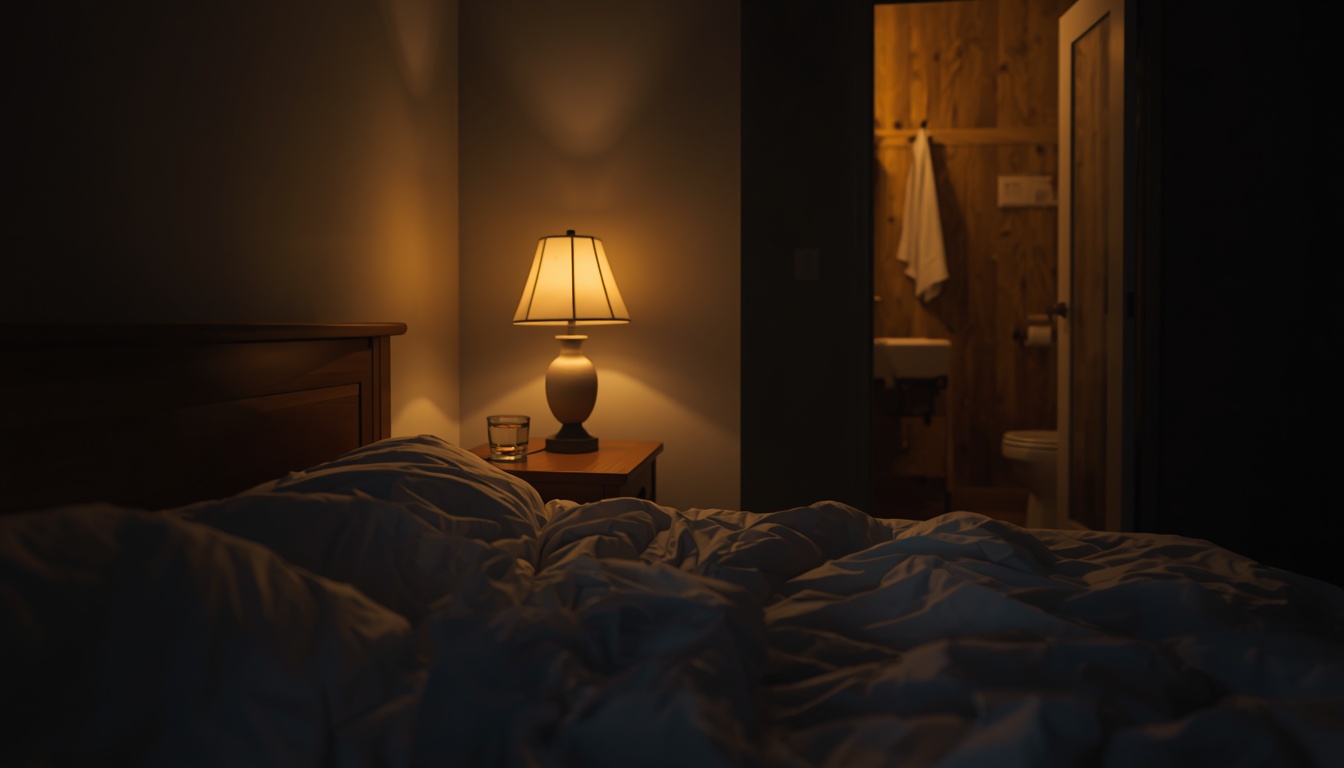
You finally fall asleep. Then the bladder sends a memo. One trip can feel like a footnote. Two or three fragment the night, sour the morning, and make you suspicious of every evening glass of water.
Needing to pee at night — nocturia — is extremely common and usually not a single dramatic disease. It is often evening fluid timing, a supper that was also a drink, legs that pooled water all day then returned it when you lay down, caffeine or alcohol still on the clock, or a sleep system that was already light. A sleep system that still expects darkness and dawn notices every hallway light. The useful work is to sort ordinary stacks from the smaller list of problems that need a clinician.
What Nighttime Urination Actually Is
By day, a healthy adult bladder holds urine and the brain mostly ignores it until a convenient pause. At night, antidiuretic hormone normally tells the kidneys to make less, more concentrated urine so you can sleep in longer blocks. Nocturia means you wake because the bladder feels full, or because something else woke you and the bladder took the opportunity.
Those two paths matter. True production of a lot of urine overnight is different from a small bladder that is irritable, a prostate that will not empty fully, or a light sleeper who notices every milliliter. People who wake between 2 and 4 a.m. for other reasons often add a bathroom trip that looks like a bladder problem when the first event was arousal.
Why It Shows Up After Lights Out
Fluid that was stored in the legs comes home. Sitting and standing all day let water sit in the lower legs. Veins that still expect the calf pump and lymph that still expects you to walk do this less neatly in a chair-heavy life. When you lie down, that fluid returns to the bloodstream. The kidneys see extra volume and make urine. The 1 a.m. trip is yesterday afternoon’s sitting, arriving late.
The last drink was closer to bed than you think. Tea after dinner, a large water bottle “to be healthy,” soup, fruit, and ice cream are all fluid. Alcohol both increases urine and fragments sleep. Caffeine late in the day does both as well, even if you “can drink coffee and sleep.”
The bladder did not get a last empty. A rushed bedtime, a long commute home, or falling asleep on the sofa means you lie down with a head start. The first cycle of sleep is then competing with a tank that was already partly full.
Sleep itself is lighter. Screens, late meals, and a warm bedroom raise the odds of brief awakenings. Once you are awake, bladder signals that you would have slept through become a trip down the hall. Nighttime nasal congestion can do the same by fragmenting sleep; a nose that gets stuffy at night is a surprising partner in nocturia.
Age and hormones change the night shift. Older adults often make a larger share of their 24-hour urine after dark. In men, a growing prostate can leave residual urine, so a smaller additional amount feels urgent. In women, after childbirth or around menopause, pelvic support and urethral closure can change the threshold for “I need to go.” A pelvic floor that still expects walking and a squat is part of that story, not the whole story.
Common Causes You Can Often Work With
- Most of the day’s water taken after 6 p.m.
- Alcohol with dinner or a nightcap
- Afternoon and evening coffee, tea, cola, or energy drinks
- Salty restaurant meals that increase thirst and overnight urine
- Long sitting, then bed, with swollen ankles by evening
- Diuretic timing — morning pills taken at night by accident, or tea used as a “digestif”
- Constipation occupying space next to the bladder
- Going to bed later than your usual sleep window, so the night is short and every wake counts
Hidden Triggers
- Sleep apnea — brief oxygen dips and heart-stretch signals tell the body to dump fluid. People wake to pee and blame the water glass
- Uncontrolled blood sugar, which pulls water into urine
- A cold bedroom that makes you tense, then a warm bathroom that fully wakes you
- Checking the phone on the way back from the toilet, which turns one trip into an hour of light
- Calcium channel blockers and some other medicines that increase ankle swelling by day and urine by night
- Habit: the bladder learns that 2 a.m. is bathroom o’clock even when the volume is modest
Less Common but Serious
New, frequent urination with burning, fever, or blood suggests infection. Thirst, weight loss, and large volumes day and night raise the question of diabetes. Swelling in the legs plus breathlessness can point to heart or kidney trouble — the night trips are a symptom of fluid handling, not a personality trait.
A man with a weak stream, straining, and a sense of incomplete emptying needs a prostate conversation. A woman with leaking on the way to the toilet, pelvic pressure, or pain deserves more than “drink less.” Sudden inability to urinate is an emergency.
When to Worry
- Blood in the urine, fever, flank pain, or vomiting
- Drinking constantly and still producing large volumes around the clock
- Shortness of breath, chest pain, or rapidly worsening leg swelling
- Accidents, a weak stream, or pain with urination
- Night trips that are new, escalating, and paired with weight loss or bone pain
Myths vs Facts
Myth: Healthy people never wake to pee.
Fact: One trip after midlife is common. Two or more most nights is worth a look, but it is not automatically cancer or kidney failure.
Myth: The fix is to stop drinking water.
Fact: Daytime under-drinking plus a gulp at 9 p.m. is a classic setup. Shift fluid earlier rather than drying yourself out.
Myth: If the volume is small, it cannot be medical.
Fact: Small volumes with urgency can be bladder irritability, incomplete emptying, or a light sleeper. Large volumes suggest a production problem. Both deserve a pattern, not a guess.
Myth: Cutting evening water will fix sleep apnea–related nocturia.
Fact: If apneas are driving the hormone signal, the bathroom trips often persist until breathing at night is treated.
How to Manage Ordinary Night Trips
Front-load fluid. Drink most of what you need with breakfast, mid-morning, and afternoon. Taper after dinner rather than racing the clock with a dry mouth at 4 p.m. and a bottle at 9.
Make the last toilet trip honest. Sit long enough. Do not hover. For some people a second attempt after washing up catches the last of it.
Use the calf pump before bed. A ten-minute walk after dinner, ankle pumps on the sofa, or legs up the wall for a few minutes can move daytime pooling earlier, so the kidneys do some of the work before sleep instead of at 1 a.m.
Watch the usual suspects after mid-afternoon. Alcohol, caffeine, and very salty meals. Herbal “sleep teas” are still fluid.
Keep the trip boring. Dim light, no phone, back to bed. A sleep system that still expects darkness does better when the hallway is not a second living room.
Treat constipation and evening swelling as bladder issues. They often are. Loose clothing, daytime walking, and a regular bowel habit reduce pressure and overnight fluid shifts.
Review timing of medicines with a clinician. Some diuretics belong in the morning. Do not move prescription pills on a blog’s advice alone.
Notice the pattern for a week. How many trips, roughly how much, what you drank after 4 p.m., whether ankles were puffy. That log is more useful than another anxious search at 3 a.m.
When to See a Doctor
Book a visit if you pee twice or more most nights for several weeks, if days are also changing, or if any red-flag symptoms above appear. Bring the week’s pattern. Simple urine tests, blood sugar, a blood pressure check, and a conversation about prostate, pelvic floor, sleep apnea, and medicines sort most cases. Pelvic floor therapy helps some people. Night-time medicines exist for selected patients; they are not the first lever for a late-tea problem.
FAQs
Is one trip a night after 50 normal?
Often yes. It becomes a problem when it fragments sleep or is increasing quickly.
Should I stop drinking after 6 p.m.?
Not if you are thirsty or active. Shift the bulk earlier and keep a modest evening amount if your mouth is dry.
Why is it worse when I sleep in a hotel?
Different bed, lighter sleep, later dinner, more alcohol, and a bathroom you can see from the pillow. The bladder is opportunistic.
Can children have this?
Night wetting in children is a different topic from adult nocturia. New frequent night waking to pee in a previously dry child needs a clinician, especially with thirst or weight change.
Does cranberry juice help?
It is fluid, and it does not treat ordinary nocturia. It is not a night-time strategy.
Conclusion
A bladder that speaks at night is often finishing the day’s paperwork: fluid you stored in your legs, a drink that landed late, a meal that was also a bowl of soup, or a sleep that was already thin. Sometimes it is a prostate, a pelvic floor, sugar, or breathing. Rarely is it a reason to panic in the hallway.
Give the kidneys their work in daylight. Empty honestly before bed. Walk the fluid out of your ankles before you lie down. Keep the return trip dark and dull. If the nights stay busy, get the simple tests rather than retiring your water glass. Most people can reclaim longer stretches of sleep without turning evening into a desert.