
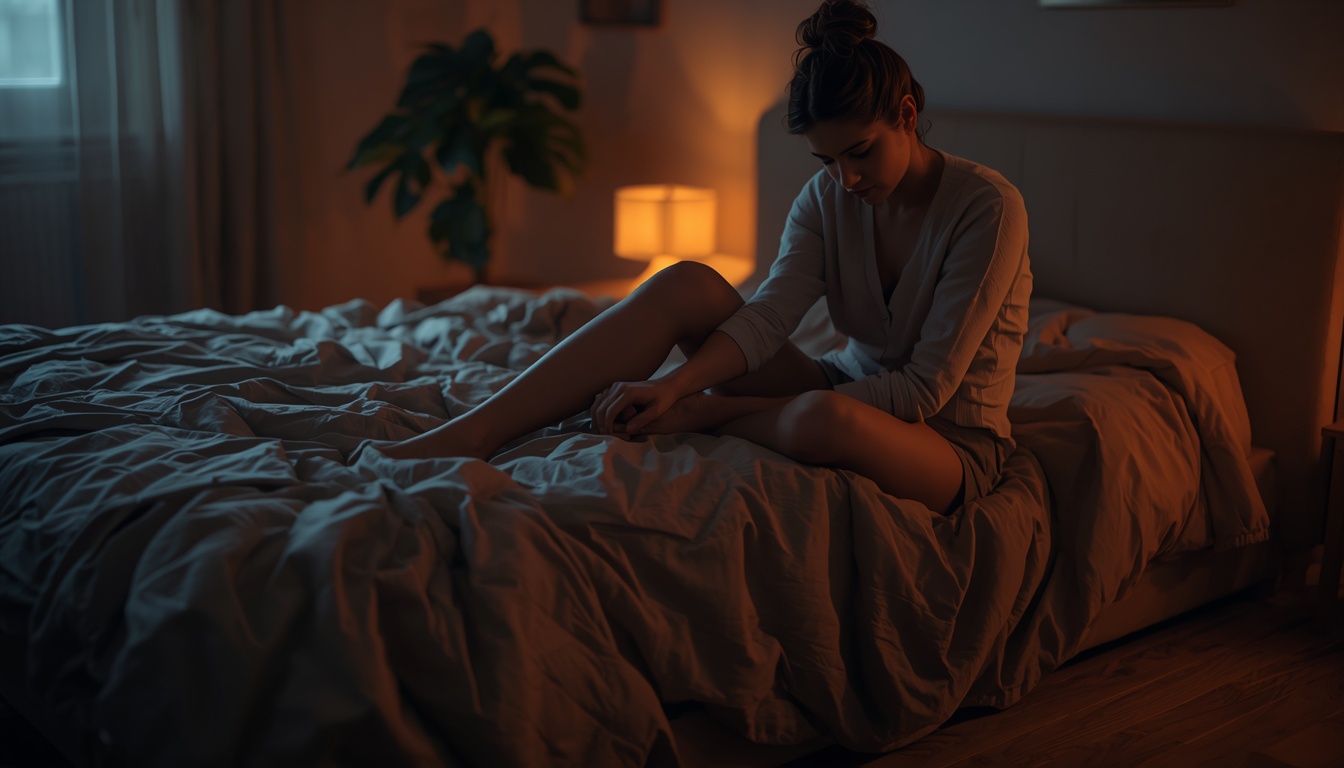
The day is over, the lights are low, and your legs refuse the script. An itch you cannot scratch lives inside the calves. You have to move, stretch, walk the hall, kick the sheet off. The moment you settle, the urge comes back. Restless legs are one of the most common reasons people dread going to bed, and they are also one of the most misunderstood. They are not “just anxiety.” They are also not usually a sign that the nerves are dying.
Restless legs syndrome — clinicians also call it Willis–Ekbom disease — is a sensorimotor pattern. The brain’s evening handling of movement and sensation gets noisy. Iron in a small region of the brain, dopamine timing, sitting, caffeine, pregnancy, and some medicines all feed that noise. The legs want motion because motion briefly turns the volume down.
What Restless Legs Feel Like
People describe crawling, pulling, fizzing, an ache that is not a cramp, or “cola in the veins.” It starts or worsens at rest, especially in the evening. Moving helps, at least for a minute. Lying still in a meeting or on a plane can bring a milder version in the afternoon. Nighttime is the classic peak because the system that keeps movement quiet is winding down with the clock.
This is different from a nocturnal leg cramp, which is a sudden hard knot, the pattern covered in why legs cramp at night. It is also different from the pins-and-needles of a foot that fell asleep. Restless legs are an urge. The discomfort lives in the quality of the sensation, not only in a locked muscle.
Many people also have periodic limb movements in sleep — small kicks every 20 to 40 seconds that a partner notices. You can have one without the other. Both are more common with age, in women, and in pregnancy, but children can have them too.
Why Evening Turns the Volume Up
A tight circuit in the brain uses dopamine to gate sensory noise from the legs. That circuit is sensitive to iron. When iron stores in the brain are low — even if a standard anemia test looks only “low-normal” — the gate is sloppy. Evening is when dopamine signaling in this pathway naturally dips. Sitting still removes the sensory competition that walking provided all day. The result is a signal that feels like you must move.
Modern evenings pile on extra switches. Long sitting after dinner. A late coffee or glass of wine. A hot bath then a cool bedroom. Screens that delay sleep, the same circadian tug described in why the sleep system still expects darkness and dawn. None of those invent restless legs. They unmask a tendency that was already there.
Common Causes
Low iron stores. Ferritin can sit in a range that is “fine” for blood counts and still be too low for this circuit. Pregnancy, heavy periods, frequent donation, and a low-iron diet are classic setups.
Evening rest after a still day. The legs did not get the walking they were built to do, then they are asked to be silent for eight hours.
Caffeine, alcohol, and nicotine late in the day. All can fragment the same evening chemistry.
Medications. Some antihistamines, anti-nausea drugs, and certain antidepressants can worsen symptoms. That is a conversation with the prescriber, not a reason to stop a needed medicine on your own.
Family pattern. Restless legs often run in families. The threshold is inherited; the evening habits decide how loud it gets.
Hidden Triggers
A very hard workout that leaves the legs buzzing, then a long sofa evening. Tight socks and a heavy duvet that overheat the feet. Dehydration. A skip of the usual afternoon walk. Uncontrolled blood sugar. Kidney disease and neuropathy, which belong in a clinic if other signs are present. Sleep loss itself, which makes the next night worse — a loop that also shows up in how sleeping in can leave you feeling off.
Kids may describe “growing pains” or an inability to keep their legs still at homework time. The same iron and evening pattern can sit underneath. Treat a child’s complaint as real, not as stalling.
Less Common but Serious
Restless legs can ride along with significant iron deficiency, pregnancy complications that need ordinary prenatal care, kidney disease, or nerve problems. New, one-sided weakness, loss of bladder control, or rapidly worsening night pain is not restless legs and needs prompt evaluation. Isolated evening fidgets with relief from walking are still the common story.
When to Worry
See a clinician if the urge regularly steals sleep, if you need to walk every night, if you are pregnant and miserable, if you have heavy periods or a known low ferritin, or if symptoms are new after a medication change. Occasional fidgets on a late, caffeinated night that settle after a short walk are annoying, not an emergency.
Myths vs Facts
Myth: Restless legs are in your head.
Fact: They have a measurable brain and iron signature. Stress can amplify them. It does not invent them.
Myth: You just need more magnesium.
Fact: Magnesium helps some people who are low. Iron status, evening habits, and medicines explain more cases. A supplement is not a diagnosis.
Myth: Only older adults get this.
Fact: It is more common with age, but teens, pregnant people, and blood donors get it too.
Myth: You should take a dopamine drug at the first twitch.
Fact: Those medicines have a place in severe cases and can also worsen symptoms over time if used casually. Start with iron checks, movement, and trigger removal.
How to Quiet Restless Legs
Ask for a ferritin and iron panel, not only a hemoglobin. Many sleep and movement specialists aim for a higher ferritin target than the “not anemic” line on a lab printout — your clinician will interpret that for you. Do not start high-dose iron on your own if you have no confirmed need; extra iron is not harmless.
Give the legs an evening job they understand: a 10- to 20-minute walk after dinner, gentle calf and hip stretches, or a short session of easy cycling. Heat or a warm bath early in the evening helps some people; a cool room and uncovered feet help others. Experiment once, not all at once.
Move caffeine to the morning. Keep alcohol modest and not as a nightcap. If you sit all day, break it up — the same muscle-pump logic as why veins still expect the calf pump. A consistent bedtime beats sleeping in, because a shifted clock makes the evening dip sloppier.
When a flare starts in bed, get up and walk rather than fighting still. A minute or two of motion is more effective than lying there rehearsing the sensation. Compression, massage, and a light stretch of the calves are reasonable home tools. If sleep is regularly wrecked, a clinician can discuss iron repletion, other medical causes, and, when needed, prescription options that are chosen carefully.
When to See a Doctor
Make an appointment if you cannot sleep several nights a week, if a partner reports frequent kicking, if you are pregnant and miserable, or if you have heavy periods, a restricted diet, or a chronic illness. Bring a list of medicines and a simple diary of caffeine, evening walks, and how bad the nights were. That history is often more useful than another scan.
FAQs
Is this the same as ADHD fidgeting?
Some people have both. Restless legs have a strong evening-and-rest pattern and relief with movement. Daytime fidgeting without that clock is a different conversation.
Can kids have restless legs?
Yes. They may not have the adult vocabulary. Evening discomfort, trouble settling, and a family history are clues. Iron status is worth checking with a pediatric clinician.
Will stretching alone fix it?
Stretching helps many flares. It rarely replaces an iron check or a change in evening stimulants if those are the drivers.
Does exercise make it worse?
Moderate daytime movement usually helps. A very hard late workout can temporarily increase the buzz. Morning or afternoon activity is the safer default while you are settling a flare.
Are periodic limb movements dangerous?
They fragment sleep for some people and are harmless extra motion for others. They matter when you or a partner are exhausted, not because the kicks themselves injure the legs.
Conclusion
Restless legs are a noisy evening circuit, not a moral failure and not usually a hidden catastrophe. Iron, timing, sitting, and stimulants turn the volume up. Walking, a cooler simpler night, and a proper look at ferritin turn it down. You do not have to wait until sleep is wrecked to treat the pattern as real. Give the legs a little honest motion before bed, clean up the late-day triggers, and get the simple bloodwork that actually matches the biology. For most people, that is enough to make night feel like night again.