
Humans evolved skin, metabolism, and physiology tuned to specific climates and sunlight. Modern relocation creates evolutionary mismatches — especially with melanin and vitamin D. Here’s what the science shows and how to protect yourself.
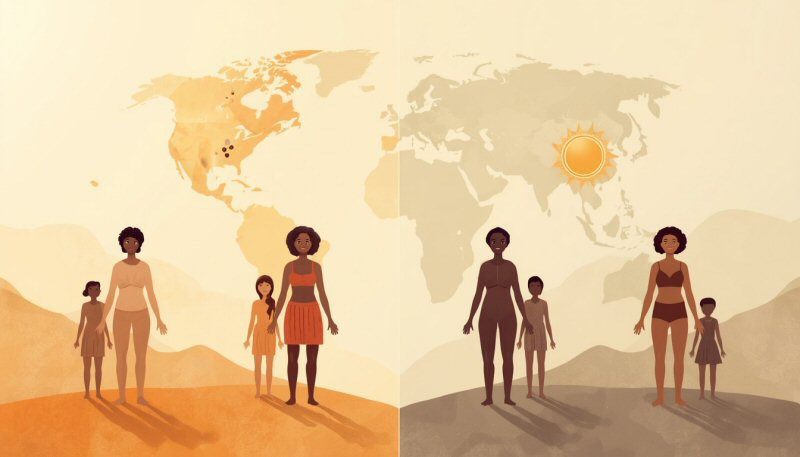
Most of us take for granted that we can pack up and move to another country for work, study, or a better life. Planes, visas, and remote jobs make geographic mobility feel normal. Yet our biology still carries the imprint of the places where our ancestors lived for tens of thousands of years. Skin tone, vitamin D production, heat tolerance, and even some aspects of metabolism were shaped by local sunlight, temperature, and climate. When people relocate far from those ancestral environments, subtle mismatches can appear — sometimes as fatigue, bone weakness, higher infection risk, or greater vulnerability to certain skin conditions.
One of the clearest examples is melanin, the pigment that gives skin its color. Understanding this evolutionary story helps explain why some health patterns track ancestry and latitude more closely than diet or lifestyle alone. The good news is that awareness, modest adjustments, and modern tools can close most of the gap.
What Evolutionary Mismatch Means
Evolutionary mismatch describes situations in which a trait that was once helpful in the environment where it evolved becomes less useful — or even problematic — in a new setting. Human skin pigmentation is a textbook case. For the vast majority of our species’ history, populations stayed within relatively narrow geographic bands. Natural selection fine-tuned skin color, body proportions, and related physiology to the intensity and seasonality of ultraviolet radiation, temperature extremes, and local food sources.
In the last few centuries, and especially the last few decades, long-distance migration has accelerated far faster than genetic change. People with skin adapted to intense equatorial sun now live under the weak winter light of northern Europe or Canada. People whose ancestors evolved pale skin under cloudy high-latitude skies now live under strong tropical or desert sun. Clothing, indoor work, sunscreen, and heated or air-conditioned buildings further separate daily life from the outdoor conditions our physiology still expects. The result is not that every disease is caused by geography, but that certain vulnerabilities become more common when ancestry and current latitude diverge.
The Melanin Story: Evolution’s Compromise
Melanin is not simply about appearance. It is a biological filter that balances two competing needs: protection from excessive ultraviolet radiation and the ability to produce vitamin D from the limited UVB rays that do reach the skin.
Near the equator, intense year-round UV damages DNA, raises skin-cancer risk, and breaks down folate — a B vitamin essential for cell division and fetal development. Darker skin, rich in eumelanin, acts as a natural sunscreen. Anthropologists such as Nina Jablonski and colleagues have shown that this highly pigmented skin was the ancestral state for modern humans in Africa. As populations moved into higher latitudes, UVB levels dropped, especially in winter. The same protective melanin that was beneficial near the equator began to limit vitamin D synthesis. Over thousands of years, natural selection favored lighter skin in those regions so that enough UVB could penetrate to produce the vitamin D needed for bone health, immune function, and reproduction.
The correlation is remarkably consistent: skin reflectance (how light the skin is) tracks both absolute latitude and measured UV intensity across indigenous populations. Intermediate latitudes produced intermediate pigmentation with a strong capacity to tan seasonally. The process happened more than once through different genetic pathways in European and East Asian lineages, underscoring how powerful the selective pressure was.
Today, when someone with high-melanin ancestry lives long-term at high latitude with limited outdoor time, vitamin D production can fall short even if the person spends time outdoors in summer. Conversely, someone with low-melanin ancestry who spends prolonged unprotected time under strong tropical sun faces elevated cumulative UV damage.
Health Consequences of the Mismatch
The most extensively documented consequence involves vitamin D status. Darker skin requires longer UVB exposure to generate the same amount of vitamin D as lighter skin. Population studies repeatedly find higher rates of vitamin D insufficiency or deficiency among people of African, South Asian, or other high-melanin ancestries living in northern Europe, Canada, the northern United States, and similar latitudes — even after accounting for diet. Low vitamin D is linked to reduced bone density, higher fracture risk in older adults, muscle weakness, and, in some research, greater susceptibility to certain infections and autoimmune conditions.
On the other side of the spectrum, lightly pigmented skin in high-UV environments carries higher lifetime risk of sunburn, photoaging, and both melanoma and non-melanoma skin cancers when protection is inadequate. These patterns are well recognized in dermatology and public-health data.
Other effects are subtler. Seasonal mood changes, immune-seasonality differences, and variations in heat or cold tolerance can also reflect ancestral climate adaptations interacting with a new environment. None of these outcomes are inevitable; they represent elevated probability that can usually be mitigated.
Other Climate-Linked Adaptations Beyond Melanin
Skin color is the most visible example, but it is not the only one. Body proportions tend to follow ecological rules: populations from colder climates often have stockier builds and shorter limbs that conserve heat, while those from hotter climates frequently have longer limbs and leaner frames that dissipate heat more readily. High-altitude populations in Tibet, the Andes, and Ethiopia show distinct genetic adaptations for oxygen use. Lactase persistence (the ability to digest milk into adulthood) rose in populations that relied on dairy herding. Even aspects of circadian biology and fat storage show geographic signatures.
When these traits meet a very different modern environment — air-conditioned offices in the tropics, heated homes in the far north, year-round indoor work everywhere — the original adaptive advantages can diminish or reverse. The point is not that people “belong” only in one place, but that biology retains a memory of the climates that shaped it.
Hidden Triggers in Modern Life
Several everyday factors amplify geographic mismatch:
- Indoor-centric work and schooling that sharply reduce cumulative UVB exposure, even in sunny cities
- Glass windows that block nearly all UVB, so a bright office or car interior contributes almost nothing to vitamin D production
- Widespread sunscreen use and cultural clothing practices that further limit skin exposure
- Seasonal cloud cover and shorter winter days at higher latitudes that already restrict UVB
- Higher body-fat percentage, which can sequester vitamin D and lower circulating levels
- Diets low in the few natural food sources of vitamin D (fatty fish, egg yolks, fortified foods)
These triggers help explain why deficiency rates remain high even among people who believe they get “enough sun.” For a deeper look at why vitamin D and B12 shortfalls persist despite seemingly adequate diets, see our related article on why vitamin D and B12 deficiencies keep rising.
Myths vs Facts
Myth: Darker skin completely prevents vitamin D production.
Fact: Darker skin slows production and requires longer exposure, but it does not block it. With sufficient time outdoors or with supplementation, adequate levels are achievable.
Myth: Only people with very dark skin need to worry about vitamin D at high latitudes.
Fact: Anyone with limited outdoor time, higher body fat, older age, or certain medical conditions can develop low levels. Ancestry and latitude simply raise the probability.
Myth: Light-skinned people living near the equator are automatically safe from vitamin D issues.
Fact: Indoor lifestyles, sunscreen, and clothing can still produce deficiency even in high-UV regions.
Myth: Evolutionary mismatch means people should only live in their ancestral climate.
Fact: Humans are highly adaptable. Culture, clothing, architecture, fortification, and medical knowledge allow healthy lives almost anywhere. The mismatch concept simply highlights where extra attention is useful.
Myth: Skin color is only about recent ancestry or race categories.
Fact: Pigmentation is a continuous trait shaped by multiple genes and local UV history over tens of thousands of years. Modern population labels are imperfect proxies.
How to Manage and Reduce Risk
Most mismatches can be addressed with practical, low-burden steps:
- Know your baseline. A simple blood test for 25-hydroxyvitamin D is the most direct way to assess status, especially if you have high-melanin ancestry and live at higher latitude, spend most days indoors, or have symptoms such as persistent fatigue or muscle aches.
- Strategic sun exposure. Short periods of midday sun on arms and legs (without burning) can help, but the required time varies greatly by skin tone, latitude, season, and cloud cover. Never aim for erythema.
- Dietary and supplemental vitamin D. Fatty fish, fortified dairy or plant milks, and egg yolks contribute. Many people, particularly those at higher risk, benefit from a daily supplement; typical adult ranges used in research and clinical practice often fall between 1000–4000 IU, but individual needs differ. Consult a clinician for personalized dosing, especially if levels are already low.
- Skin protection when UV is strong. For lighter skin or anyone spending extended time under intense sun, clothing, shade, and broad-spectrum sunscreen remain the primary defenses against cumulative damage.
- Support overall metabolic health. Maintaining a healthy body composition, managing chronic inflammation, and ensuring adequate magnesium and other cofactors all help vitamin D function more effectively.
- Seasonal awareness. In winter at higher latitudes, UVB is often insufficient for meaningful synthesis regardless of skin tone. Relying more on food and supplements during those months is rational.
These steps do not require abandoning modern life. They simply restore some of the inputs the body still expects.
When to Worry and When to See a Doctor
Most evolutionary mismatches produce gradual, manageable effects rather than sudden emergencies. Still, certain signs warrant medical attention:
- Persistent unexplained fatigue, muscle weakness, or bone pain
- Frequent fractures or delayed healing
- Mood changes that track seasons and do not improve with light or routine self-care
- New or changing skin lesions, especially in people with lighter skin living in high-UV climates
- Known malabsorption conditions, bariatric surgery history, or long-term use of medications that interfere with vitamin D or calcium metabolism
A clinician can order appropriate blood work, rule out other causes, and guide safe supplementation or further evaluation. Severe vitamin D deficiency can affect bone mineralization and, in extreme cases, contribute to osteomalacia or rickets; these are preventable with timely attention.
Frequently Asked Questions
Does moving to a new climate permanently change my health risks?
No. Risks shift with current exposure, lifestyle, and latitude. Many effects are reversible or manageable once recognized.
Should I get genetic testing for skin-related traits?
Usually unnecessary for everyday decisions. Ancestry, current location, lifestyle, and a vitamin D blood test provide more actionable information for most people.
Can children of mixed ancestry face unique challenges?
They may inherit intermediate pigmentation and therefore intermediate risk profiles. The same principles — adequate vitamin D assessment and sensible sun practices — still apply.
Is the mismatch only about vitamin D and skin cancer?
Those are the best-documented examples. Other climate-linked traits (thermoregulation, circadian responses, certain metabolic tendencies) can also interact with new environments, though the evidence is often less precise.
Do people who never leave their ancestral region avoid all these issues?
Not entirely. Indoor lifestyles, air pollution, clothing, and dietary shifts create mismatches even without long-distance migration. Geography is one important factor among several.
Conclusion
Your body carries a quiet record of the climates that shaped your ancestors. Melanin is the most visible chapter of that record: a sophisticated evolutionary compromise between sun protection and vitamin D production. When modern life moves people far from the latitudes and outdoor patterns that selected those traits, measurable health differences can emerge. The differences are real, but they are rarely destiny.
Understanding the mismatch removes unnecessary mystery from symptoms such as stubborn low vitamin D or heightened sun sensitivity. With straightforward testing, thoughtful sun and skin practices, and targeted nutrition, most people can live healthily in almost any climate. The goal is not to return to a single ancestral homeland, but to work with the biology we inherited while fully participating in the mobile world we now inhabit.