Two or three sneezes in a burst are usually one irritant still sitting on the nasal lining, not a weak reflex or a sign the cold is worse.
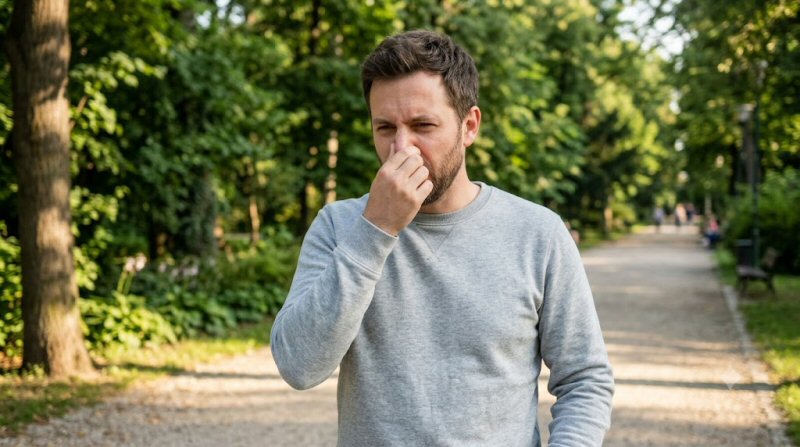
You step into bright pollen, pepper dust, or a cold doorway, and the first sneeze does not finish the job. A second follows almost at once, then often a third, sometimes a fourth, before the nose finally settles. It can feel excessive, as if the reflex misfired. In most people it is the ordinary pattern. A single blast rarely clears the trigger. The lining stays irritated for a few seconds, and the brainstem runs the program again.
A short salvo that ends on its own is normal anatomy. A new pattern of endless fits, a sneeze that brings a thunderclap headache, or bleeding that will not stop is a different question.
What a Sneeze in a Row Feels Like
The warning is familiar. The nose prickles high inside, often toward the bridge. The eyes may water. Breathing pauses. Then the expulsive blast, a brief wet relief, and almost immediately the tickle returns. The second sneeze often feels stronger than the first. By the third, many people feel the lining has finally cleared, and the urge drops.
A healthy burst is usually two to four sneezes, occasionally five, over a few seconds. The eyes water, the nose runs for a minute, and then it stops. You can talk, swallow, and breathe through the nose again. There is no chest pain, no spinning, and no headache that peaks like a clap of thunder.
Allergy bursts can repeat through the morning, especially after waking into bedroom dust or stepping outside in pollen season. Cold-virus bursts cluster in the first days of a cold, then fade. Pepper, strong perfume, and a sudden change from cold air to a warm room can each trigger one short row and nothing more.
Why One Sneeze Is Often Not Enough
The point of a sneeze is to clear the nasal lining. Dust, pollen grains, viral particles, and droplets of histamine-rich fluid sit on a broad surface. One expulsion throws a lot of that material forward, but it does not vacuum the mucosa. Whatever remains keeps firing the same sensory endings.
Those endings are trigeminal nerve fibers in the nasal lining. They respond to mechanical dust, to chemical irritants, and to inflammatory mediators. Histamine, released by mast cells in allergic rhinitis, is especially good at producing a run of sneezes rather than a single one. Niels Mygind’s nasal-challenge work showed that a histamine stimulus in a sensitive nose reliably produces a sneezing salvo, not a lone blast. The chemical is still bound for seconds after the first expulsion, so the reflex has a reason to fire again.
There is a short refractory period after a sneeze, but it is brief. It is long enough to reset the inspiratory muscles, not long enough to ignore an irritant that is still there. When the lining finally clears, or the histamine pulse fades, the row stops. That is why the last sneeze in a burst often feels like the satisfying one.
How the Reflex Is Built
The sneeze is a brainstem reflex, not a habit you can fully decide. Sensory traffic from the nose travels in trigeminal branches into the medulla. Animal mapping by H. L. Batsel and A. J. Lines placed a sneeze-related network in the lateral medulla, close to the circuits that time ordinary breathing. A later clinical review by Murat Songu and Cemal Cingi described the same idea in human terms: a patterned motor program, once triggered, runs to completion.
The program has a few phases. A nasal tickle builds. A deep inspiration loads the lungs. The glottis closes briefly so pressure can rise. Then the glottis opens and air is driven out through the nose and mouth at high speed, while the eyes squeeze shut and the soft palate helps direct the blast. Ronald Eccles, working from the Common Cold Centre in Cardiff, grouped sneezing with the other early cold symptoms that are driven by nasal inflammation rather than by infection of the sneeze muscles themselves.
Because the program is a reflex arc, it prefers to repeat until the sensory input falls. That is also why trying to stifle every sneeze can feel unfinished. Pinching the nose and closing the mouth raises pressure in the airway and the ears. An occasional stifled sneeze is common. Making a habit of blocking the outlet is the part worth dropping.
A related but separate reflex is the photic sneeze, sometimes called ACHOO, in which bright light triggers a row of sneezes in genetically prone people. Henry Everett described sunlight sneezing in the 1960s, and it often arrives as a short series for the same reason: the trigger has not cleared after sneeze one. That light-triggered pattern is covered on its own in Is It Normal to Sneeze in Bright Sunlight?. Plucking a brow hair can do something similar through the same trigeminal neighborhood, which is why Is It Normal to Sneeze When You Pluck Your Eyebrows? belongs in the same family.
Common Causes
Most rows of sneezes come from a short list.
Allergic rhinitis is the classic producer of paroxysmal sneezing. Pollen, dust-mite debris, pet dander, and mold fragments land on a primed lining. Mast cells release histamine. The nose runs, itches, and fires two to ten sneezes in a cluster, often worse on waking or outdoors. James Baraniuk’s work on nasal reflexes helps explain why the same nose can also drip and congest once the sensory nerves are wound up.
A common cold does this too, especially in the first two or three days. Eccles and others have noted that sneezing, runny nose, and throat irritation lead the symptom list because the lining is inflamed, not because each virus particle must be sneezed out one by one.
Irritants act without allergy. Black pepper, chili dust, cigarette smoke, cleaning sprays, and some perfumes stimulate trigeminal chemesthesis. Cold, dry air can do it as well, which overlaps the watery drip described in Is It Normal for Your Nose to Run in the Cold?. A doorway between a cold street and a heated room is a frequent one-row trigger.
Physical tickle counts. A loose hair, a speck of dust, or a crumb of tissue left high in the nostril can drive repeated sneezes until it moves.
Hidden Triggers
A few quieter habits stretch a normal row into a morning routine.
Bedroom dust and a warm, dry radiator season leave the lining primed before breakfast. Sneezing in the shower is often steam plus old dust shaken from hair, not a water allergy.
Overusing decongestant sprays for more than a few days can leave rebound congestion and a hair-trigger nose. The sneeze row is then a side effect of the treatment.
Spicy food and a full stomach occasionally trigger a sneeze through shared autonomic wiring. That post-meal pattern is less common than allergy, but it is real.
Bright window light after a dim room can add a photic sneeze on top of an already itchy nose. Two triggers at once make a longer row.
Less Common but Serious
Repetitive sneezing is rarely the main clue to a dangerous disease. A few patterns are worth separating from the ordinary burst.
A sneeze that is followed by a sudden, severe headache, the worst of your life, needs urgent care. Forceful sneezing briefly raises pressure in the head, and a new thunderclap headache is not a normal part of a cold.
Sneezing with heavy nosebleeds, especially from one side only, or with a visible mass, one-sided blockage, or facial numbness, should be examined. Ordinary colds are bilateral and temporary.
Fits that arrive with wheeze, chest tightness, or shortness of breath can be an asthma flare set off by the same allergen. The sneeze is the clue. The breathing is the problem.
Very prolonged bouts, sneezing every few seconds for many minutes without a clear trigger, are uncommon. Intractable sneezing has been described as a rare reflex or functional disorder and deserves a clinician, not another antihistamine experiment at home.
When to Worry
Seek urgent care if a sneeze is followed by a thunderclap headache, fainting, chest pain, new weakness, trouble speaking, or a nosebleed you cannot stop with ten minutes of firm pressure.
Book a routine visit if rows of sneezes last most days for more than a couple of weeks, disturb sleep, come with wheeze, or stay one-sided. Also get checked if you have fever and facial pain that is worsening after a cold, or if stifling sneezes has left ear pain and muffled hearing that does not clear.
A two-to-four sneeze burst with a tickle, a brief runny nose, and a full stop is the pattern that does not need a workup.
Myths vs Facts
Myth: A real sneeze should happen only once. Fact: Clearance is incomplete after one blast, and histamine or dust often remains. Two or three is the usual healthy pattern.
Myth: Holding a sneeze in is safer and more polite. Fact: An occasional stifled sneeze is common, but blocking the nose and mouth traps pressure. Letting the sneeze out into a tissue or an elbow is the better default.
Myth: Sneezing several times means the cold is severe. Fact: Early colds and mild allergies both produce bursts. Severity tracks fever, breathing, and how long you are ill, not the count in one row.
Myth: You cannot sneeze while you sleep. Fact: Deep sleep suppresses a lot of reflexes, so sneezing is uncommon in deep sleep, but light sleep and allergies can still wake people with a burst. The old claim that sneezing is impossible asleep is too absolute.
Myth: Only allergies come in rows. Fact: Pepper, cold air, light, and a plain cold all do it.
How to Manage a Short Burst
Let the row finish into a tissue or the crook of the elbow. Forcing it shut mid-blast is what strains ears and throat.
If the trigger is obvious, step away from it. Leave the pepper cloud, the perfume counter, or the open window during a high-pollen hour. A saline rinse after outdoor time can clear grains the sneeze did not.
For a known allergy, a non-drowsy antihistamine used as labeled often shortens the morning salvo. A steroid nasal spray, used daily for allergen season rather than as a rescue puff, settles the lining that keeps recruiting sneezes. Start those with a clinician or pharmacist if you are pregnant, have glaucoma, or already use other nasal drugs.
Keep the bedroom cooler and less dusty if waking sneezes are the pattern. Wash pillowcases often in allergy season. Skip stacking decongestant sprays day after day.
If cold air is the trigger, a scarf over the nose for the first outdoor minute warms the first breaths and can abort the doorway row.
When to See a Doctor
See a clinician when bursts are daily, one-sided, paired with wheeze, or unchanged after a fair trial of avoiding the trigger and using simple allergy care. Children with sneezing plus poor sleep, mouth breathing, and dark circles under the eyes often have allergic rhinitis that is worth treating properly, not just waiting out.
Urgent review is for the red flags above: thunderclap pain, uncontrolled bleeding, breathing trouble, neurologic symptoms, or a sneeze that will not stop.
FAQs
Is two or three sneezes in a row normal?
Yes. Most healthy bursts are two to four sneezes. The first rarely clears the irritant, so the reflex runs again until the tickle drops.
Why is the second sneeze usually bigger?
The first blast does not empty the lining, and the inspiratory muscles have just loaded. Residual histamine or dust plus a fresh breath often makes sneeze two the strongest of the row.
Can bright light and dust both cause a series?
Yes. Dust and pollen act on nasal trigeminal fibers. Bright light triggers a separate photic reflex in prone people. Either one, or both together, can arrive as a short series.
Should I hold the sneezes in?
Prefer a tissue or an elbow. An occasional stifled sneeze is common, but regularly blocking the nose and mouth raises airway and ear pressure for no real gain.
Do allergy sneezes feel different from a cold?
Allergy rows often come with itch, watery drip, and no fever, and they repeat whenever you meet the trigger. A cold adds sore throat, fatigue, or fever and fades over several days. Both can sneeze in bursts.
When is a sneezing fit not normal?
If it lasts many minutes without a pause, stays strictly one-sided with bleeding or blockage, or is followed by a sudden severe headache, wheeze, or fainting, get it checked. A short row that ends on its own is ordinary.
Conclusion
A sneeze is a clearance reflex with a short memory. If the speck, the pollen, or the histamine is still on the lining, the medulla runs the program again. Two or three sneezes, a wet nose, and a clean stop are what that design looks like in daily life. Let the row finish, step away from the trigger, and treat a truly itchy allergic nose if the bursts own your mornings. Save the worry for a fit that will not end, a one-sided bleed, breathing trouble, or a headache that arrives like a thunderclap.