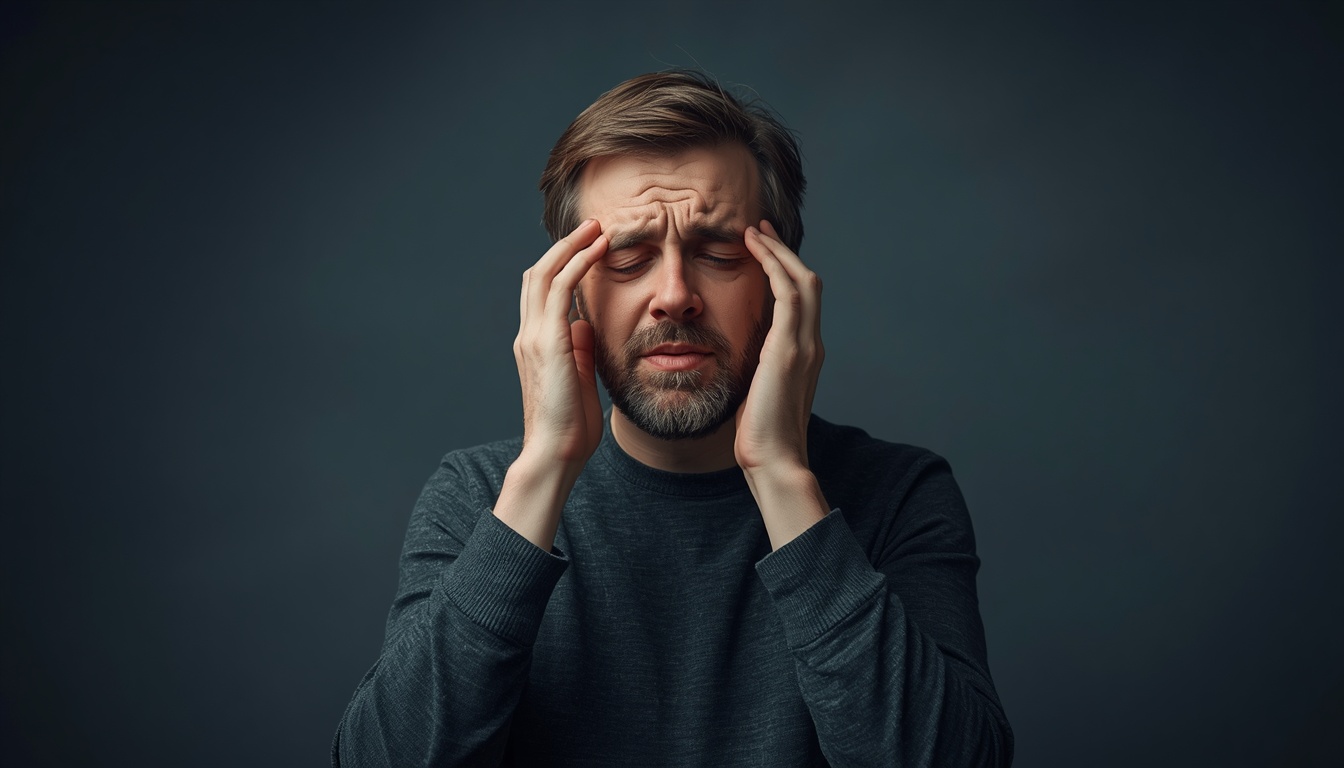
A headache from strong perfume is often trigeminal irritation or a migraine odor trigger, not a weak nose. Fresh air usually helps; a new pattern still deserves a look.

You step into an elevator, a shop, or a meeting room, and the air is thick with cologne. Within a minute your forehead tightens. Your eyes feel a little hot. By the time you reach the street, the ache is real. You did not bump your head. You did not skip lunch. The smell arrived, and the pain followed.
That sequence is common enough to have a clinical name, and ordinary enough that most people never report it. A strong fragrance can irritate the same nerve endings that notice cold air and spice, and in people prone to migraine it can also act as a trigger. The headache is not proof that the perfume was toxic, and it is not proof that you are imagining it.
What This Headache Feels Like
The usual version starts soon after the odor, not hours later. It sits across the forehead, behind the eyes, or at the temples. Some people get a tight band. Others get a one-sided throb, light sensitivity, or a wave of nausea if they already get migraines. The nose may sting or run. The eyes may water. Leaving the room often softens it within minutes to an hour. Lingering in the scent tends to keep it going.
Perfume is the classic example because it is concentrated and hard to escape. The same pattern shows up with cleaning sprays, scented candles, air fresheners, paint, gasoline, and cigarette smoke. The shared feature is a strong airborne chemical, not a particular brand.
Why a Smell Can Hurt
Smell is not only the olfactory nerve. Many “smells” also poke the trigeminal nerve, the same nerve that carries facial pain, eye irritation, and the burn of wasabi. Richard Doty and Thomas Hummel spent careers separating those two channels. Pure odorants are rare. Perfume alcohols, solvents, and fragrance aldehydes usually stimulate both. That is chemesthesis: a chemical touch, not a memory of a flower.
Trigeminal endings in the nose and eyes feed into brainstem circuits that also serve headache. In migraine, those circuits are already easier to fire. Giorgio Zanchin and colleagues described osmophobia, an aversion to odors during an attack, as a frequent migraine companion, not a quirk. Leslie Kelman’s large clinic surveys found odors among the triggers patients could name, alongside skipped meals, weather, and sleep loss. Peter Goadsby’s work on the trigeminovascular system gives the wiring a place to land: sensory input from the face and meninges converges, and a strong chemical puff can be enough to tip a primed system into pain.
You do not need a migraine diagnosis for a perfume headache. A healthy trigeminal nerve can still protest a cloud of fragrance in a closed room. Migraine-prone people simply protest sooner, harder, and with more of the extras: nausea, light bother, and a one-sided throb.
Indoor life makes the dose worse. Ancestral smells were mostly outdoor, brief, and mixed with moving air. A living-world nose is covered in why your sense of smell still expects a living world. Modern fragrance is engineered to last, then trapped in cars, offices, and small bathrooms. The nose was not built for a sealed cloud.
Common Everyday Triggers
Most perfume headaches cluster around a short list.
A freshly sprayed scent in a small space is the most reliable. The first minute after application is the highest concentration. Elevators, rideshares, and meeting rooms hold it.
Layered products add up. Detergent, dryer sheets, lotion, hair spray, and cologne can all be “mild” alone and irritating together.
Cleaning sprays and plug-in fresheners sit in the same category. The label says fragrance. The nose reads irritant.
A migraine day lowers the threshold. If you already slept badly, skipped a meal, or felt a weather shift, a scent that you tolerate on a good day can finish the job. Meal-skip patterns are outlined in why a skipped meal can start a headache, and pressure shifts in why weather changes give you a headache.
A recent cold can also make ordinary smells feel harsh for a while, even after congestion fades. That is usually a recovering nose, not a new allergy to every bottle on the shelf.
Less Common but Serious Causes
Odor plus headache is rarely an emergency by itself. A few patterns are different.
If everyone in the room gets a headache, dizziness, or confusion, think of a shared exposure, including carbon monoxide from a faulty heater, not a personal sensitivity to perfume. Carbon monoxide is odorless. The clue is the shared illness, not the cologne.
A sudden severe headache, the worst of your life, with neck stiffness, weakness, confusion, fainting, or a seizure needs urgent care whether or not a smell was nearby.
Headache with fever, a new one-sided weakness, trouble speaking, or vision loss is not a fragrance story.
True chemical exposure at work, with eye burn, cough, chest tightness, or wheeze, belongs with occupational health, not a home remedy. Perfume annoyance and a solvent spill are not the same event.
Hidden Triggers That Get Blamed on the Scent
The perfume is often the last straw, not the only one. Dehydration, a long screen day, a tight ponytail, caffeine withdrawal, and a loud room all lower the same pain threshold. People notice the cologne because it has a clear start time. They miss the short sleep and the missed breakfast that set the stage.
Expectation can amplify it too. If a scent has hurt you before, the first whiff can tense the forehead and the jaw before the chemistry has done much. That does not make the pain fake. It means the nervous system learned the pairing. The practical test is still the same: leave the odor and see whether the ache fades.
When to Worry
Get prompt care if the headache is sudden and maximal, if it comes with neurological symptoms, if several people are ill in the same space, or if you have chest pain, severe shortness of breath, or fainting. See a clinician if odor headaches are new after age fifty, are getting more frequent, wake you from sleep, or arrive with unexplained weight loss, a persistent fever, or a change in smell that does not recover after a cold. A one-off ache that clears in fresh air is the ordinary version.
Myths vs Facts
Myth: A perfume headache means you are allergic to the fragrance.
Fact: Most of these aches are nerve irritation or a migraine trigger. Allergy usually adds itching, hives, or wheeze, not only a tight forehead.
Myth: If the bottle is “natural,” it cannot cause pain.
Fact: Essential oils are concentrated volatiles. Peppermint, citrus, and lavender can sting trigeminal endings as easily as a synthetic musk.
Myth: Only people with migraine get this.
Fact: Migraine makes it more likely and more elaborate. Closed-room irritation happens in people who never get a one-sided throbbing attack.
Myth: You should push through it to desensitize yourself.
Fact: Staying in a heavy scent usually prolongs the ache. Brief, chosen exposures are a different project from trapping yourself in an elevator.
How to Manage It
Leave the cloud. A doorway, an open window, or a short walk outside is the first treatment. The concentration drops fast once you are in moving air.
Rinse the obvious residue. If spray landed on your clothes or hair, a change of layer or a quick water rinse of the face helps more than another scented wipe.
Do not answer fragrance with fragrance. A “neutralizing” spray is often a second irritant.
Note the pattern for a week. Time of day, sleep, meals, and whether the pain was one-sided or came with nausea. That note is more useful than a long list of banned bottles.
If these headaches are clearly migraines, the usual migraine plan applies: regular meals, steady caffeine rather than a sudden stop, and whatever acute treatment you and your clinician already use. Treating the attack early works better than waiting in the scented room.
At home, cut the background load. Unscented detergent, fewer plug-ins, and a cracked window during cleaning remove the daily dose that makes the next elevator harder.
When to See a Doctor
See a clinician if odor headaches are new, weekly, or paired with other migraine features you have not had evaluated. Mention osmophobia specifically. It is a recognized migraine-associated symptom, and naming it keeps the visit from turning into a debate about whether perfume is “really” a trigger. Seek urgent care for the red flags above, especially a shared headache in a closed building or a sudden maximal headache.
FAQs
Can perfume cause a migraine, or only make one worse?
Both. In clinic series, odors show up as triggers before pain and as aggravators once an attack has started. Kelman’s patient surveys and Zanchin’s osmophobia work describe the second pattern clearly. A scent on a primed day can also be the push that starts the attack.
Why do I get a headache from cologne but not from food smells?
Food smells are often milder and mixed with air movement. Cologne, solvent, and smoke hit trigeminal endings harder. Hummel and Doty’s separation of olfactory and trigeminal stimulation explains why “strong” is not the same thing as “food-like.”
Is this multiple chemical sensitivity?
A single, repeatable ache from heavy fragrance is much more common than a multisystem chemical syndrome. The everyday pattern fits trigeminal irritation or migraine. A broader illness with many organ systems needs a proper medical workup, not a label from a scent diary alone.
How fast should it fade once I get fresh air?
Irritant ache often eases within minutes to an hour. A migraine that was already building may last the usual length of your attacks even after you leave. If pain is escalating after you are clearly out of the odor, treat it as the headache it has become, not as leftover perfume.
Should I avoid all scented products?
Not automatically. Many people do well by skipping heavy sprays in closed rooms and choosing unscented cleaners, while tolerating a light product in open air. Total avoidance is reasonable if small exposures reliably start a full migraine. It is a practical boundary, not a moral one.
Conclusion
A headache from strong perfume is a normal nervous-system response to a concentrated chemical cloud, especially if you are migraine-prone. The nose and the trigeminal nerve were built for brief outdoor smells, not a sealed elevator. Step into moving air, skip the second fragrance, and watch the rest of the day: sleep, meals, and weather often did half the work. A one-off ache that leaves with the scent is ordinary. A new, worsening, or shared pattern is the one to take seriously.