Blurry vision while driving at night is often linked to wider pupils, mild refractive shifts, or dry eyes. Here’s why it happens and when it is worth checking.
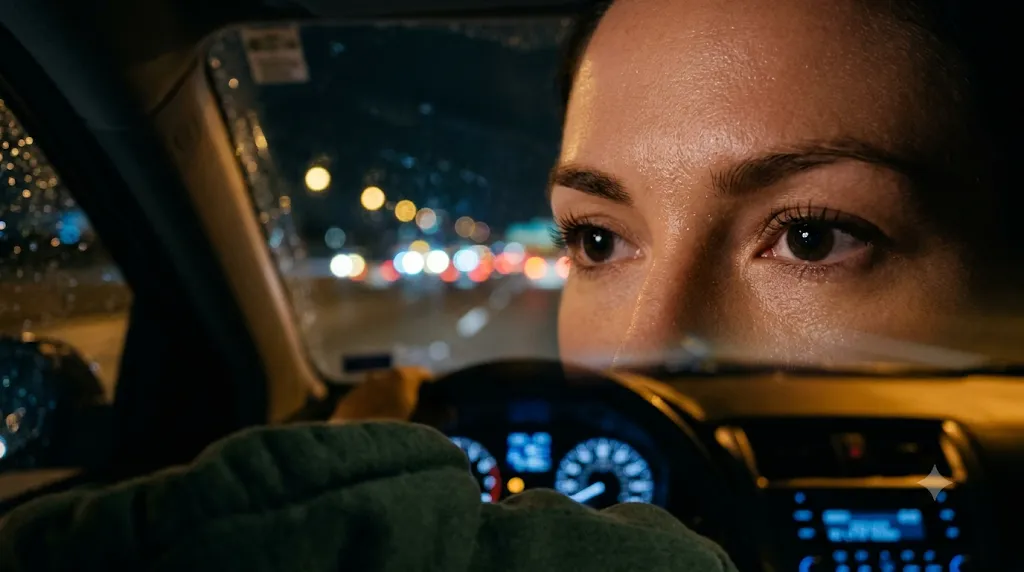
You are on a familiar road after dark. Headlights from oncoming cars bloom into soft starbursts, road signs look a little softer than they did in daylight, and the lane markings seem to lose their edges. For many people this is a familiar, mildly annoying part of night driving rather than a sign that something has suddenly gone wrong with their eyes.
Some degree of reduced clarity after sunset is extremely common. The eyes simply receive less light, pupils open wider, and small optical imperfections that stay hidden during the day become more noticeable. Most of the time the change is temporary and linked to everyday factors such as an outdated glasses prescription, mild dryness, or the normal way the visual system behaves in low light. At the same time, night driving is one of the higher-stakes tasks we ask our eyes to perform, so it is useful to know which patterns are ordinary and which ones deserve a closer look.
What This Symptom Feels Like
People usually describe a soft, fluctuating blur rather than a sudden blackout. Streetlights and headlights may develop halos or starburst rays. Contrast drops, so a dark-clothed pedestrian or a faded road marking is harder to pick out against the night background. Some drivers notice that their vision clears for a moment after a deliberate blink, then softens again. Others feel their eyes work harder to keep distant objects sharp, and the effort itself becomes tiring after twenty or thirty minutes on the road.
The effect is often worse on unlit rural roads or when oncoming headlights are especially bright. Daytime vision may feel completely normal, which is part of why the problem can be surprising the first few times it appears.
Common Causes
The most frequent reasons are optical rather than disease-related:
- Pupil dilation in low light. In dim conditions the pupils open to let more light reach the retina. A wider aperture also lets more peripheral light rays enter the eye. Any small refractive error (nearsightedness, astigmatism, or an outdated prescription) is magnified because those rays no longer pass through the optically best central zone of the lens and cornea.
- Night myopia. Some people experience a temporary shift toward nearsightedness only in low light. One study of professional drivers found roughly one in four showed some degree of night myopia. The exact mechanism is still discussed, but it appears related to reduced focusing cues in the dark and a slight relaxation of the ciliary muscle that controls the lens.
- Dry eyes and an unstable tear film. The tear film is the first refractive surface light encounters. When it thins or breaks up—common during prolonged visual concentration when blink rate drops—light scatters. Drivers often notice the blur worsens after half an hour of focused highway driving.
- Glare and light scatter. Bright point sources against a dark background create high contrast. Larger pupils and any microscopic irregularities in the cornea or lens turn those points into halos. Modern LED headlights, which contain more blue light, can feel especially intense.
These factors often overlap. A person with a slightly outdated prescription and mild dry eye may manage fine under office lighting yet struggle once the sun goes down.
Why This Happens
Human vision evolved for a range of lighting, but modern night driving is an extreme version of low-light demand. During the day, small pupils act like a natural aperture that improves depth of field and masks minor focusing errors. After dark the system prioritizes light gathering over optical perfection. Rod photoreceptors take over from cones, contrast sensitivity falls, and the brain receives a lower-resolution image. Optometrists such as Thomas Stokkermans have noted that a modest reduction in night clarity is expected simply because of lower contrast; the question is whether the drop is mild and stable or progressive and disabling.
Age adds another layer. The crystalline lens gradually yellows and scatters more light. Pupil size in the dark also decreases with age, so less total light reaches the retina. Ophthalmologist Sumitra Khandelwal has pointed out that these changes, combined with an unoptimized prescription or a dirty windshield, explain why many drivers first notice difficulty at night long before daytime vision feels impaired.
Less Common but Serious Causes
While most night blur is optical or surface-related, a few conditions make the symptom more persistent or one-sided:
- Early cataracts increase internal light scatter and are a classic reason older drivers report worsening glare and reduced contrast after dark.
- Uncontrolled blood-sugar swings can temporarily swell the lens and shift the prescription, producing fluctuating blur that is often worse at night.
- Rare retinal or optic-nerve problems can reduce night vision, usually accompanied by other symptoms such as peripheral-field loss, flashes, or a sudden change in one eye.
These are less common than simple refractive or tear-film issues, but they are the reason an eye exam is useful when the symptom is new, progressive, or interferes with safe driving.
Hidden Triggers
Several everyday factors amplify the problem without being obvious:
- A windshield or eyeglasses that look clean in daylight but carry a thin film of road film, which scatters oncoming headlights dramatically at night.
- Prolonged screen use earlier in the day that leaves the tear film unstable by evening.
- Medications that reduce tear production or dilate pupils (certain antihistamines, antidepressants, or blood-pressure drugs).
- Driving with a slightly incorrect prescription that was adequate for daytime but fails under dilated-pupil conditions.
If you also spend long hours looking at screens, the same tear-film issues that cause dry eyes after screen time can carry over into night driving.
When to Worry
Most night-driving blur is not an emergency. It becomes more important to have an eye exam when:
- The blur is new, worsening over weeks or months, or significantly worse in one eye.
- You experience increasing glare, dense halos, or difficulty reading road signs that you previously managed.
- You have diabetes, a family history of glaucoma, or other systemic conditions that can affect the eyes.
- You feel unsafe driving after dark or have started avoiding night trips because of vision.
Sudden vision loss, flashes of light, a curtain over part of the visual field, or severe eye pain need same-day medical attention and are unrelated to ordinary night blur.
Myths vs Facts
Myth: Yellow-tinted “night-driving” glasses improve vision after dark.
Fact: They reduce overall light reaching the retina and are not recommended by most eye-care professionals for night use. Anti-reflective coatings on correctly prescribed lenses are more helpful.
Myth: If you can pass a daytime vision test you will see fine at night.
Fact: Daytime charts use high-contrast letters under bright light. Night driving is a low-contrast, high-glare task; many people with 20/20 daytime acuity still struggle after sunset until their prescription or tear film is optimized.
Myth: Blurry night vision always means cataracts.
Fact: Cataracts are one cause, especially after age 50–60, but refractive error, dry eye, and normal pupil dilation explain the majority of cases in younger adults.
How to Manage It
Practical steps often improve comfort without any special equipment:
- Have a current eye exam and mention specifically that night driving is difficult. A prescription optimized for distance and low-light conditions can make a noticeable difference.
- Ask about anti-reflective coatings if you wear glasses; they reduce internal reflections that worsen glare.
- Use preservative-free artificial tears before a night drive if your eyes feel dry. Blink fully and deliberately every few minutes on longer trips.
- Clean the inside and outside of the windshield and your glasses. Road film that is invisible by day becomes a major scatter source under headlights.
- Dim the dashboard and any phone screens so your pupils are not forced to adapt repeatedly between bright and dark.
- If headlights feel overwhelming, look slightly toward the right edge of your lane rather than staring directly into oncoming lights; this is a classic defensive-driving habit that also reduces glare load.
These measures address the same factors that make eyes feel tired after a long drive in daylight—sustained focus, reduced blinking, and optical demand—except the margins for error are smaller after dark.
When to See a Doctor
Schedule a routine comprehensive eye exam if night driving has become noticeably harder and you have not been checked in the past year or two. Mention the specific symptoms (halos, fluctuating blur, glare). If you already wear glasses or contacts, bring them. Most people leave with either an updated prescription, dry-eye guidance, or simple reassurance that their eyes are healthy and the change is optical.
Seek prompt care for sudden changes, pain, or vision loss in one eye. For gradual but bothersome night blur in the absence of red-flag symptoms, a standard optometric or ophthalmologic visit is appropriate.
FAQs
Is it normal for headlights to look like starbursts at night?
Mild starburst or halo effects are common when pupils are dilated and any small optical imperfection or tear-film irregularity is present. Dense, disabling starbursts that have worsened over months are worth an exam to rule out early lens changes or an outdated prescription.
Why is my vision fine during the day but blurry only when I drive at night?
Daylight keeps pupils small, which masks minor refractive errors and limits light scatter. At night the pupils open, contrast drops, and those same small imperfections become obvious. An updated distance prescription or treatment for dry eye often restores much of the lost clarity.
Can dry eyes really make night driving harder?
Yes. An unstable tear film is the eye’s outermost optical surface. When it breaks up, incoming light scatters before it reaches the retina. The effect is exaggerated by larger pupils and by the reduced blink rate that occurs during sustained visual attention.
Do yellow night-driving glasses help?
Most eye-care research and clinical guidance indicate they do not improve night vision and can reduce the total light available to the retina. Correctly prescribed clear lenses with anti-reflective coating are preferred.
At what age does night vision usually start to decline?
Many people notice gradual changes in their forties and fifties as the lens stiffens and begins to scatter more light, and as maximum pupil size in the dark decreases. Significant difficulty before then is more often related to refractive error or dry eye than to age alone.
Should I stop driving at night if my vision feels blurry?
If you cannot clearly see lane markings, pedestrians, or road signs, or if glare leaves you feeling unsafe, it is reasonable to limit night driving until you have had an eye exam. For mild, stable blur that does not impair safe operation, the management steps above are usually sufficient while you arrange a check-up.
Conclusion
Blurry vision while driving at night is a common experience rooted in the way pupils, the tear film, and the optical system behave when light levels fall. For most people it reflects a combination of wider pupils revealing small refractive errors, mild dryness from reduced blinking, and ordinary glare—not a sudden disease. An updated prescription, attention to the tear film, and simple habits such as cleaning the windshield and blinking deliberately often restore comfortable clarity.
Because night driving places higher demands on contrast and glare recovery than daytime tasks, it is also one of the earliest places an outdated prescription or early lens change can announce itself. If the symptom is new, worsening, or makes you hesitant to drive after dark, a routine eye exam is a low-effort way to sort ordinary optics from anything that needs further attention. In the meantime, the same principles that keep daytime vision sharp—current correction, stable tears, and reduced unnecessary glare—apply even more strongly once the sun has set.