
Sudden toe cramps inside snug shoes are common. Learn the usual muscle and nerve reasons, when the pattern is just footwear, and simple ways to ease them.
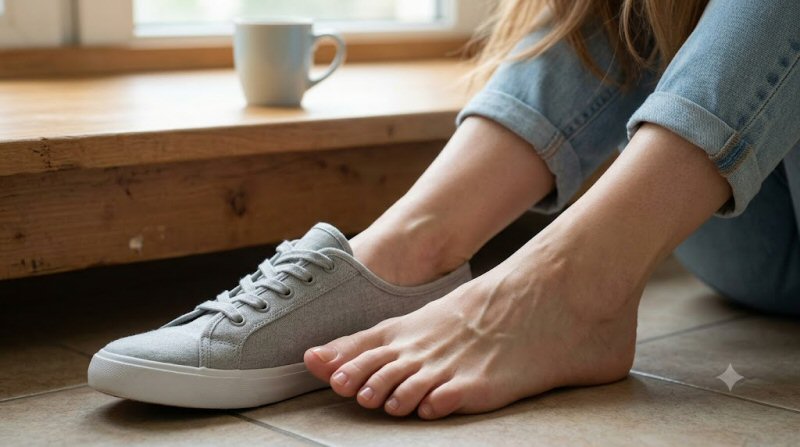
You are halfway through a long day when one or two toes suddenly lock into a hard, involuntary curl inside your shoe. The spasm lasts seconds to a couple of minutes, feels sharp or gripping, and often eases once you free the foot or massage the toes. It is an ordinary, usually harmless response of small foot muscles and their nerves to prolonged crowding and fatigue.
What This Symptom Feels Like
The cramp is a sudden, sustained contraction of the intrinsic muscles of the toes or the longer tendons that flex them. Toes may curl under, splay, or lock together. Pain is local and intense while it lasts, then leaves a residual ache or tightness. Many people notice it most in the afternoon or evening after hours in the same pair of shoes, or right after they take the shoes off and the toes try to straighten. Numbness or pins-and-needles can accompany the cramp if a nerve is also being pressed.
Common Causes
Tight or narrow shoes are one of the most frequent everyday triggers. A cramped toe box holds the toes in a shortened or overlapping position for hours. The small muscles that stabilize and move the toes stay partially contracted or compressed, and the nerves and blood vessels that supply them are squeezed. Over time this produces local fatigue. Research on exercise-associated muscle cramps, including work by sports physician Martin Schwellnus and colleagues, points to a neuromuscular mechanism: when a muscle is shortened and fatigued, the balance between signals that tell it to contract and signals that tell it to relax can tip toward sustained firing.
Other ordinary contributors include:
- Shoes that are simply too short or that have a pointed or shallow toe box (high heels and many dress shoes are classic examples).
- Feet that swell modestly through the day, making morning-fitting shoes tighter by afternoon.
- Weak or under-used intrinsic foot muscles that tire quickly when restricted.
- Mild dehydration or low potassium/magnesium on a hot or active day, which can lower the threshold for any already-fatigued muscle to cramp.
- Sudden extra demand (a longer walk, new activity) while the toes are already confined.
The same mechanism can explain related sensations covered in pieces such as why your forefoot still expects a natural toe spread and why your foot soles still expect occasional barefoot time.
Why This Happens
Modern footwear often keeps the toes pressed together and slightly flexed for most of the waking day. The intrinsic muscles (interossei, lumbricals, flexor digitorum brevis and others) evolved to work with freer toe splay and grip. When they are held shortened and under continuous low-level compression, motor-nerve activity can become disinhibited. The result is a cramp rather than a smooth, controlled contraction. Tight shoes also reduce local blood flow slightly and can irritate digital nerves, both of which make the muscle more irritable. Once the shoe comes off, the sudden change in length and pressure sometimes triggers one final spasm before the muscle settles.
Less Common but Serious
Most shoe-related toe cramps resolve quickly and leave no lasting problem. Persistent, frequent, or severe cramps that occur even in well-fitting shoes, or that are accompanied by ongoing numbness, burning, color changes, or weakness, deserve attention. Possible less-common causes include peripheral neuropathy (especially with diabetes), nerve entrapment such as Morton’s neuroma, circulatory issues, or, rarely, electrolyte disorders or medication side effects. Night-time toe or calf cramps that wake you regularly can also have other contributors; see the related discussion of morning calf cramps.
Hidden Triggers
- Swelling from heat, prolonged standing, or high salt intake that turns borderline shoes into tight ones.
- New or stiff shoes that have not been broken in.
- Standing or walking on hard surfaces for long periods while the toes are already confined.
- Low overall fluid intake or a sudden increase in activity without gradual conditioning of the foot muscles.
- Crossing the legs or other postures that further reduce circulation to the feet.
When to Worry
Seek medical advice if:
- Cramps are frequent, severe, or last many minutes and do not improve with better footwear and simple measures.
- You have persistent numbness, burning, or weakness in the toes or foot.
- The foot changes color, stays cold, or develops open sores.
- You have known diabetes, circulatory disease, or kidney problems and the cramps are new or worsening.
- Swelling, redness, or pain in one calf or foot appears suddenly (possible clot—seek urgent care).
Myths vs Facts
Myth: Toe cramps always mean you are low in a specific mineral and need a supplement.
Fact: While marked electrolyte imbalance can contribute, the stronger evidence for everyday cramps centers on local muscle fatigue and shortened position. Most people improve simply by changing shoes and moving the toes more.
Myth: If the shoe feels okay in the morning it cannot be the cause.
Fact: Feet often enlarge slightly through the day. A shoe that is snug at 8 a.m. can become compressive by mid-afternoon.
Myth: Cramps mean the muscle is tearing.
Fact: A typical cramp is a reversible electrical event in the muscle fibers, not structural damage.
How to Manage
Immediate relief usually comes from taking the shoe off, gently straightening and massaging the toes, and walking barefoot for a few minutes. Longer-term steps that help most people:
- Choose shoes with a roomy toe box in which you can wiggle the toes freely. Measure feet later in the day and try shoes on while standing.
- Alternate pairs so the same tight pair is not worn every day.
- Stretch the toes and calves regularly (toe spreads, towel scrunches, calf stretches against a wall).
- Stay reasonably hydrated and include potassium- and magnesium-containing foods if your diet is low in them.
- Give the intrinsic foot muscles short periods of freer movement—barefoot time on safe surfaces or wide-toe-box shoes.
When to See a Doctor
See a clinician or podiatrist if the cramps persist despite better-fitting shoes and basic care, if neurological symptoms are present, or if you have underlying conditions that affect nerves or circulation. They can check fit, examine for nerve compression or structural issues, and rule out systemic causes when needed.
FAQs
Why do the cramps often start after I take the shoes off?
The sudden release of compression and change in muscle length can trigger one last burst of firing in already-fatigued fibers before they relax.
Can high heels cause this even if they are not “tight” all over?
Yes. The elevated heel and narrow toe box force the toes into a crowded, extended position that fatigues the small muscles and can compress nerves.
Will toe cramps from shoes damage my feet permanently?
Occasional cramps usually do not. Repeated years of very tight shoes can contribute to hammer toes, bunions, or nerve irritation, which is why gradual improvement in fit is worthwhile.
Does this mean I have poor circulation?
Not necessarily. Temporary local compression is enough. Persistent coldness, color change, or pain at rest would be reasons to have circulation checked.
How quickly should better shoes help?
Many people notice fewer cramps within days to a couple of weeks once the toes have consistent room to move and the muscles are no longer held shortened all day.
Conclusion
Toe cramps inside tight shoes are a normal response of small, easily fatigued muscles and their nerves to prolonged crowding. In most cases the fix is straightforward: give the toes more room, keep them moving, and stay hydrated. If the pattern is new, severe, or accompanied by numbness or other red-flag symptoms, a medical check is the sensible next step. Your feet were built to spread and grip; modern shoes that prevent that simple motion are a common, fixable reason they sometimes protest.


