Hands feel sticky after fruit because residual sugars and pectin form a thin adhesive film. It is a common, harmless response that washing removes.
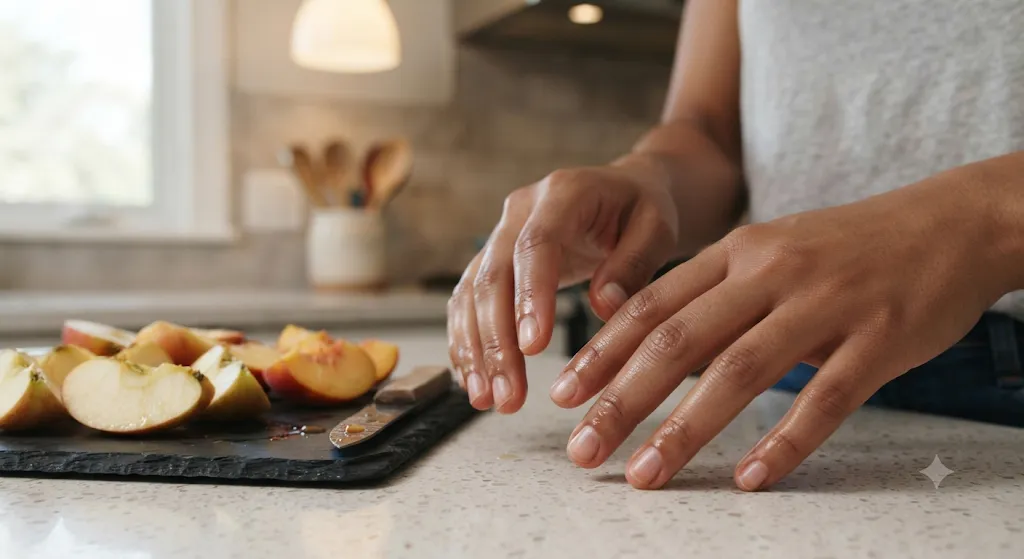
You finish an apple or a handful of grapes and notice your fingers still feel tacky. The sensation is familiar to anyone who eats fresh fruit with their hands. It is almost always ordinary residual juice, not a skin problem.
What This Feels Like
The stickiness is usually mild and localized to the fingertips and palms. It can feel slightly tacky, a little slippery, or as if a thin film remains even after you wipe your hands on a napkin. Some people describe it as a light glue-like pull when they press their fingers together. It is most noticeable with juicy fruits and fades once the hands are washed and dried.
Common Causes
The main source is the natural sugars in fruit juice—primarily fructose, glucose, and smaller amounts of sucrose. These sugars dissolve in the water of the juice and form a viscous solution. When that solution dries or partially evaporates on the skin, it leaves a sticky residue.
Certain fruits are more noticeable than others. Apples, peaches, nectarines, mangoes, and grapes leave a clear tacky film. Fruits high in pectin (apples, peaches, plums) can add a slightly gel-like quality. Overripe fruit tends to release more free sugars and juices, increasing the effect. Even fruit that looks dry on the outside can leave residue once bitten or peeled.
Why This Happens
Sugar molecules are polar. In water they form extensive hydrogen bonds with both water and each other, raising the viscosity of the liquid and its tendency to adhere to surfaces. Skin is also polar, so the sugar solution sticks to it rather than simply running off. As some of the water evaporates, the remaining mixture becomes even more adhesive. Food scientists have documented the same behavior in fruit leathers and dried purees, where low-molecular-weight sugars drive stickiness.
Pectin, a soluble fiber common in many fruits, can contribute a mild gelling effect when it contacts moisture on the skin, reinforcing the film. The combination is temporary; ordinary soap and water disrupt the bonds and rinse the sugars away.
Less Common but Serious Possibilities
True allergic reactions to fruit (oral allergy syndrome or contact urticaria) can produce stickiness accompanied by itching, redness, swelling, or hives within minutes of contact. These reactions are usually localized and short-lived but can occasionally be more widespread. Persistent stickiness that appears without recent fruit exposure, or that is joined by cracking, weeping, or a spreading rash, is not explained by ordinary juice residue and warrants attention.
Hidden Triggers
- Eating fruit without washing hands afterward, especially when you are busy or outdoors.
- Handling very ripe or cut fruit that releases more free juice.
- Light hand sweating that mixes with residual sugars and keeps the film moist longer.
- Incomplete rinsing; a quick wipe with a dry napkin often leaves the sugars in place.
- Fruits with natural latex or sap (certain mango varieties, figs, jackfruit) that can leave an extra viscous layer.
When to Worry
Ordinary post-fruit stickiness clears completely after washing and does not return until the next exposure. Seek care if you notice:
- Itching, redness, or swelling that develops within minutes of contact and lasts more than a short time.
- A rash, blisters, or cracking that spreads beyond the areas that touched the fruit.
- Stickiness that persists for hours after thorough washing or appears with no recent fruit intake.
- Systemic symptoms such as widespread hives, facial swelling, or breathing difficulty (these require urgent evaluation).
Myths vs Facts
Myth: Sticky hands after fruit mean you have a blood-sugar problem.
Fact: The sensation is surface residue. Research has shown that unwashed fruit sugars on the fingers can falsely elevate finger-stick glucose readings, but the effect disappears once the hands are washed with water.
Myth: Only sugary processed snacks leave sticky residue.
Fact: Fresh fruit juices contain the same sugars and produce the same temporary film.
Myth: The stickiness indicates a skin barrier defect.
Fact: Healthy skin simply retains the polar sugar solution until it is rinsed away. Frequent harsh washing can dry the skin, but ordinary fruit residue itself does not damage the barrier.
How to Manage It
Wash with lukewarm water and a mild soap, paying attention to the fingertips and nail edges, then dry thoroughly. If you are outdoors and cannot wash, rubbing with a moist leaf or simply licking the fingers (then drying them) can reduce the film until proper washing is possible. A light hand cream afterward is useful if your skin feels tight after frequent washing; see related guidance on dry hands after frequent washing.
For people who check blood glucose, the same principle matters: wash and dry the finger before testing. Alcohol swabs alone do not reliably remove fruit sugars.
When to See a Doctor
Most people never need medical advice for this sensation. Contact a clinician if stickiness is accompanied by persistent itching, rash, or swelling, or if you suspect a true fruit allergy. People with known oral allergy syndrome or latex-fruit syndrome should discuss cross-reactive fruits with their allergist.
FAQs
Does every fruit cause this?
Juicy fruits high in free sugars (apples, peaches, grapes, mangoes, citrus) are the most common. Drier fruits such as bananas leave less residue unless very ripe.
Why does it feel worse with some apples than others?
Ripeness and variety affect free sugar and pectin content. Sweeter, juicier apples release more of the adhesive solution.
Can the residue affect a glucose meter?
Yes. Studies have shown that fruit sugars left on the finger can produce falsely high readings. Washing with water restores accurate results; alcohol swabs are less effective.
Is the stickiness a sign I should avoid fruit?
No. It is a normal surface effect of healthy fruit. Simply wash afterward.
What if my hands stay sticky even after washing?
Incomplete rinsing, residual soap, or light sweating can prolong the feeling. If thorough washing does not clear it and no fruit was eaten recently, consider other causes such as dry skin or contact irritants.
Conclusion
Hands that feel sticky after eating fruit are a routine consequence of natural sugars and pectin left on the skin. The film is temporary, harmless, and easily removed with ordinary washing. The same chemistry that makes fruit juice pleasant to eat also explains the brief tackiness on your fingers. Wash, dry, and continue enjoying the fruit.