
Hand cramps while writing are common with tight grips or long sessions. Learn the difference between ordinary muscle fatigue and rarer task-specific issues.
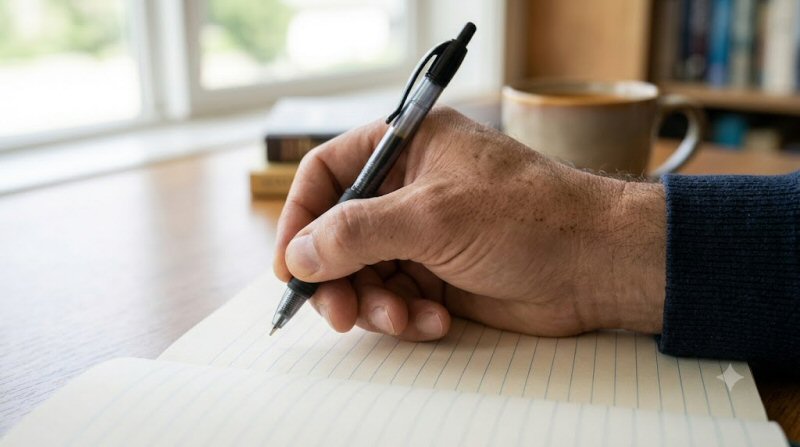
You settle in to write a note, sign a form, or jot ideas in a notebook. After ten or fifteen minutes the pen feels heavier. Your fingers tighten around it. A dull ache builds across the palm or the back of the hand, and the next stroke takes more effort than it should. You shake the hand out, the feeling eases, and you continue. Many people notice this and wonder whether it is simply tired muscles or something more.
In most everyday cases the answer is ordinary muscle fatigue from a sustained, precise grip. The small muscles that stabilize the fingers and the larger ones that control the wrist were not built for long, uninterrupted writing sessions with a hard instrument. When the demand exceeds their usual load, they protest with tightness or a cramp-like sensation. The experience is common enough that it rarely signals a serious problem on its own, yet it is worth understanding why it happens and when the pattern changes.
What This Sensation Usually Feels Like
The typical episode is gradual. The hand feels fine at first. After continuous writing the grip unconsciously strengthens. The pen is driven more firmly into the page. A sense of stiffness appears in the fingers or across the thenar eminence (the fleshy pad at the base of the thumb). Some people describe a pulling sensation in the forearm that travels toward the wrist. Stopping for a minute, opening and closing the hand, or switching to a thicker pen usually restores comfort quickly.
The feeling is different from the sudden, sharp nocturnal cramps that wake people in the calf. Writing-related tightness tends to build with the task and ease when the task stops. It is also distinct from the involuntary, task-specific postures of true writer’s cramp, a rarer focal dystonia in which the fingers or wrist move into abnormal positions almost as soon as writing begins and remain difficult to control even after rest.
Common Reasons Hands Tighten While Writing
Several ordinary factors explain most episodes:
- Sustained isometric grip. Holding a pen requires continuous low-level contraction of the finger flexors and the intrinsic hand muscles. Unlike walking or carrying, there is little natural variation in the load, so metabolites accumulate and local blood flow is restricted.
- Excessive force. Many people press harder than necessary, especially when concentrating or when the pen has a fine tip. Higher force recruits more motor units and fatigues the muscles faster.
- Wrist position. Writing with the wrist bent strongly downward or upward increases tension in the tendons that cross the joint and can make the same muscle work feel harder.
- Long uninterrupted sessions. Students during exams, professionals filling forms, or anyone catching up on handwritten notes can exceed the endurance of the small hand muscles within 15–30 minutes.
- Cold or dry air. Cool temperatures raise the viscosity of synovial fluid and make fine motor control slightly less efficient, so the same task costs more effort.
These factors often appear together. A thin pen, a hard desk surface, and a tight deadline are a classic combination.
Why the Hand Muscles Tire So Readily
The intrinsic muscles of the hand (lumbricals, interossei, and the thenar and hypothenar groups) are specialized for precise, short bursts of force rather than endurance. Their fibers are predominantly of the type that fatigue relatively quickly when held in continuous contraction. Researchers studying occupational hand use have long noted that repetitive fine-motor tasks produce local metabolic changes faster than larger limb movements. David Marsden and colleagues, in their classic descriptions of task-specific hand disorders, observed that even people without dystonia report early tightness when writing is prolonged or performed under pressure.
There is also a simple mechanical side. The tendons that flex the fingers must slide through narrow channels. Sustained tension reduces the small gliding movements that normally help circulate synovial fluid. The result is a gradual increase in resistance that the person feels as stiffness. Changing the pen grip or resting the hand briefly restores the normal sliding and the sensation fades.
If you also notice wrist discomfort after typing, the same principle of sustained low-level load applies. The article on wrists aching after typing all day explores a closely related pattern.
Less Common but More Specific Patterns
True writer’s cramp is a task-specific focal dystonia. It usually begins with an abnormally tight or awkward grip that appears within seconds of starting to write, rather than after many minutes. The fingers may extend involuntarily, the wrist may flex, or the pen may be driven through the paper. Other activities with the same hand remain normal. Marsden and Sheehy’s 1980s studies helped establish that this pattern reflects disordered inhibitory control in the sensorimotor cortex rather than simple muscle fatigue. It is uncommon, tends to appear in people who write or play instruments for long periods, and does not resolve with a short rest in the way ordinary fatigue does.
A separate, less frequently discussed possibility is chronic compartment syndrome in the forearm extensors. Some clinicians, including those following earlier observations by Duchenne, have measured elevated pressure in the extensor compartment during prolonged writing. The person feels a deep ache and sometimes coldness or tingling in the hand that eases only after longer rest. This remains a minority explanation and is usually considered only when ordinary measures fail.
Hidden Triggers That Make It Worse
Several everyday factors amplify the sensation without being the root cause:
- Holding the pen too close to the tip, which shortens the lever and increases the force required.
- Writing on a surface that is too high or too low, forcing the wrist into an extreme angle.
- Dehydration or low magnesium intake, which can lower the threshold for muscle excitability in general (though evidence specific to writing is limited).
- Anxiety or time pressure, which unconsciously increases grip force.
- A recent increase in handwriting volume—starting a new course, returning to paper notes, or filling out many forms in one week.
The forearms themselves are adapted for varied twisting and gripping rather than fixed postures. The piece on why the forearms still expect twist and grip describes how modern desk habits under-load the same muscle groups in different ways.
When the Pattern Deserves Attention
Ordinary writing fatigue improves within minutes of stopping and does not appear during other hand tasks. Seek medical advice if any of the following occur:
- The abnormal grip or posture begins almost immediately and cannot be relaxed voluntarily.
- The same hand develops involuntary postures during other activities (buttoning, using utensils, or typing).
- There is progressive loss of control over weeks rather than simple fatigue that comes and goes.
- Numbness, persistent tingling, or weakness spreads beyond the writing hand.
- Pain is severe, wakes you at night, or is accompanied by swelling or color change in the fingers.
These features are uncommon. Most people who notice hand tightness while writing never develop them.
Myths Versus Everyday Reality
Myth: Hand cramps while writing always mean you are developing arthritis or a nerve disease.
Reality: The great majority are local muscle fatigue from a sustained grip. Joint or nerve problems usually produce additional signs such as morning stiffness lasting more than an hour, visible swelling, or constant numbness.
Myth: You should stop writing altogether if the hand ever feels tight.
Reality: Brief rests, a thicker pen, and small changes in posture usually allow comfortable continued use. Complete avoidance is rarely necessary for ordinary fatigue.
Myth: Only people who write for a living experience this.
Reality: Anyone who writes continuously for 15–30 minutes—students, parents filling school forms, or someone catching up on a journal—can notice it.
Practical Ways to Reduce the Tightness
Small adjustments often make a large difference:
- Use a pen with a thicker barrel or a soft grip. The larger diameter reduces the force needed to stabilize it.
- Rest the forearm on the desk so the shoulder and upper arm do not have to hold the hand suspended.
- Pause every 10–15 minutes to open the hand fully, shake it gently, and circle the wrist.
- Keep the wrist in a roughly neutral position rather than strongly flexed or extended.
- If you write a lot, alternate between handwriting and typing, or switch hands for short notes when practical.
Morning wrist stiffness from overnight stillness follows a similar logic of fluid and soft-tissue recovery; the article on wrists feeling stiff in the morning covers related habits that help.
When to See a Doctor
Most writing-related hand tightness needs no medical visit. Arrange an evaluation if the abnormal posture appears within seconds of starting to write and persists despite rest, if other fine-motor tasks become difficult, or if you notice progressive weakness or sensory changes. A clinician can distinguish ordinary fatigue from task-specific dystonia or less common forearm compartment issues and can suggest targeted measures if needed. Early attention to grip habits and rest intervals prevents most everyday episodes from becoming limiting.
Frequently Asked Questions
Why does my hand only cramp when I write and not when I type?
Writing requires a continuous, precise pinch grip on a narrow instrument. Typing distributes force across more fingers and includes frequent micro-movements and rests between keystrokes, so the same muscles experience less sustained isometric load.
Can a different pen really help?
Yes. A thicker barrel or a pen with a cushioned grip lowers the peak force the finger flexors must produce. Many people notice less tightness within a day or two of switching.
Is this the same as writer’s cramp?
Usually no. Ordinary fatigue builds after minutes of continuous writing and eases quickly with rest. True writer’s cramp is a rarer focal dystonia in which involuntary postures appear almost immediately and are difficult to override.
Should I worry if it happens more when I am stressed?
Stress commonly increases unconscious grip force. The underlying mechanism remains muscle fatigue; the stress simply makes the same task more demanding. Short breaks and a deliberate lighter grip still help.
Will stretching or strengthening exercises prevent it?
Gentle forearm and hand stretches between sessions can reduce the sense of stiffness. Heavy strengthening is not required for ordinary fatigue and is best guided by a clinician if symptoms are more than occasional.
Does cold weather make hand cramps while writing worse?
Cool temperatures can raise the effort needed for fine control and may make the same grip feel tighter. Warming the hands briefly before a long writing session often improves comfort.
Conclusion
Hands that tighten or cramp after a stretch of writing are usually signaling that the small intrinsic muscles and finger flexors have been held in continuous contraction longer than they prefer. A thicker pen, a neutral wrist, and brief rests restore comfort for most people. The rarer pattern of true writer’s cramp—immediate, involuntary postures that do not ease with a short pause—is a different matter and worth mentioning to a clinician, yet it accounts for only a small fraction of everyday complaints. Paying attention to grip force and giving the hand the short interruptions it evolved to expect keeps ordinary writing comfortable.


