
Morning wrist stiffness is common after overnight stillness. Learn why synovial fluid thickens, what usually eases it, and when longer stiffness or swelling needs checking.
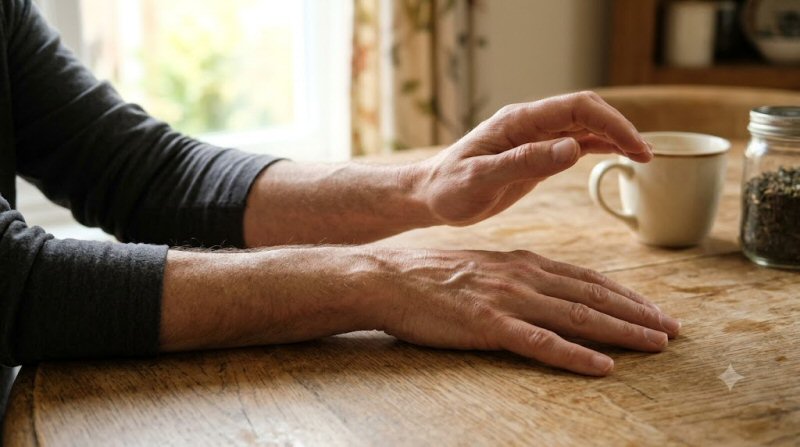
You wake up, reach for your phone, and your wrists feel thick and reluctant. Making a fist takes a moment. The first few keystrokes feel clumsy. By the time you finish breakfast the tightness has mostly gone. This pattern is familiar to a lot of people, and in most cases it is ordinary.
Joints are built to move. Hours of stillness overnight slow the circulation of synovial fluid—the slippery lubricant that lets bone surfaces glide. The fluid thickens, soft tissues cool, and mild fluid can settle around the joint capsule. The result is a temporary “gel” feeling that eases once you start using your hands.
What Morning Wrist Stiffness Feels Like
Most people describe a tight, sluggish sensation rather than sharp pain. Wrists may feel swollen even if they look normal. Finger motion can feel restricted for the first few minutes. Strength and coordination return as the joints warm. The stiffness is usually worst right after waking and improves steadily with ordinary use.
It can appear on one side or both. Some notice it more after a heavy typing day or a long drive the day before. Others feel it mainly in colder weather. The key pattern is that it fades with movement instead of lingering or worsening.
Common Benign Reasons It Happens
Several everyday factors produce the same morning tightness:
- Overnight stillness lets synovial fluid thicken and reduces the natural pumping that keeps joints lubricated.
- Sleeping with wrists flexed or resting under a pillow increases local pressure and slows fluid clearance.
- Repetitive hand use the previous day (typing, phone scrolling, gripping tools) can leave mild tendon or joint irritation that is most noticeable after rest.
- Cool bedroom air can make soft tissues feel stiffer until they warm.
- Mild fluid retention overnight, especially if you slept with hands lower than your heart, adds a sense of fullness.
These are mechanical and temporary. Similar overnight stiffness appears in other joints; people who notice tight knees on first steps or stiff ankles after long sitting often recognize the same pattern in their wrists.
Why the Feeling Clears With Movement
Synovial fluid behaves like a non-Newtonian gel: it thickens when still and thins when sheared by motion. Once you flex, extend, and circle your wrists, the fluid recirculates, cartilage surfaces are better cushioned, and the joint capsule warms. Most ordinary morning stiffness eases within 10–30 minutes of light use. Rheumatologists sometimes call this short-lived version “morning gel” to distinguish it from longer inflammatory stiffness.
Circulation also improves. Gentle hand activity moves fluid out of the tissues and brings warmer blood in. That is why a warm shower or simply making coffee often finishes the job.
Less Common but More Persistent Causes
Longer or more intense stiffness can signal something beyond ordinary overnight gel:
- Osteoarthritis of the wrist or thumb base produces stiffness that is usually under 30 minutes and may be accompanied by bony enlargement or activity-related ache.
- Inflammatory arthritis (such as rheumatoid arthritis) tends to cause stiffness lasting longer than 30–60 minutes, often with visible swelling, warmth, or morning fatigue.
- Carpal tunnel syndrome can add numbness or tingling that is worse on waking, especially if wrists were flexed during sleep.
- Trigger finger or mild tenosynovitis can make individual digits catch or feel locked after rest.
- Recent injury, gout, or other inflammatory conditions can produce more dramatic overnight changes.
If stiffness is mild, short-lived, and improves with motion, it is far more likely to be the ordinary mechanical version than any of these.
Hidden Everyday Triggers
A few modern habits amplify the sensation without being the root cause:
- Hours of keyboard and mouse work keep wrists in slight extension or deviation, so the overnight “reset” feels more pronounced.
- Phone use with wrists flexed adds cumulative load on the flexor tendons.
- Sleeping on the side with a hand tucked under the pillow or head keeps the wrist bent for hours.
- Low daytime movement overall means the joints get less of the loading that keeps synovial fluid healthy.
- Cold, dry indoor air in the morning can make tissues feel tighter until you warm up.
Small adjustments in daytime posture and sleep position often reduce how noticeable the stiffness is.
When to Worry
Short morning tightness that fades with use is usually not concerning. Contact a clinician if you notice:
- Stiffness that regularly lasts more than 30–60 minutes
- Visible swelling, redness, or heat in the wrist or hand
- Numbness or tingling that persists into the day or wakes you at night
- Weakness, dropping objects, or difficulty with fine tasks
- Stiffness that is new, progressive, or accompanied by unexplained fatigue or joint pain elsewhere
- Pain that interferes with sleep or daily function
These patterns deserve evaluation to rule out inflammatory arthritis, nerve compression, or other treatable conditions.
Myths vs Facts
Myth: Morning wrist stiffness always means arthritis.
Fact: Brief stiffness after stillness is normal joint physiology. Arthritis is more likely when stiffness lasts longer, is accompanied by swelling, or worsens over weeks.
Myth: You should keep the wrist completely still until it loosens.
Fact: Gentle, pain-free motion is the fastest way to thin the thickened synovial fluid and restore comfort.
Myth: Only older people get this.
Fact: Anyone can feel it after heavy hand use or awkward sleep positions; it becomes more common with age as synovial fluid production declines somewhat.
How to Ease Morning Wrist Stiffness
Most people improve the feeling with simple steps:
- Before getting out of bed, gently flex and extend the wrists and open and close the fists for 30–60 seconds.
- Run warm (not hot) water over the hands while washing your face or making breakfast.
- During the day, take brief breaks from sustained typing or phone use to circle the wrists and stretch the forearms.
- Keep wrists closer to neutral while sleeping—some people find a simple wrist brace or just avoiding extreme flexion helpful.
- Stay generally active; walking and varied hand use support healthy joint fluid dynamics.
- If stiffness follows heavy hand work, balance the next day with lighter grip tasks.
These match the same principles that help morning knee stiffness or post-sitting ankle tightness: restore motion and circulation.
When to See a Doctor
See a clinician if the stiffness lasts longer than about half an hour most mornings, if swelling appears, if numbness or weakness develops, or if the problem is interfering with work or sleep. Primary care can start the evaluation; a rheumatologist or hand specialist may be appropriate if inflammatory arthritis or nerve compression is suspected. Early attention to persistent patterns usually leads to straightforward management.
Frequently Asked Questions
Is it normal for only one wrist to feel stiff?
Yes. Sleep position, dominant-hand overuse, or minor differences in joint loading often make one side more noticeable. Symmetric stiffness that is long-lasting is more characteristic of inflammatory conditions.
Does typing all day cause permanent wrist damage?
Heavy typing can contribute to temporary morning tightness and, over years, to tendon irritation or carpal tunnel symptoms in susceptible people. Short breaks, neutral wrist posture, and varied movement reduce the load. Most people who manage load well do not develop lasting problems.
Will a wrist brace at night help?
A soft brace that keeps the wrist near neutral can reduce extreme flexion during sleep and sometimes lessens morning stiffness or numbness. It is not necessary for everyone; try simple position changes first.
Can dehydration or diet make it worse?
Severe dehydration can affect tissue feel, but ordinary morning wrist stiffness is driven more by stillness and fluid dynamics than by fluid intake. Maintaining normal hydration is sensible but is not the main lever.
Should I stretch aggressively to “break” the stiffness?
Gentle motion is better. Forceful stretching on cold, stiff joints can irritate tendons. Warm the hands first, then move through comfortable ranges.
Conclusion
Waking with stiff wrists is usually the predictable result of hours without motion. Synovial fluid thickens, mild fluid settles, and the joints need a few minutes of ordinary use to resume smooth gliding. When the tightness fades within half an hour and is not accompanied by swelling or numbness, it is a normal response to stillness rather than a warning sign. Paying attention to sleep position, daytime hand posture, and brief movement breaks keeps the feeling minor for most people. If the pattern changes or lasts longer, a medical check can quickly distinguish ordinary morning gel from something that needs specific care.


