
A foot that goes numb on a long drive is usually a brief squeeze of a nerve at the fibular neck, seat edge, or ankle — not automatically a clot or a damaged nerve.
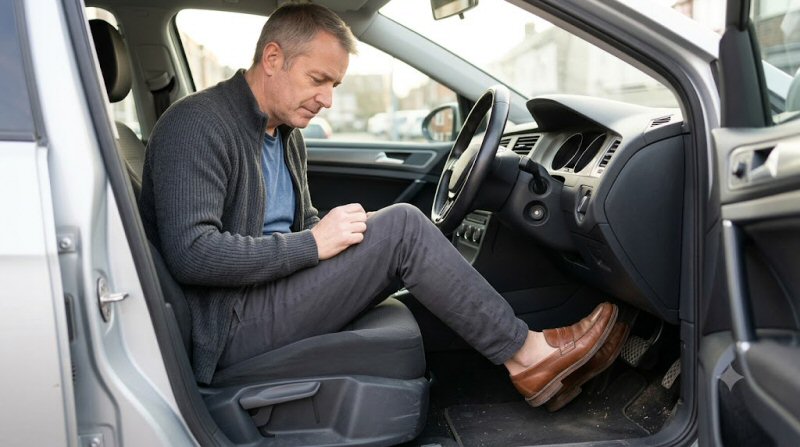
Halfway through a highway stretch, the right foot feels distant. The pedal is still there. The toes are not. When you finally pull off and stand, pins and needles race through the top of the foot, then the limb is yours again.
A foot that “falls asleep” on a long drive is common. It is usually a brief squeeze of a nerve against bone or a seat edge — not proof of a blood clot, a dying nerve, or a disc that chose that exact mile marker.
What This Sensation Feels Like
People describe a familiar cluster:
- Pins-and-needles on the top of the foot or the outer shin
- A wooden patch across the toes, especially after holding the same pedal angle
- One foot louder than the other, almost always the driving foot
- A rush of buzzing when you unhook the ankle or stand at a rest stop
- Feeling that returns within a minute or two of moving
It is not the same as a swollen, hot calf, sudden chest pain, or weakness that lasts after you walk. Ordinary driving numbness is local, timed to the posture, and fades once the knee, fibular neck, and ankle change shape.
Why a Car Seat Quiets a Foot
Three corridors do most of the work.
The first is the common peroneal (fibular) nerve where it winds around the neck of the fibula, just below the outer knee. Classic mapping by Sydney Sunderland showed how shallow and poorly padded that turn is. Reviews associated with Bashar Katirji and later clinical neurophysiology work in the tradition of Jun Kimura made the same point: a little pressure here hushes sensation on the top of the foot and the outer shin first. In a car, that happens when the outer knee leans into the door, the center console, or a hard seat bolster, or when the legs stay slightly crossed under the wheel.
The second is the seat edge itself. The back of the thigh rests on a firm lip. Sustained pressure can load cutaneous branches and, in a slouched sit, crowd the sciatic path higher up. The same seating-pressure physiology Kosiak described for buttocks applies to any bony or firm contact that does not get a break.
The third is the ankle. Holding the foot slightly plantar-flexed and inverted on a pedal for an hour keeps the anterior ankle and the top of the foot in one packed shape. Sensory branches that already sit close to bone complain before motor fibers do.
A car adds time. You cannot stand, you rarely change the knee angle, and the right foot has a job. That is why a drive can feel louder than the same sit in a living-room chair. Related postures explain why cross-legged sitting puts a foot to sleep and why a whole leg can go numb on a couch. The nerve is close to bone. The cabin just holds the clamp.
Common, Usually Harmless Triggers
Most episodes have a boring list behind them:
- A long highway stretch with the same right-foot angle on the accelerator
- The outer knee resting against the door or a hard bolster
- Sitting low in the seat so the seat-front lip digs into the thigh
- A short driver stretching for the pedals, which straightens the knee and tautens the peroneal turn
- A tall driver folding the knees tightly under the dash
- Cruise control that lets the foot hover in one hover-pose for an hour
Brief driving is not the problem. Holding one contact patch until the foot goes silent is.
Hidden Triggers
A few less obvious habits make the same physiology louder:
- A wallet or phone in the back pocket on the driving side
- Tight jeans that add external pressure at the fibular neck
- Heeled or very stiff driving shoes that lock the ankle
- A seat that is tilted so the front lip is higher than the back
- Heating vents that bake the outer knee into the same lean
- Stopping only for fuel, never for a thirty-second stand
If tingling only ever appears after a long sit in the cabin and clears when you walk the rest-stop pavement, the hidden trigger is usually time plus angle — not a new disease that boarded at the on-ramp.
Quiet calves play a supporting role. Sitting without a calf pump lets blood pool in the lower legs, which can add a heavy, distant feeling on top of the nerve squeeze. That pooling story is the same one behind heavy legs after a long sit. Numb buzzing that maps to the top of the foot is still usually nerve, not vein. The two can share a car.
When It Is Not Just the Drive
Seek care rather than another shake-out if any of these show up:
- Swelling, heat, or one-calf tightness that does not ease after you walk
- Numbness that lasts hours after you leave the car
- Foot drop — the toes slap or you cannot lift the foot
- Tingling that wakes you at night even when you have not been driving
- Back or hip pain shooting below the knee with weakness
- Chest pain, breathlessness, or sudden one-sided swelling
Those patterns are not “a foot that fell asleep on the pedal.” They deserve a clinician, not another cup of rest-stop coffee.
Myths vs Facts
Myth: A numb driving foot means a clot is forming.
Fact: A clot can cause swelling and ache. Isolated pins-and-needles that vanish when you stand are far more often a compressed sensory nerve.
Myth: If the foot buzzes, the nerve is permanently damaged.
Fact: Sensory fibers hush first under pressure and usually recover within minutes of unloading. Lasting weakness or a foot drop is a different story.
Myth: Cruise control prevents the problem.
Fact: Cruise control can reduce ankle motion, which is part of what the nerve wanted.
Myth: Only older drivers get this.
Fact: A short person stretching for pedals and a tall person folding under the dash both load the same fibular turn.
How to Keep Sensation on Long Drives
Small changes beat a new diagnosis:
- Slide the seat so the knee stays softly bent, not locked and not jammed under the dash
- Keep the outer knee off the door and the bolster
- Empty the back pockets before you buckle
- Change ankle angle at every song change — heel down, then a brief flex
- Stop every hour or two and walk until the feet feel like feet
- Loosen the waistband and avoid a tight cuff at the fibular neck
- After a long sit, stand before you sprint across a parking lot
You do not need a perfect cockpit. You need a nerve that gets a new shape before it goes silent.
When to See a Doctor
Book a visit if driving numbness becomes the default, if one foot stays weak, if night tingling appears without a long sit, or if swelling and heat join the buzz. A clinician can sort peroneal compression, radiculopathy, and the rarer vascular problems that share a highway. Bring the details: which part of the foot, how long the drive, how fast feeling returned.
FAQs
Is it dangerous to keep driving on a numb foot?
If the foot is only buzzing and you can still press the pedal with control, pull off when you can, stand, and reset. If control feels uncertain, stop. Sensation is part of driving.
Why is it always the right foot?
That foot holds the pedal. The left foot can fidget on the dead pedal. Same anatomy, different job.
Can this turn into foot drop?
Sustained, repeated compression of the peroneal nerve can, in uncommon cases, weaken ankle-lifting muscles. Brief, reversible buzzing after a drive is not the same as a slap-foot gait that lasts.
Does a lumbar cushion help?
Sometimes. A cushion that stops you slouching can unload the seat-front lip and the sciatic path. It will not help if the real clamp is the outer knee on the door.
Should I worry about a DVT every time a foot tingles?
Worry more about a hot, swollen, aching calf than about pins-and-needles that vanish on standing. When in doubt, get the swollen calf checked.
Will new shoes fix it?
Softer, roomier driving shoes can help an ankle that was locked. They will not fix a fibular neck leaning on a bolster.
Conclusion
A foot that falls asleep on a long drive is usually a shallow nerve doing what shallow nerves do when a knee, seat edge, or ankle holds one shape too long. Change the angle, empty the pocket, and give the calf a walk. Save the alarm for buzzing that does not leave the car with you, weakness that slaps the foot, or a calf that looks like a different limb.