
Pruney fingers after a bath or a long dish-wash are a normal nerve-and-blood-vessel response, not simple soaking. Learn why the ridges form, why they help grip on wet objects, and when wrinkling that appears without water needs a check.
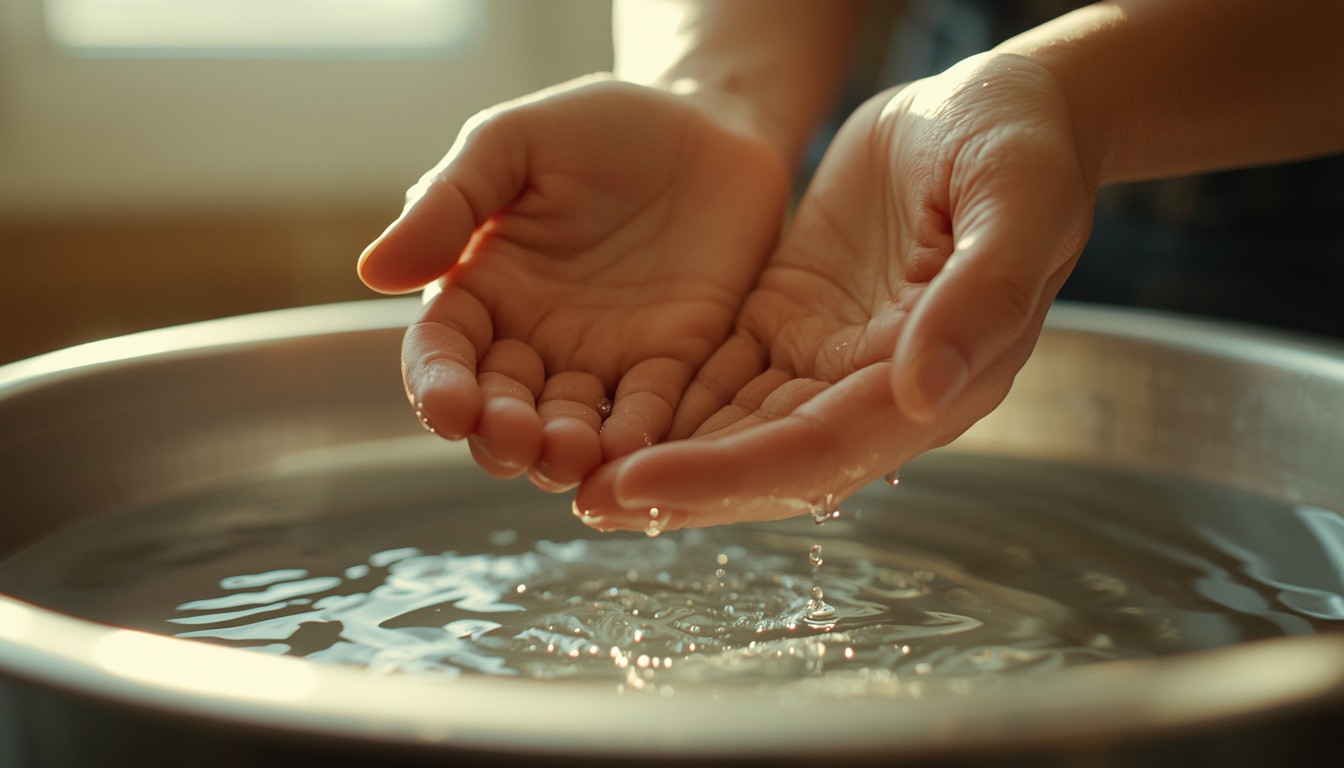
You pull your hands out of the sink and the fingertips look like a relief map. The same ridges appear after a bath, a swim, or a long session of washing vegetables. The skin is not peeling. It is not painful. It simply looks older for twenty minutes, then smooths out again.
That pattern is so ordinary that most people treat it as proof that skin is a sponge. The sponge story is incomplete. Water wrinkling of the fingertips and toes is an active, nerve-driven change in blood flow, not passive swelling of the outer layer alone. When the nerves that control small vessels in the fingers are damaged, the prune pattern often fails to appear even after a long soak.
In other words: pruney fingers after water are usually a sign that a small, old piece of your nervous system is working.
What Water Wrinkling Actually Looks Like
A typical healthy episode is:
- Limited to the pads of the fingers and, often, the toes
- Stronger on the fingertips than on the back of the hand
- Visible after roughly five to thirty minutes in water
- Painless
- Reversible within minutes to an hour of drying
- More obvious in warm water than in very cold water
It is not the same as:
- Deep cracks or peeling after harsh soap
- White, painful maceration from a bandage left on too long
- Wrinkles that appear on dry skin with no soak
- A sudden change in color or temperature in only one finger
The last two patterns belong in a different conversation. Everyday water wrinkles track immersion. Dry, sudden, or one-sided changes need a different look.
The pads of the fingers are also the part of the hand that still expects texture and varied load, a theme explored in our article on why your fingers still expect texture and tools. Wrinkling is one more way those pads adapt to a wet world.
Why the Old “Sponge” Story Is Incomplete
The outer layer of skin does take on water. Keratin in the stratum corneum swells. That swelling is real, and it is why a long soak can leave skin looking puffy even on the back of the hand.
It cannot explain the full fingertip pattern. Two findings get in the way of a purely passive story.
First, the deep prune ridges form in a consistent architecture — branching valleys that look more like a drainage network than like random puffiness. Second, the pattern depends on an intact sympathetic nerve supply. Clinicians have used that fact for decades as a bedside test. In the 1930s, T. Lewis and colleagues already noted that denervated fingers often fail to wrinkle. Later work by neurologists including Einar P. V. Wilder-Smith and others refined “skin wrinkling in water” as a marker of small-fiber and sympathetic function. If the local nerves that narrow fingertip vessels are interrupted — after certain nerve injuries, in some neuropathies — the soak produces little or no prune pattern.
The current working model is a two-step sequence:
- Water and electrolytes alter the outer skin and the signals coming from it.
- Sympathetic fibers respond by constricting the many tiny vessels in the fingertip pulp. As blood volume in that pulp falls, the skin above it buckles into ridges.
Warm water speeds the process. Very cold water can slow it, which is one reason a brief splash at the tap rarely wrinkles you and a long warm bath does.
The Rain-Tread Idea
In 2011, neuroscientist Mark Changizi and colleagues proposed that the ridge pattern is not a cosmetic side effect. They argued it behaves like rain treads on a tire: channels that help shed water so the skin can keep friction on a wet object. The branching geometry of a fully wrinkled fingertip looks, in their analysis, like a network optimized to drain fluid away from the contact surface.
A 2013 study led by Kyriacos Kareklas with Daniel Nettle and Tom V. Smulders at Newcastle University put a simple version of that idea to a practical test. Volunteers transferred wet marbles from one container to another more quickly when their fingers were already wrinkled than when the same fingers were smooth. The advantage disappeared for dry marbles. That is not proof that every ridge is an evolutionary masterpiece, but it is evidence that the pattern can improve handling of wet objects — exactly the situation in which human hands historically spent a lot of time: river stones, wet food, soaked plant fiber, rain-slick tools.
Grip itself is a capacity modern life under-doses. Hands that once hauled, climbed, and worked wet material now spend hours on glass and plastic, a mismatch described in why your hands lost their daily workout. Wrinkling is a brief, reversible reminder that the fingertip is still a wet-weather tool.
Common Situations That Make Wrinkling Obvious
You notice the ridges more when:
- The water is warm rather than icy
- The soak lasts longer than a quick rinse
- You have been in a pool, bath, or dishpan
- You look at the pads rather than the backs of the fingers
- You have just dried the hands and the ridges have not yet refilled with blood
Soap and long immersion can also soften the outer layer, which makes the same vascular buckling easier to see. That is why dishwashing and swimming are classic settings, while a three-second hand-wash rarely is.
Toes wrinkle by the same mechanism. Thick callus and closed shoes can make the pattern less obvious on the feet than on the hands, even after the same swim.
When Wrinkling Shows Up Without a Soak — or Fails to Show Up With One
Two less common patterns deserve a calmer, more specific look.
Wrinkling without water. Fingertips that prune while dry can appear in some people after illness, with certain medications, or in conditions that change vessel tone and sweat. A striking version called aquagenic wrinkling of the palms can appear after only a brief wet exposure, sometimes with a burning or tight feeling. It has been studied in relation to cystic fibrosis and to CFTR-related traits, and it is also reported with some drugs. Brief, painless prune hands after a normal bath do not belong in that category. Rapid, uncomfortable wrinkling after a few seconds of water does.
Failure to wrinkle after a long soak. Because the pattern depends on sympathetic fibers, a finger that never wrinkles when its neighbors do can be a clue to local nerve injury. Neurologists have used timed water-immersion tests as a rough window on small-fiber function. The test is not a diagnosis by itself. It is one observation among many. A single odd finger after a one-off soak is usually nothing. A lasting, one-sided change plus numbness or color shift is worth a clinical conversation.
Skin that is already very dry or recently stripped by harsh detergent may also wrinkle in a less tidy way. That is a barrier issue as much as a nerve issue, and it sits closer to the story of why your skin barrier still expects weather than to a problem inside the fingertip pulp.
Hidden Triggers and Everyday Amplifiers
A few ordinary factors change how dramatic the ridges look:
- Water temperature. Warm water is more efficient than cold at producing the pattern.
- Time. Most people need several minutes, not a splash.
- Salt versus fresh water. Both can wrinkle fingers; pool time and bath time are both classic.
- Age. Children’s fingertips often wrinkle clearly; very aged, thinned skin can look different because the pulp has less volume to buckle.
- Local nerve health. Anything that interrupts sympathetic supply to one digit can mute wrinkling on that side.
- Harsh cleansing. Extra detergent does not create the nerve reflex, but it can make the outer layer look more corrugated once the vessels constrict.
None of these turn a normal soak into a disease. They change the visibility of a reflex that was already there.
Myths vs Facts
Myth: Fingers wrinkle only because the skin drinks water like a sponge.
Fact: The outer layer does take on water, but the classic prune ridges require an active change in fingertip blood volume driven by sympathetic nerves.
Myth: Pruney fingers mean you damaged your skin.
Fact: Temporary wrinkling after a bath or swim is expected. Damage looks more like cracks, pain, bleeding, or skin that will not recover after drying.
Myth: Wrinkled fingers are weaker and more likely to slip.
Fact: In the Newcastle wet-marble tests, wrinkled fingers handled wet objects better, not worse. Dry objects did not show the same advantage.
Myth: If one finger wrinkles less, something is always seriously wrong.
Fact: A one-off difference after a short soak is common. A consistent one-sided failure plus numbness or color change is the pattern that deserves a check.
Myth: You should scrub the ridges away.
Fact: They refill and flatten as blood returns. Gentle drying is enough. Aggressive scrubbing only irritates the barrier.
How to Live With Ordinary Water Wrinkling
You do not need to prevent a healthy prune pattern. You can make the aftermath more comfortable:
- Dry between the fingers instead of leaving them wet in a closed fist
- Use a plain moisturizer after a long bath or swim if the backs of the hands feel tight
- Ease up on ultra-hot water and harsh dish soap if the skin around the nails splits
- Give the ridges time; most fade within half an hour
- Treat the hands as tools again once they are dry — texture, grip, and varied load help the pads more than avoiding water does
If you swim often, think of wrinkling as equipment, not injury. The same pads that prune in the pool are the pads that still want friction, tools, and irregular surfaces when they are dry.
When to See a Doctor
Make an appointment — or go sooner if the situation feels acute — if you notice:
- Wrinkling that is painful, burning, or appears after only a few seconds in water
- A finger or whole hand that no longer wrinkles when the other side does, especially with numbness, weakness, or color change
- Dry-skin wrinkling that arrives without any soak and does not reverse
- Deep cracking, bleeding, or signs of infection around soaked skin
- A sudden change after starting a new medication, if the wrinkling is intense and uncomfortable
Bring a simple timeline: how long the hands were wet, whether the water was warm, which digits changed, and whether feeling and color were normal. That history is more useful than a photograph of already-dried hands.
Frequently Asked Questions
How long does it take for fingers to wrinkle in water?
Many people see clear ridges after about five to fifteen minutes in warm water. Some need closer to half an hour. A quick rinse at the tap is usually too short. Warm baths and pools are the typical setting.
Why do fingertips wrinkle more than the back of the hand?
The fingertip pulp is packed with small vessels and bound by tight skin. When those vessels constrict, the pad has somewhere to buckle. The back of the hand has a different structure, so it may look puffy without forming the same deep prune map.
Do wrinkled fingers mean I was in the water too long?
Not by themselves. The pattern is a timed reflex, not a damage alert. Stay-in-the-water limits have more to do with temperature, fatigue, and skin barrier comfort than with the ridges.
Can nerve problems stop fingers from wrinkling?
Yes. Because the ridges depend on sympathetic control of fingertip vessels, some nerve injuries and small-fiber neuropathies reduce or abolish water wrinkling on the affected digits. That is why clinicians have used immersion tests as a rough bedside clue. The test never stands alone as a diagnosis.
Is it bad to soak until my fingers prune?
For most healthy skin, a normal bath or swim that leaves temporary ridges is fine. Problems come from harsh soap, very hot water, or hours of trapped moisture under a ring or glove — not from the ridges themselves.
Why do my toes wrinkle in the pool but my fingers look worse?
They use the same mechanism. Hands are easier to inspect, and fingertip pads are especially well designed to show the pattern. Thick sole skin and water shoes can hide toe ridges even when they are present.
Conclusion
Pruney fingers after a soak are one of the most visible ordinary reflexes you have. Water changes the outer skin, sympathetic nerves narrow the vessels in the fingertip pulp, and the pad buckles into a temporary rain tread. Work from clinicians who used wrinkling as a nerve test, from Mark Changizi’s rain-tread hypothesis, and from the Newcastle wet-object experiments all point in the same reassuring direction: the pattern is usually physiology doing a small, useful job.
Let the ridges come. Dry the hands. Watch them fade. The map on your fingertips is not a warning that you stayed in too long. It is a brief, reversible reminder that human skin still knows what to do with water.