
Many drivers notice their fingers start to tingle or go numb after gripping the steering wheel for a while. Here is why that happens and when it is worth checking.
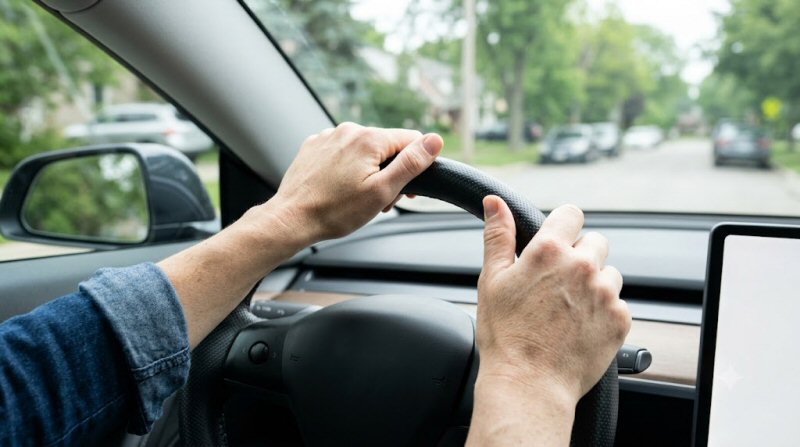
You have been on the road for forty minutes. The radio is low, traffic is steady, and then you notice it: a pins-and-needles feeling creeping into your thumb and the next two fingers. You loosen your grip, shake one hand, and the sensation eases for a few minutes before it returns. It is a common enough experience that many drivers treat it as ordinary road fatigue. In most cases it is ordinary, but the reason it happens is specific.
What This Symptom Feels Like
The tingling usually starts in the thumb, index finger, middle finger, and the thumb side of the ring finger. The little finger is often spared. Some people describe an electric-shock quality; others simply feel the fingers “go to sleep.” The sensation can stay local to the hand or creep a short distance up the wrist. It tends to build during sustained gripping and improves when you change position or shake the hand out. On longer drives it can become more insistent, especially if the cabin is cold or the road is rough.
Common Causes
The most frequent reason is temporary pressure on the median nerve as it passes through the carpal tunnel at the base of the palm. Holding a steering wheel places the wrist in mild extension while the fingers maintain a steady grip. Both actions raise pressure inside the tunnel. Vibration from the road adds a further irritant. Many people notice the same pattern when they hold a phone, a book, or a tool for a long time. The nerve simply does not like prolonged, fixed compression.
A second common contributor is the posture of the whole arm. Elbows slightly bent, shoulders rounded, and hands locked on the wheel for an hour can slow local circulation and add mild stretch to other nerves. In these cases the tingling is usually milder and clears quickly once you arrive and move around.
Why This Happens
The median nerve is the main sensory nerve for the thumb and the first three fingers. It shares a narrow bony-and-ligamentous tunnel with nine flexor tendons. When the wrist is held in extension and the fingers are flexed around a wheel, the cross-sectional area of the tunnel decreases and the pressure on the nerve rises. Classic work by hand surgeons has shown that even moderate wrist extension produces higher carpal-tunnel pressures than a neutral wrist, and that adding a grip raises those pressures further. Over twenty or thirty minutes the nerve’s ability to transmit signals begins to falter, which the brain registers as tingling or numbness.
Shaking the hand or straightening the wrist temporarily reduces the pressure and restores the signal. That is why the symptom often comes and goes rather than staying constant. If the same posture is repeated day after day, the nerve can become more irritable, and the episodes start earlier in the drive.
Less Common but Serious Causes
Not every case of finger tingling while driving is simple carpal-tunnel pressure. Compression of the ulnar nerve at the elbow (cubital tunnel) can affect the little finger and the ring finger and may be aggravated by resting the elbow on a console. A pinched nerve root in the neck (cervical radiculopathy) can send tingling into the hand that worsens with certain head positions rather than with grip alone. Systemic conditions such as diabetes, hypothyroidism, or vitamin B12 deficiency can make nerves more sensitive to ordinary compression. In rare cases, a mass inside the carpal tunnel or a recent wrist injury narrows the space enough to produce symptoms with ordinary driving.
Hidden Triggers
Several everyday factors make the same grip more troublesome. A cold car interior slows nerve conduction and makes tingling appear sooner. Tight sleeves or a watchband can add external pressure at the wrist. Gripping the wheel more tightly than necessary (common in traffic or on unfamiliar roads) multiplies the force on the tendons. Even the height of the seat and the angle of the steering column matter: a wheel that forces the wrists into pronounced extension or the elbows into deep flexion keeps the nerves under continuous stretch or compression.
When to Worry
Most driving-related tingling is self-limited and improves with simple changes. See a clinician if:
- The numbness becomes constant or spreads to the whole hand
- You notice weakness in pinching or dropping objects
- Symptoms wake you at night even when you are not driving
- Tingling is accompanied by neck pain, arm weakness, or loss of coordination
- The problem appears after a fall or sudden wrist injury
Progressive night-time symptoms or measurable weakness are the classic reasons hand specialists investigate further.
Myths vs Facts
Myth: Any finger tingling means you already have carpal tunnel syndrome that needs surgery.
Fact: Transient tingling from a sustained grip is common and often reversible with posture changes. True carpal tunnel syndrome is a clinical diagnosis based on pattern, duration, and examination findings (including tests such as those described by George Phalen and Jules Tinel), not a single drive.
Myth: Shaking the hand means the problem is only “circulation.”
Fact: Shaking temporarily relieves pressure on the nerve; the underlying issue is usually mechanical compression rather than a pure blood-flow problem.
Myth: Only people who type all day get this.
Fact: Any prolonged gripping or wrist-extension activity (driving, holding a phone, using tools) can produce the same temporary symptoms.
How to Manage It
Small adjustments usually make a large difference:
- Keep the wrists as neutral as possible. Adjust the seat and steering column so you do not have to reach or cock the wrists upward.
- Loosen your grip. Rest the hands lightly and use the whole hand rather than a tight finger squeeze.
- Change position every fifteen to twenty minutes: open the fingers, straighten the wrists, or briefly rest one hand.
- Warm the cabin or wear light gloves on cold mornings; cold nerves complain sooner.
- On longer trips, pull over and walk for a minute; movement restores both circulation and nerve glide.
- A simple wrist-neutral position during the day (and sometimes a soft night splint) reduces overall irritation if symptoms are recurring.
These same principles appear in guidance for other sustained-grip activities. If you also notice tingling while typing, the article on why your median nerve still expects a neutral wrist explains the shared mechanism. Related posture habits are covered in why your wrists still expect a neutral hang and is it normal for your wrists to ache after typing all day.
When to See a Doctor
If the tingling lasts more than a few weeks despite posture changes, wakes you regularly, or is joined by weakness or dropping objects, a hand specialist or neurologist can evaluate. They may examine sensation, strength, and provocative tests, and sometimes order nerve-conduction studies. Early recognition allows simple measures (splinting, activity modification, treatment of contributing conditions) to work before longer-term nerve changes set in.
FAQs
Why does only the thumb and first few fingers tingle?
Those fingers are supplied by the median nerve. The little finger is usually supplied by the ulnar nerve, so it stays normal when the problem is at the carpal tunnel.
Is it dangerous to keep driving when my fingers tingle?
Brief, reversible tingling is common and not immediately dangerous, but persistent numbness can reduce fine control. If you cannot feel the wheel reliably, pull over and reset your position.
Can cold weather make it worse?
Yes. Lower temperatures slow nerve conduction and can make the same amount of pressure produce symptoms sooner.
Will strengthening my grip help?
Heavy gripping often aggravates the problem. Gentle nerve-gliding and posture work are usually more useful than building stronger grip force.
Does this mean I should stop driving long distances?
Not necessarily. Most people improve with better seat and wheel positioning, lighter grip, and periodic movement. If symptoms persist, professional assessment is wiser than simply avoiding the road.
Conclusion
Finger tingling after holding a steering wheel is a common signal that the median nerve has been under sustained pressure. For most drivers it is a posture problem, not an emergency. Neutral wrists, a lighter grip, and occasional movement usually restore normal sensation. When the tingling becomes frequent, constant, or is joined by weakness, a straightforward evaluation can identify whether simple changes or further treatment is needed. The hand that holds the wheel is built for varied motion; giving it brief relief during a long drive is often enough to keep the signals clear.


