
Waking up with stiff fingers is a common experience. Learn why morning hand stiffness happens, the role of overnight inactivity, and when it is worth checking with a doctor.
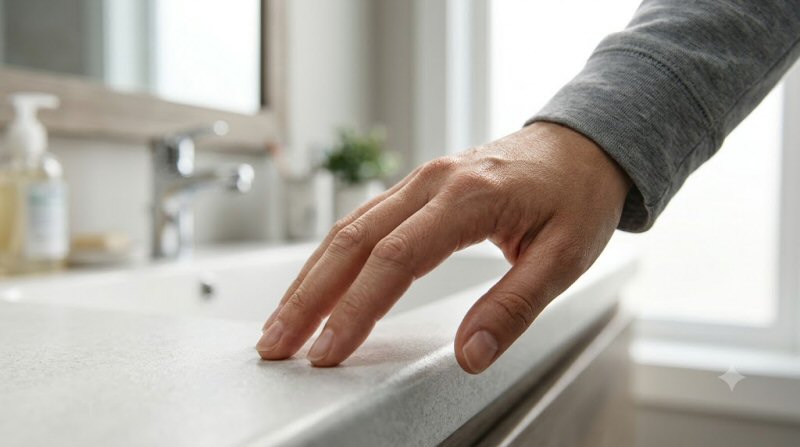
You reach for your phone or the coffee mug and your fingers feel a little tight, slow to curl, or oddly resistant for the first few minutes. The stiffness fades once you move them. Most people notice this at some point. It is usually ordinary.
What This Symptom Feels Like
The sensation is typically a mild resistance rather than sharp pain. Fingers may feel thicker or slower to bend fully. Making a fist takes a second longer than usual. The feeling is strongest right after waking and improves within five to twenty minutes of ordinary use. Some people notice it more in colder rooms or after a night of deeper sleep. It rarely interferes with the rest of the day once the hands are moving.
Common Causes
Overnight stillness is the main reason. Joints produce synovial fluid that lubricates the surfaces. When the hand stays still for hours, that fluid becomes more viscous, almost gel-like. The first movements “warm it up” again. Mild swelling from normal fluid shifts during sleep can add a bit of tightness. People who type, grip tools, or use their hands heavily the day before may notice it more the next morning.
Similar overnight gelling happens in other joints. If your wrists feel stiff in the morning or your knees feel stiff in the morning, the same basic mechanism is often at work.
Why This Happens
Synovial fluid is a dialysate of plasma with added hyaluronic acid and lubricin. Its viscosity rises when it is not being stirred by movement. Classic work on joint lubrication, including studies by researchers such as J. Charnley and later biomechanical work on hyaluronan, showed that fluid behaves more like a gel under static conditions and thins under shear. Once you start flexing and extending the fingers, the fluid redistributes and the sensation eases.
Temperature also plays a role. Hands cool slightly overnight. Cooler tissue makes fluid thicker and soft tissue less pliable. Warming the hands under warm water or simply using them usually reverses this quickly. This is different from the more persistent stiffness that appears in inflammatory conditions, where the lining of the joint itself is swollen.
Less Common but Serious Causes
Stiffness that lasts more than an hour, is accompanied by obvious swelling, redness, or warmth, or is much worse in one hand can point to inflammatory arthritis (such as rheumatoid arthritis), osteoarthritis with bony enlargement, or less often tenosynovitis. Trigger finger (stenosing tenosynovitis) can make a finger catch or lock, especially in the morning. Carpal tunnel symptoms are more often numbness or tingling than pure stiffness, but the two can overlap. None of these are the usual explanation for a few minutes of mild tightness that clears with movement.
Hidden Triggers
Sleeping with the hands tightly curled or under the pillow can increase overnight fluid pooling and morning tightness. A cooler bedroom or cold hands at bedtime makes the gel-like effect more noticeable. High salt intake or hormonal fluid shifts can add mild generalized swelling. People who spend the day with sustained gripping (driving, tools, heavy phone use) sometimes feel more residual tightness the next morning. Dehydration can make tissues less pliable, though it is rarely the sole cause.
When to Worry
Mild stiffness that lasts under thirty minutes and improves steadily with ordinary activity is almost always benign. See a clinician if the stiffness routinely lasts longer than an hour, if joints are visibly swollen or hot, if you have difficulty fully straightening the fingers, if there is locking or catching, or if the problem is new and progressive over weeks. Sudden severe pain, redness, or inability to move a finger needs prompt evaluation. Persistent one-sided stiffness after an injury also deserves attention.
Myths vs Facts
Myth: Morning finger stiffness always means arthritis.
Fact: Brief stiffness that clears with movement is common in healthy joints and is largely a fluid and temperature effect.
Myth: You should avoid using stiff fingers until they feel normal.
Fact: Gentle movement is what thins the fluid and restores comfort. Resting them longer usually prolongs the sensation.
Myth: Cracking or stretching the fingers hard will “fix” it permanently.
Fact: Occasional gentle movement helps in the moment; forceful cracking does not change the underlying overnight process and is unnecessary.
How to Manage It
Simple steps usually suffice. Start the day with a minute or two of gentle finger curls, spreads, and fist openings. Running warm (not hot) water over the hands for thirty to sixty seconds often speeds recovery. A light hand-cream routine after washing can reduce the dry-skin contribution some people notice. During the day, vary hand positions and take short breaks from sustained gripping; this also reduces the chance of the finger stiffness that can appear after typing all day.
Keeping the bedroom from becoming very cold and avoiding extreme hand postures at night (such as sleeping with fists tightly clenched) can lessen the morning effect. Most people find the stiffness becomes less noticeable once they expect it and simply move the hands for a minute upon waking.
When to See a Doctor
Book a visit if morning stiffness regularly lasts more than an hour, if you see swelling, redness, or nodules at the joints, if fingers lock or catch, or if grip strength is declining. Mention any other joint symptoms, morning stiffness elsewhere, or a family history of inflammatory arthritis. Early evaluation can distinguish ordinary gelling from conditions that benefit from specific treatment.
FAQs
How long should normal morning finger stiffness last?
For most healthy people it lasts only a few minutes to about twenty or thirty minutes and then disappears with ordinary use. Stiffness that persists beyond an hour is worth discussing with a clinician.
Does cold weather make it worse?
Yes. Cooler temperatures increase fluid viscosity and reduce soft-tissue pliability, so many people notice more morning tightness in winter or in a cold bedroom.
Can typing or phone use the day before cause it?
Sustained gripping and repetitive finger work can leave residual soft-tissue tightness that is more noticeable the next morning, but the core mechanism remains the overnight lack of movement.
Is it a sign I am developing arthritis?
Brief, movement-responsive stiffness alone is not. Longer-lasting stiffness, swelling, or progressive joint changes would be more suggestive and should be evaluated.
Should I take anti-inflammatory medicine for it?
Not usually. Ordinary morning stiffness does not require medication. If a doctor has already diagnosed an inflammatory condition, follow their guidance; otherwise simple movement and warmth are sufficient.
Will stretching my fingers at night prevent it?
Gentle movement before bed can help, but the stiffness is mainly produced by hours of stillness during sleep. A short warm-up in the morning is usually more effective than trying to eliminate the overnight effect entirely.
Conclusion
Waking with slightly stiff fingers is a normal consequence of overnight stillness and the way synovial fluid behaves when it is not being moved. The sensation is usually brief, improves with ordinary use, and does not signal a problem on its own. Warm water, a minute of gentle movement, and varied hand use during the day are typically all that is needed. If the stiffness lasts longer than an hour, is accompanied by swelling, or is getting steadily worse, a medical check can rule out less common causes and provide reassurance.


