
Calf twitching after a run or leg day is common and usually harmless. Learn why fatigued muscles and nerves fire on their own, what helps them settle, and when to check with a doctor.
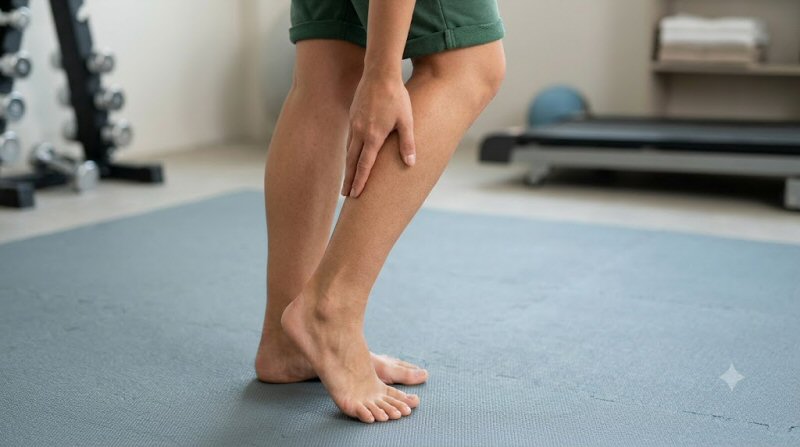
You finish a hard run, a set of calf raises, or a long hill walk, sit down, and notice a small ripple under the skin of your calf. It feels like a tiny muscle is flickering on its own. For most people this is a normal after-effect of hard work, not a warning sign.
The sensation is called a fasciculation — a brief, involuntary contraction of a small group of muscle fibers. Calves are especially prone to it because they work with every step, climb, and push-off. When they are tired, slightly dehydrated, or low on electrolytes, the nerves that control them can become briefly over-excitable and fire without your instruction.
What This Symptom Feels Like
Most people describe a light, painless flutter or ripple that comes and goes under the skin of the calf. You can often see it if you look closely. It may last a few seconds, pause, then return a few more times while you rest. Strength stays normal: you can still stand, walk, and push off your toes without trouble.
It is different from a true cramp. A cramp is a sudden, painful, sustained contraction that locks the muscle and makes you want to stretch or massage it immediately. Post-workout twitching is usually milder and does not stop you from moving.
Common Causes
The most frequent reasons are ordinary and temporary:
- Muscle fatigue after longer or harder effort than usual
- Fluid and electrolyte losses from sweating (sodium, potassium, magnesium)
- Mild dehydration
- Residual effects of caffeine or pre-workout stimulants
- General tiredness or short sleep the night before
- Simply noticing the sensation more once you sit still
Researchers who study exercise and nerve excitability note that lower-leg muscles show temporary increases in spontaneous firing after strenuous activity. The pattern usually fades within hours to a couple of days as the muscle recovers and fluid balance returns.
Why This Happens
During hard work the motor nerves that supply the calves fire thousands of times. Fatigue changes the local chemical environment around those nerves and the muscle membrane. Sodium and potassium gradients shift, calcium handling inside the fiber is temporarily altered, and the threshold for spontaneous firing drops. A small bundle of fibers can then twitch without a conscious signal from the brain.
The calves are particularly visible and frequently used, so the same process that might go unnoticed in a deeper muscle becomes obvious here. People who already experience occasional random twitches (see Is It Normal to Get Random Muscle Twitches) often notice them more clearly after exercise because the muscles are primed.
This is not the same mechanism as the eyelid twitch that appears with tiredness and screens (covered in Is It Normal for Your Eyelid to Twitch When You’re Tired?). The calf version is more closely tied to local muscle load and fluid shifts.
Less Common but Serious Possibilities
True neurological disease is rare when twitching is the only symptom and strength is intact. Persistent, widespread fasciculations accompanied by progressive weakness, muscle wasting, or difficulty with daily tasks need medical evaluation. In the absence of those features, post-exercise calf twitching is almost always benign.
Other occasional contributors include high caffeine intake, certain medications, or an overactive thyroid. These tend to produce twitching in more than one area and are usually accompanied by other symptoms such as restlessness, weight change, or tremor.
Hidden Triggers
A few everyday factors can make the same workout produce more noticeable twitching:
- Starting a new running program or suddenly increasing hill work
- Training in heat without matching fluid and salt intake
- Tight calves from prolonged sitting earlier in the day (related to Is It Normal for Your Calves to Feel Tight After Sitting All Day?)
- Anxiety about the sensation itself, which can heighten body awareness
- Low magnesium or potassium status that only becomes apparent after heavy sweating
When to Worry
Most post-workout calf twitches settle with rest and normal eating and drinking. Seek medical advice if you notice:
- True weakness (difficulty standing on your toes or walking that is new)
- Visible muscle wasting or shrinking
- Twitching that spreads widely and continues for weeks without improvement
- Twitching together with numbness, tingling, or loss of coordination
- Painful cramps that keep returning at the same intensity of exercise
A single evening of flickering after a hard session is not one of these red flags.
Myths vs Facts
Myth: Calf twitching after exercise means you have a serious nerve disease.
Fact: Isolated fasciculations after hard work are common in healthy people and usually resolve with recovery.
Myth: You must stop exercising if your calves twitch.
Fact: Moderate, consistent training is generally fine; the twitching is a temporary recovery signal, not a reason to avoid movement.
Myth: Only magnesium supplements will stop it.
Fact: Hydration, overall electrolytes from food, and rest address the most common drivers. Supplements help only if a true deficit exists.
How to Manage
Practical steps that help most people:
- Drink enough fluid after the workout and include a source of sodium if you sweated heavily.
- Eat a normal meal containing potassium-rich foods (fruit, vegetables, yogurt) and magnesium-containing foods (nuts, seeds, leafy greens).
- Gently stretch the calves or use light self-massage; avoid aggressive deep work on very sore muscle.
- Give the legs a full recovery day if the session was unusually hard.
- Reduce caffeine for the next few hours if you used a strong pre-workout.
- Elevate the legs briefly while you rest to ease any residual fluid pooling.
If the calves also feel tight from long sitting, short walking breaks during the day can reduce the baseline load before your next workout.
When to See a Doctor
Book a routine visit if the twitching lasts more than a couple of weeks, appears in many muscle groups, or is joined by any weakness or sensory change. Urgent care is appropriate for sudden severe weakness, trouble breathing or swallowing, or symptoms that suggest a stroke. For the ordinary post-workout flutter that fades with rest, self-care is usually sufficient.
FAQs
How long should post-workout calf twitching last?
Most episodes fade within hours to one or two days as fluid balance and muscle recovery progress. Brief returns over the next evening are still common.
Can dehydration alone cause it?
Yes. Even moderate fluid loss changes the environment around the motor nerves and can make spontaneous firing more likely, especially in the calves.
Is it the same as a nighttime leg cramp?
No. Nighttime cramps are painful, sustained contractions. Post-workout twitching is usually painless and does not lock the muscle. The two can occasionally appear together if the muscle is very fatigued.
Will foam rolling help?
Light rolling or massage can reduce the sense of tightness for some people, but it is not required. Rest and rehydration address the main drivers.
Should I avoid hills or calf raises if this keeps happening?
Not necessarily. Gradual progression and adequate recovery usually prevent the problem from recurring. Sudden large increases in volume are more likely to trigger it.
Conclusion
Feeling your calves flicker after a workout is a familiar recovery signal for many active people. The combination of local fatigue, fluid shifts, and temporary nerve excitability explains most cases. Strength stays normal, the sensation settles with ordinary rest and rehydration, and it does not point to disease in the absence of other symptoms. Paying attention to how hard you pushed and how well you recovered is usually enough to keep the twitches brief and unremarkable.


