
Sitting keeps the calf muscles in a shortened position for hours. A mild tightness that eases once you walk is common. Learn the ordinary causes, the less common red flags, and simple ways to keep the muscles happier.
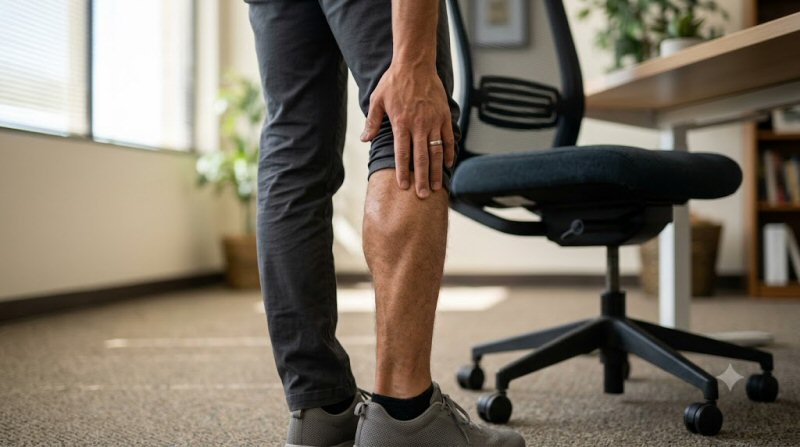
You stand up from the desk or the car and the backs of your lower legs feel short, heavy, and slightly stiff. The first few steps are awkward. After a minute or two of walking the sensation usually fades. Many people notice this after a long meeting, a flight, or an afternoon of laptop work. It is usually ordinary.
What This Symptom Feels Like
The tightness sits in the muscle belly of the calf rather than the ankle joint or the Achilles tendon. It can feel like the muscle has “shortened” overnight even though you were only sitting for a few hours. Some people describe a mild cramp-like pull when they take the first steps; others just notice reduced springiness. The feeling is almost always worse on the first few steps and better once blood flow and movement return.
Common Causes
The main reason is simple geometry. When you sit with your knees bent and feet on the floor (or crossed), both the gastrocnemius and the soleus stay in a relatively shortened position. The gastrocnemius crosses the knee, so a bent knee takes tension off it; the soleus does not cross the knee but still loses the repeated lengthening that walking provides.
Blood flow also slows. The calf muscles act as a second heart—the so-called calf pump—pushing venous blood upward with every step. Hours of stillness let fluid and metabolic by-products linger. When you finally stand, the muscle feels denser and less elastic until the pump restarts.
Dehydration, a low-sodium meal, or simply being tired can make the same position feel tighter. Cold rooms and air-conditioning that cool the legs can add a temporary increase in muscle tone.
Why This Happens
Human calves evolved for frequent lengthening and shortening throughout the day. Walking, climbing, and standing on uneven ground keep the muscle fibers, fascia, and blood vessels in regular use. Modern sitting removes most of that stimulus for long stretches.
The soleus in particular is a postural muscle that is almost silent in a chair and highly active the moment you stand or walk. Work by researchers such as Hamilton and Basmajian mapped this on/off pattern decades ago; the muscle simply was not designed for eight-hour shutdowns. When it is finally asked to work again, the first contractions can feel restricted until the tissue warms and the local circulation catches up.
This is distinct from the ache many people get after standing still for hours. Standing loads the muscle under tension; sitting unloads it and shortens it. Both can feel uncomfortable, but the mechanisms differ. Related sensations are covered in pieces on why the soleus still expects you on your feet and calves that ache after standing.
Less Common but Serious Causes
Persistent or one-sided tightness that does not ease with walking can occasionally signal a muscle strain, an Achilles tendinopathy, or, rarely, a deep-vein thrombosis—especially if the calf is also swollen, warm, or tender to the touch and the person has been immobile for a long flight or surgery. Nerve irritation from the lower back (sciatica) can sometimes refer a tight or heavy feeling into the calf, but it usually arrives with other clues such as shooting pain or numbness.
Most everyday post-sitting tightness does not fall into these categories. It is bilateral, mild, and clearly linked to the time spent seated.
Hidden Triggers
- Chair height that forces the knees higher than the hips, further shortening the gastrocnemius
- Crossing one ankle over the opposite knee for long periods
- Under-desk heaters or cold floors that change local temperature
- High-heeled shoes worn earlier in the day (the muscle starts already short)
- Low fluid intake or a salty meal the night before
- New or intense exercise the previous evening that left residual micro-damage
When to Worry
See a clinician promptly if the tightness is accompanied by:
- Sudden swelling, redness, or warmth in one calf
- Pain that worsens when you walk rather than improves
- Shortness of breath or chest discomfort
- Numbness, weakness, or a foot that drops
- Tightness that remains unchanged for several days despite movement
A mild, bilateral, movement-responsive tightness after sitting is rarely urgent.
Myths vs Facts
Myth: Tight calves after sitting mean you need aggressive daily stretching or you will develop permanent shortening.
Fact: Brief, gentle movement and occasional calf raises are usually enough. Over-stretching a cold, unloaded muscle can irritate it more than it helps.
Myth: Only people with poor circulation get this.
Fact: Healthy people notice it too. The calf pump simply works less efficiently during prolonged stillness; restarting it solves most cases.
Myth: Compression socks are required every day.
Fact: They can help on long flights or desk marathons, but ordinary walking breaks are more important for most people.
How to Manage It
Stand and walk for two to three minutes every 45–60 minutes. Even a short trip to refill a glass of water is enough to restart the pump. While seated, periodically straighten one knee and pull the toes toward you for a few seconds, then switch sides.
When you finally stand, take the first steps slowly and deliberately rather than launching into a sprint. A brief walk outdoors or around the block usually clears the feeling faster than static stretching alone.
Stay reasonably hydrated and keep the room from becoming uncomfortably cold. If you wear heels during the day, spend some time in flatter shoes afterward so the muscle can lengthen naturally.
When to See a Doctor
Book a routine visit if the tightness becomes one-sided, is accompanied by swelling, or starts limiting your walking distance. Mention recent long-haul travel, surgery, or new medications. Most people never need more than the simple movement breaks described above.
FAQs
Why does the tightness disappear after only a minute of walking?
Walking lengthens the muscle repeatedly and restarts the calf pump. Blood flow rises quickly, the tissue warms, and the temporary stiffness resolves.
Can this turn into a nighttime cramp?
Sometimes the same shortened position contributes to nocturnal calf cramps, especially if you also sleep with pointed toes. Keeping the ankle closer to neutral at night and staying hydrated reduces the chance.
Is it worse in winter?
Cold muscles hold more resting tone. A cooler office or cold car can make the first steps feel tighter until the muscle warms up.
Does strength training prevent it?
Regular calf raises and walking on varied terrain keep the muscle more resilient, but they do not eliminate the effect of hours of continuous sitting. Movement breaks still matter.
Should I stretch before I stand up?
A gentle seated calf stretch is fine, but aggressive bouncing or long holds on a cold muscle are unnecessary. Simply walking is often more effective.
Conclusion
A tight, heavy feeling in the calves after a long sit is one of the more predictable consequences of modern chair-based days. The muscles have been held short and quiet; the first steps ask them to lengthen and pump again. For most people the sensation is mild, bilateral, and gone within a few minutes of ordinary walking. Regular short breaks, a bit of hydration, and the occasional longer stroll keep it from becoming more than a minor, temporary nuisance.


