A brief eyelid twitch when you're tired is usually a harmless form of myokymia linked to fatigue, caffeine, or screen strain. Here's what causes it and when it deserves a closer look.
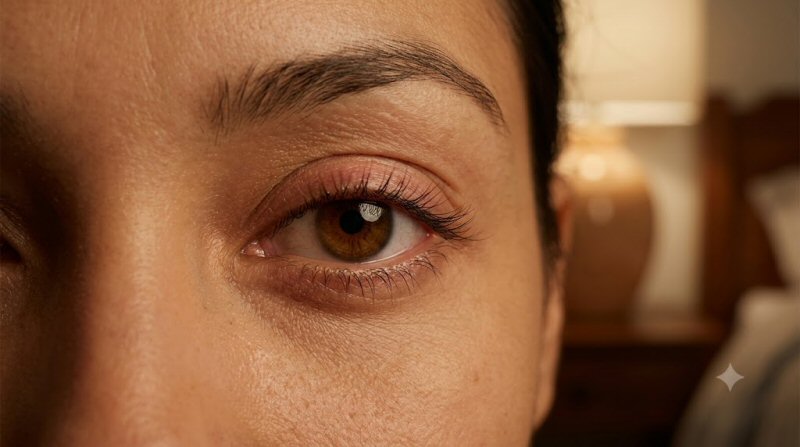
You feel a small, rhythmic flutter at the corner of one eye. It lasts a few seconds, stops, then returns while you finish an email or sip coffee. Nothing hurts. Your vision stays clear. Yet the sensation is oddly hard to ignore, especially after a short night or a long stretch at the screen. Most of the time this is a familiar, self-limited event called eyelid myokymia—fine, involuntary contractions of the thin muscle that closes the lid. It is common enough that many people notice it during busy or under-slept periods and then forget about it once rest returns.
What This Sensation Feels Like
The twitch is usually limited to one eyelid, more often the lower lid than the upper. It feels like a gentle quiver or ripple rather than a full blink or squeeze. The eye itself stays open; the lid simply flutters for seconds at a time. You may notice it more when you are still and less when you are talking or walking. Other people rarely see it. The episode can come and go over hours or a couple of days and then vanish without treatment.
Common Everyday Triggers
Fatigue is one of the most frequently reported associations. After a night of short or broken sleep, the small motor units that control the orbicularis oculi muscle appear more prone to spontaneous firing. Caffeine and other stimulants can add to the effect by raising overall nervous-system excitability. Prolonged near work and reduced blinking leave the ocular surface drier, which can irritate the same muscle. Stress and anxiety are commonly noted in the same window; they do not “cause” the twitch in a simple one-to-one way, but they reliably co-occur with the periods when people report more episodes. Alcohol, nicotine, and bright wind or air-conditioning can also tip the balance for some individuals.
Why the Muscle Does This
Eyelid myokymia reflects brief, asynchronous discharges of individual motor units within the orbicularis oculi. Recordings show these units firing in short bursts at roughly three to eight times per second. The exact site of the irritability is not fully mapped; some evidence points to the nerve terminals inside the muscle itself, while others note possible influence from the facial-nerve nucleus in the brainstem. In the everyday form the discharges remain isolated, reversible, and free of weakness or sensory change. The thin skin of the lid simply makes the tiny contractions visible and palpable. Because the muscle works continuously during waking hours—helping with blinks, tear distribution, and protection—it is especially sensitive to accumulated fatigue and local irritation.
Less Common but Important Distinctions
A true hemifacial spasm involves more of one side of the face and often stems from vascular contact with the facial nerve; it does not stay confined to a single eyelid. Benign essential blepharospasm produces stronger, bilateral squeezing that can interfere with vision and is linked to disordered control of the blink reflex rather than simple fatigue. These patterns are far less common than ordinary myokymia and almost always bring additional signs. Isolated eyelid flutter that stays mild, one-sided, and free of facial weakness is rarely the first clue to a neurological disease.
Hidden Everyday Amplifiers
Screen sessions that drop the blink rate leave the tear film unstable and can heighten local sensory input to the lid muscle. An already dry or gritty eye—whether from indoor air, contact lenses, or seasonal irritation—adds another low-level stimulus. Skipping meals or relying on coffee in place of sleep can further raise excitability. Even a single late night plus an extra afternoon espresso is enough for many people to notice a flutter that was absent the week before. Related reading on screen-related dryness and morning gritty eyes can be found in Is It Normal for Your Eyes to Feel Dry After Screen Time? and Is It Normal for Your Eyes to Feel Gritty in the Morning?.
When to Pay Closer Attention
Seek evaluation if the twitching lasts continuously for more than two or three weeks, spreads to other facial muscles, forces the eye shut, or is joined by drooping, double vision, numbness, or weakness. Redness, pain, or a new change in vision also warrants a look. These features are uncommon with ordinary myokymia and help clinicians separate the everyday form from the rarer movement disorders or nerve-compression problems. For most people the simple version fades once sleep and stimulant load improve.
Myths Versus Facts
Myth: An eyelid twitch means you have a serious neurological condition.
Fact: The isolated, fatigue-linked form is almost always benign and self-limited.
Myth: Magnesium deficiency is the usual cause.
Fact: While low magnesium can affect muscle irritability in general, ordinary eyelid myokymia is far more strongly tied to sleep debt, caffeine, and local eye surface irritation; routine supplementation is not required for the typical case.
Myth: Rubbing the lid will stop it.
Fact: Gentle pressure sometimes briefly interrupts the sensation, but rubbing can further dry or irritate the surface and is not a reliable fix.
How to Settle the Twitch
Protect sleep for a few nights; even one or two full nights often reduces the episodes. Cut back on caffeine after midday and notice whether the flutter lessens within a day or two. Follow the 20-20-20 habit during screen work and keep the room from becoming excessively dry. Artificial tears can ease surface irritation if the eye feels gritty. Brief outdoor walks or simple breathing breaks lower overall arousal without special equipment. These steps address the most common amplifiers and are sufficient for the large majority of cases. Occasional muscle twitches elsewhere are discussed in Is It Normal to Get Random Muscle Twitches?.
When to See a Doctor
Arrange a visit if the twitch persists beyond a few weeks despite better sleep and lower caffeine, if it involves both eyes with forceful closure, or if any new neurological symptoms appear. An eye-care professional can confirm the diagnosis, check the ocular surface, and rule out less common patterns. Imaging or specialist referral is reserved for the atypical presentations, not the ordinary tired-eye flutter.
Frequently Asked Questions
Does the twitch mean I need glasses?
Not by itself. Uncorrected refractive error can increase eye strain and dryness, which may contribute, but the classic myokymia pattern occurs in people with and without glasses. A routine eye exam is reasonable if you have not had one recently, yet the twitch alone is not diagnostic of a refractive problem.
Can it move to the other eye?
It can appear on either side at different times, but simultaneous forceful involvement of both lids is unusual for ordinary myokymia and should be checked.
Is it related to anxiety?
Anxiety and stress frequently co-occur with the periods when people notice more twitching. Reducing overall arousal and protecting sleep tends to help more than treating the lid in isolation.
Will it ever become permanent?
The everyday form almost always resolves. Persistent cases that last months are uncommon and can be managed with local measures or, if needed, temporary botulinum toxin to the affected muscle; they do not typically progress to serious disease.
Should I stop caffeine completely?
A temporary reduction, especially later in the day, is usually enough to test the connection. Many people find that returning to a moderate morning amount is fine once sleep is restored.
Conclusion
A brief eyelid twitch after a short night or a caffeine-heavy day is a common, reversible signal from a small, hard-working muscle. Rest, modest stimulant adjustment, and attention to eye-surface comfort resolve it for most people. The pattern is worth noting if it lingers or spreads, yet the ordinary version is one of the body’s quieter reminders that recovery still matters.