Yes, calves often feel warm after climbing stairs. Extra blood flow to the working muscles is the usual reason, and the sensation typically fades within minutes once you stop.
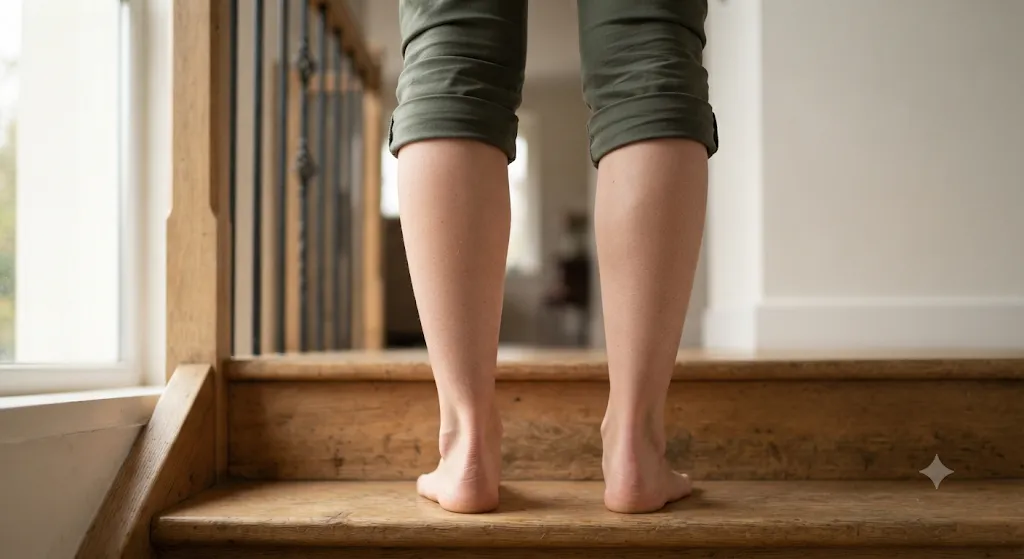
You reach the top of a flight of stairs and notice your calves feel distinctly warm, almost flushed, even though the rest of you seems fine. The sensation is usually brief and fades as you catch your breath. For most people this is an ordinary response to the sudden demand the calves just met, not a sign that something is wrong.
What This Warmth Feels Like
The warmth is typically localized to the back of the lower legs. It can feel like a gentle heat spreading through the muscle, sometimes accompanied by a slight fullness or awareness of the calves that was not there before. It is different from a burning pain or a sharp ache. Most people describe it as pleasant or simply noticeable, and it settles within a few minutes of standing still or walking on flat ground.
Common Reasons the Calves Warm Up
Climbing stairs is a high-demand task for the calf muscles. The gastrocnemius and soleus must repeatedly contract to lift the body against gravity. That work increases local metabolism and the need for oxygen and fuel. Blood vessels in the working muscle dilate, and cardiac output rises, sending substantially more blood to the calves. The extra volume of warm blood is what you feel as heat.
Researchers who have measured calf blood flow during and after exercise, including work by teams using ultrasound and magnetic resonance techniques, consistently show that flow can rise several-fold during even moderate efforts such as repeated plantar flexion. Once the effort stops, the elevated flow declines over minutes rather than seconds, which matches the time course of the warm sensation.
Other everyday factors can make the warmth more noticeable: a warm room, tight socks that trap heat, or climbing several flights in a row. None of these change the basic physiology; they simply make the normal hyperemia easier to detect.
Why the Body Responds This Way
The calves evolved to handle repeated, brief loading—walking up slopes, stepping over obstacles, and climbing. Modern staircases simply recreate a concentrated version of that demand. The rapid increase in blood flow is an efficient way to deliver oxygen and remove metabolites so the muscle can keep working. When the demand ends, the vessels gradually return toward their resting diameter, and the sense of warmth fades.
This response is the same mechanism that warms any working muscle. The calves are simply more noticeable because they sit close to the surface and because stair climbing loads them intensely relative to flat walking. Related ideas about how the lower legs handle everyday load appear in discussions of the calf muscle pump and how the gastrocnemius responds to hills and power steps.
Less Common but Serious Causes
True one-sided warmth that appears without recent effort, or that is joined by swelling, redness, or pain, can occasionally signal a blood clot (deep-vein thrombosis) or a local inflammatory process. These are far less common than ordinary post-exercise warmth, especially when the warmth follows clear muscle work and then settles. Persistent heat that does not fade, or heat that spreads and is accompanied by systemic symptoms such as fever, warrants medical attention rather than self-monitoring.
Hidden Triggers That Make Warmth More Noticeable
Several ordinary conditions can amplify the sensation without changing its benign nature:
- Dehydration or a warm indoor environment that already raises skin temperature
- Wearing compression socks or tight leggings that limit heat escape
- Climbing stairs immediately after sitting for a long period, so the contrast feels sharper
- Mild residual muscle fatigue from earlier activity the same day
None of these turn a normal response into a problem; they simply make the usual blood-flow change easier to feel.
When to Worry
Seek prompt medical care if the warmth is clearly one-sided, appears at rest, and is accompanied by swelling, redness, or calf tenderness that worsens when you walk. Also get checked if the sensation lasts for hours after only light activity, or if you have risk factors for clotting (recent surgery, long immobility, known clotting disorder) and the warmth does not behave like ordinary post-stair recovery. Sudden shortness of breath or chest pain alongside leg symptoms is an emergency.
If the warmth is bilateral, follows clear stair climbing, and fades within ten to fifteen minutes, it is almost always the expected hyperemic response.
Myths vs Facts
Myth: Warm calves after stairs mean you have poor circulation.
Fact: The opposite is usually true. The warmth reflects a normal, healthy increase in blood flow to working muscle.
Myth: You should stop climbing stairs if your calves feel warm.
Fact: Mild warmth is a sign the muscles are being used. Gradual progression is fine for most people; sharp pain is the signal to pause.
Myth: Only intense exercise produces this heat.
Fact: Even a single flight of stairs can raise calf blood flow enough for some people to notice warmth, especially if they are sensitive to the change.
How to Manage the Sensation
Most people need no special action. If the warmth feels distracting:
- Pause on a landing or at the top and let the calves rest for a minute; the flow will settle.
- Walk a short distance on flat ground afterward rather than standing completely still.
- Loosen tight socks or pants if they are trapping heat.
- Stay hydrated so the circulatory response stays comfortable.
If you climb stairs frequently and the warmth bothers you, building calf endurance with short, regular walks or gentle heel raises can make the same effort feel less intense over time. The underlying blood-flow response remains, but the relative demand decreases.
When to See a Doctor
Contact a clinician if the warmth is new, one-sided, and not clearly linked to recent muscle work, or if it is joined by swelling, redness, or pain that limits walking. People with known vascular disease, recent immobilization, or clotting risks should have a lower threshold for evaluation. In the absence of those features, the ordinary post-stair warmth does not require a visit.
Frequently Asked Questions
How long should the warm feeling last?
Usually a few minutes. If it is still obvious after fifteen to twenty minutes of rest, and especially if it is one-sided, it is reasonable to have it checked.
Does the warmth mean I worked the calves too hard?
Not by itself. It mainly means blood flow increased to meet the demand. Sharp pain, lasting soreness, or swelling would be more relevant signals of overload.
Is it the same as the warmth people feel after a workout?
Yes. Stair climbing is simply a concentrated, everyday version of calf exercise. The physiology—local vasodilation plus higher cardiac output—is the same.
Can cold weather change this?
Cold can make the contrast more noticeable because the skin starts cooler, but the underlying increase in muscle blood flow still occurs. The warmth may simply feel more pronounced when you come in from the cold.
Should I stretch right away if my calves feel warm?
Gentle movement is fine. Aggressive stretching while the muscle is still highly perfused is unnecessary and can feel uncomfortable. Most people simply walk normally and let the sensation pass.
Conclusion
A warm sensation in the calves after climbing stairs is a normal consequence of increased blood flow to muscles that just worked hard. The response is well documented in exercise physiology studies and matches everyday experience: the heat appears with the effort and fades as the calves rest. When the warmth is bilateral, brief, and clearly linked to the stairs, it needs no special treatment. Persistent, one-sided, or painful warmth that does not follow this pattern is the version that deserves a closer look.