Evening and midnight aches in both shins or calves are often growing pains — a real, benign childhood pattern Naish, Apley, Peterson, Evans and Hashkes described — not a sign that bones are tearing as they lengthen.
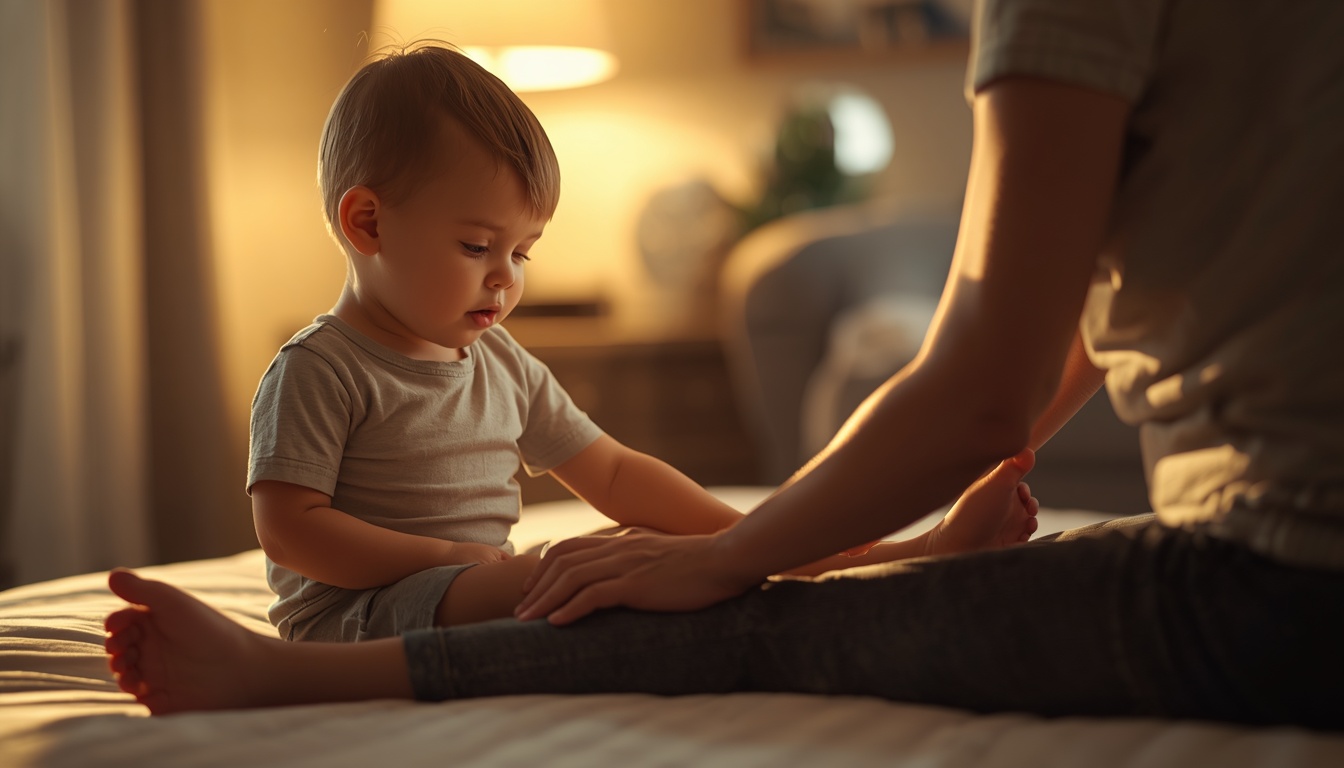
The house is quiet. A child who ran, climbed, and argued through the afternoon sits up and says the legs hurt. Not one knee. Both shins, or both calves, or the fronts of both thighs. There is no bruise, no fever, no swollen joint. Rubbing helps. A warm cloth helps. By morning the same child is often downstairs asking for breakfast as if the night never happened.
That script is old enough to have a name that still misleads. “Growing pains” sounds as if the skeleton is ripping itself longer after dark. It is not. Long bones lengthen at growth plates through a quiet daytime and nighttime process. The ache that wakes a four- to twelve-year-old is something else: a real, usually harmless pattern of non-articular limb pain that clusters in the evening and at night. J. M. Naish and John Apley described it in Bristol children in 1951. Hannu Peterson, Angela Evans, Yosef Uziel and Philip Hashkes later tightened the clinical picture so families and clinicians could tell this pattern from the rarer diseases that must not be missed.
The name stuck. The mechanism is still debated. The pattern is common enough that most pediatric clinics see it every week.
What Growing Pains Feel Like
The classic episode is bilateral. Pain sits in the muscles or the shafts of the long bones — shins, calves, popliteal fossae, thighs — not inside a hot, swollen joint. It arrives late in the day or after the child is in bed. Intensity ranges from a dull complaint to a cry that brings a parent down the hall. Duration is minutes to a few hours. Massage, stretching, or a parent’s hand often shortens it.
Morning is the other half of the diagnosis. A child with typical growing pains wakes able to walk, run, and bear weight. There may be a brief residual stiffness that vanishes with the first few steps, the way an adult’s quiet joints loosen after a still night. There is no progressive limp. There is no single joint that stays puffy. Between attacks the child is well.
Age clusters between about three and twelve, with many series peaking in the preschool and early school years. Some children have a few nights a month. Some have clusters after a day of extra running. Some outgrow the pattern in a year or two; a smaller group keeps intermittent nights into early adolescence.
Why the Name Is Wrong — and Why the Pain Is Still Real
Growth plates — the physes — add length through chondrocyte columns that calcify and remodel. That work does not lurch at midnight. If growth itself were painful in proportion to speed, infants in their fastest length-gain months would be the ones waking. They are not the typical patients. Adolescents in their peak height-velocity year are also not the main group.
Naish and Apley already doubted a simple growth explanation. They found the pain in active children, often after a physically crowded day, and they noted how often the family history included similar nights in a parent. Later work has not found a consistent link between a night of pain and a measurable growth spurt that same week.
So what is it? Several overlapping accounts fit the data better than “bones stretching.”
One is load and recovery. A child’s day still includes more floor time, sprint-stop play, and uneven ground than an adult office day. Muscle and periosteal tissues that worked hard can ache when the child finally lies still, the same way an adult’s calves can cramp at night after unaccustomed standing or a short night of sleep. The difference is that the child’s complaint is usually bilateral and deep rather than a single knotting muscle.
A second account is sensory. Uziel, Hashkes and colleagues have shown that some children with growing pains have a lower pressure-pain threshold in the legs and sometimes elsewhere. The nervous system that reports muscle ache may be set a little more loudly, especially at night when competing daytime noise falls away. That does not make the pain imaginary. It makes the gain on a real signal higher.
A third account is mechanics. Flat feet, a flexible hindfoot, joint hypermobility, and a day spent in worn-out shoes show up more often in some growing-pain cohorts than in quiet controls. The association is not tight enough to call growing pains “just pronation,” but it is a reminder that the tissues being asked to spring all afternoon are the same tissues that complain after lights-out. Adult bones still expect varied impact; a child’s bones and the muscles that load them are in the middle of learning that same lesson at higher weekly mileage.
Vitamin D status, restless legs, and family migraine have all been studied. Some children with nocturnal limb pain do have low 25-hydroxyvitamin D or meet criteria for restless legs later. Those overlaps matter for the individual child. They do not erase the core syndrome: bilateral, evening, non-articular, normal morning function, normal exam.
How Common This Is
Estimates vary with the exact definition, but community studies often land between one in ten and one in three school-age children at some point. Peterson’s reviews and later epidemiologic work by Evans put growing pains among the most frequent musculoskeletal complaints of childhood — far ahead of juvenile idiopathic arthritis, far ahead of bone tumors. Frequency is why the pattern deserves a calm name and a short red-flag list, not a shrug and not a panic.
Boys and girls are both affected. Some series tilt slightly toward girls. The important clinical fact is not the sex ratio. It is that the history, not the X-ray, usually makes the diagnosis.
What It Is Not
Growing pains do not live inside a single swollen knee. They do not produce a morning limp that worsens across days. They do not come with fever, weight loss, night sweats, or a child who stops using one limb. They are not the first explanation for pain that is only on one side, only in a joint, or only in the back.
Apley’s old teaching still earns its keep: the farther the pain is from a joint, and the more it respects both sides and the clock, the more likely the benign pattern. Pain that points at one growth plate, one joint line, or one bone needs a different workup.
Conditions that can mimic or coexist include:
- Overuse apophysitis such as Osgood–Schlatter at the tibial tubercle, usually in a running or jumping early adolescent, and usually one-sided and local.
- Hypermobility-related aches that last into the next day and sit closer to joints.
- Restless legs, with an urge to move and a circadian evening peak that can overlap the growing-pain window.
- Leukemia or other marrow processes, which more often bring unexplained fever, pallor, bruising, bone pain that is not bilateral-and-better-by-morning, or laboratory clues.
- Osteoid osteoma, classically a persistent one-sided night pain that eases with an anti-inflammatory medicine.
- Juvenile idiopathic arthritis, with morning stiffness, joint swelling, and loss of range.
- Infection of bone or joint — a child who will not bear weight, with fever or a hot limb.
Those lists exist so a parent does not have to memorize oncology. They exist so a pattern that is usually kind is not treated as an emergency, and a pattern that is not kind is not soothed away for weeks.
Hidden Triggers on an Ordinary Day
A long afternoon of sport after a week of sitting at a desk is a classic setup. So is a growth-spurt month in shoes that no longer fit, a new trampoline, a weekend of walking a city, or a night that followed a late, short sleep. Cold bedrooms and still legs can unmask an ache that movement had been covering, the way morning stiffness shows up after a night without joint motion.
Emotional load is not a separate disease, but it changes reporting. A child who is tired, overstimulated, or anxious may notice and name a limb ache that would have passed unremarked on a calmer night. That does not mean the pain is “in the head.” It means attention and fatigue sit on the same circuit as muscle ache.
Family clustering is real. A parent who remembers identical nights is useful history, not proof that nothing else can ever be wrong.
When to Worry
Seek prompt medical care — the same day if the child looks unwell — when any of these are present:
- Pain in only one limb that keeps returning to the same spot
- A limp, refusal to walk, or a child who guards one joint
- Swelling, redness, or heat over a joint or bone
- Morning stiffness that lasts and limits play
- Fever, unexplained bruising, pallor, swollen glands, or weight loss
- Back pain, night pain that is always one-sided, or pain that wakes the child every night in the same place
- Symptoms that steadily worsen across weeks instead of coming and going
- A very young toddler with new nocturnal limb pain — growing pains are uncommon under age three
A normal child with the classic bilateral evening pattern and a normal examination does not need routine blood tests or X-rays. Imaging and labs earn their place when the story leaves the pattern.
Myths vs Facts
Myth: The bones hurt because they are growing too fast after dark.
Fact: Physeal growth is not a midnight tear. The timing of the pain tracks rest, prior load, and sensory gain more closely than a growth-plate clock.
Myth: Growing pains mean something is medically wrong with the skeleton.
Fact: In the classic pattern the skeleton examines normally. The diagnosis is clinical.
Myth: If massage helps, the pain was not real.
Fact: Touch, warmth, and stretching change muscle tone and attention. Relief is a feature of the syndrome, not evidence against it.
Myth: Every child with night leg pain needs an X-ray “just in case.”
Fact: Radiation and false alarms have a cost. Imaging follows red flags, not the name of the complaint.
Myth: Growing pains are a mild form of arthritis.
Fact: Arthritis lives in joints, with stiffness and swelling. Growing pains live in the muscles and shafts and leave the joints quiet.
How to Manage a Typical Night
Start with the story and a look at the legs. If both shins or calves ache, the joints look ordinary, and the child was well all day, treat the night, not the radiograph.
Rub the muscles. Hold a warm cloth. Gentle calf and hamstring stretches — the way a parent would stretch after a long walk — often shorten the episode. A dose of a simple analgesic appropriate for the child’s age and weight can be reasonable on a loud night; it should not become the only plan every evening.
By day, keep the child moving. Growing pains are not a reason to cancel ordinary play. Varied walking, climbing, and time out of chairs serve the same tissues that complained at midnight. Shoes that fit, a bit of calf and foot strength, and a wind-down that is not a sudden collapse from full sprint into a cold bed all reduce the number of nights for some families.
Check the obvious modifiers. Is sleep short? Is the child cramping in a pointed-toe sleep posture? Has a vitamin D discussion already happened with the child’s clinician in a winter climate? Those are supporting moves. They do not replace the diagnosis.
What usually does not help is a long explanation at 1 a.m. that the bones are “stretching.” A short, accurate line works better: the legs worked hard, they ache the way used muscles ache, this is common, morning should be better, and we will look again if the pattern changes.
When to See a Doctor
See the child’s usual clinician if the pattern is new and you want the diagnosis confirmed, if nights are frequent enough to wreck sleep for the household, or if any red-flag feature above appears. Bring a simple diary: which legs, what time, what the child did that day, whether morning function was normal, and whether fever or limp ever showed up.
A careful exam of joints, gait, spine, and lymph nodes is the core visit. Blood work and imaging are tools for the atypical story. If the clinician is unsure, a scheduled review in one or two weeks is often wiser than a same-day scan of a moving, playful child.
FAQs
Do growing pains mean my child will be tall?
No. The name is historical. Night limb pain does not predict adult height.
Can growing pains happen in the arms?
They overwhelmingly favor the legs. Isolated arm pain, especially one-sided, is not the classic syndrome and deserves a closer look.
Will stretching every night prevent attacks?
A short evening stretch of calves and thighs helps some children, especially after a sport-heavy day. It is not a guarantee. It is a low-cost habit with a plausible mechanical rationale.
Is this the same as restless legs?
Not always. Restless legs add an urge to move and often a crawling sensory quality. Some children meet both descriptions over time. The treatments and the long-term implications can differ, so name the features you actually see.
Should we stop sport until the pains end?
Usually no. Ordinary play is part of how the tissues adapt. Pause only if there is a limp, a focal hotspot, or a clinician’s instruction after a different diagnosis.
When do growing pains stop?
Many children fade out of the pattern before or during early adolescence. A new one-sided or joint-centered pain at a later age is not “the same growing pains coming back.” Treat it as a new story.
Conclusion
A child who wakes with both legs aching and runs to breakfast is usually living inside a common, kind pattern. Naish and Apley gave that pattern a clinic door. Peterson, Evans, Uziel and Hashkes kept the door honest: believe the pain, trust the bilateral evening script, and save the urgent workup for the child whose story leaves that script.
You do not have to explain away a midnight cry as weakness. You also do not have to assume the skeleton is failing. Rub the shins, watch the morning, keep play in the day, and change course if one limb, one joint, or one unwell child rewrites the night.