
The supinator still expects palm-up turns through the day. Hours of pronated typing leave it quiet, then a jar lid or a pan pour aches the outer forearm.
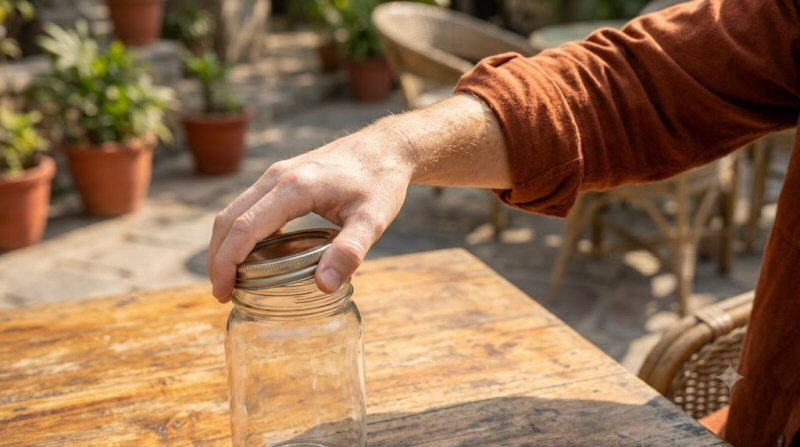
The jar does not look heavy. You twist the lid, the elbow stays almost straight, and a dull burn shows up just below the outer elbow, on the thumb side of the forearm. It is the same spot that complained after you poured a full pan with the palm turning up, or after a Saturday of screwdriver work following a week of typing. The muscle that should have been turning sticks, fiber, and tools in short bursts has been quiet in a palm-down posture since breakfast.
That muscle is the supinator. It wraps the top of the radius and rolls the forearm so the palm faces up. It still expects those turns. A keyboard, a mouse, and a phone ask for the opposite, hours of pronation, then one stubborn lid.
What This Ache Feels Like
People describe a deep tired ache in the upper outer forearm, a few centimeters below the elbow crease, sometimes spreading toward the wrist. It is worse turning a key, a doorknob, or a jar, and often worse with the elbow straight than with the elbow bent. Shaking hands palm-up after a long desk block can feel oddly relieving. Resting the forearm on a hard desk edge makes the same spot complain.
It is easy to call it tennis elbow. True lateral elbow pain sits on the bony bump where the wrist extensors attach, and it hurts when you lift a mug with the palm down. Supinator fatigue sits a little farther down the forearm and tracks rotation more than wrist extension. A click at the elbow when you fully rotate is usually the joint, not this muscle. Numbness in the pinky is the ulnar nerve, covered in the shock when you bump your elbow. The supinator story is rotation, not a funny-bone zap.
What the Supinator Is For
The radius rolls around the ulna. I. A. Kapandji’s joint anatomy put everyday forearm rotation near 80 to 90 degrees each way from a thumb-up neutral, enough to turn a tool, a hide scraper, or a digging stick without moving the whole arm. The supinator runs from the lateral epicondyle, the annular ligament, and the supinator crest of the ulna onto the upper radius. When it shortens, the radius spins into supination.
John V. Basmajian’s electromyography separated the jobs. In slow, unresisted palm-up turns, especially with the elbow extended, the supinator does most of the work. Bend the elbow and add load, and the biceps becomes the strong supinator. That is why a stuck lid feels easier if you pin the jar to your body and bend the elbow: you have recruited a bigger muscle. A straight-arm crank leaves the smaller wrapper to do it alone.
Richard L. Lieber’s muscle-architecture work fits the design. The supinator is built more for range than for huge force. Ancestral days used it often and briefly: twisting cord, turning a handstone, pouring, carrying a bundle palm-up, finishing a throw. The partner muscle on the other side of that rotation is the pronator that still expects a twist. Both want turns. Neither wants a frozen palm-down day.
Why Desk Life Leaves It Quiet
A keyboard holds the forearm pronated. A standard mouse does the same. A phone in one hand, thumb scrolling, rarely asks for a full palm-up roll. Steering wheels and laptop trackpads repeat the pattern. By evening the supinator has done almost none of the short rotations it was built for, while the wrist extensors have held a low-grade posture all day.
Then the mismatch arrives in one motion. A new jar, a heavy skillet tipped to pour, a suitcase handle turned, a weekend of screws. The muscle is not injured by evolution. It is under-rehearsed, then asked for a hard turn at the end of a still day. The outer elbow already irritated by wrist-extensor load, the pattern Robert P. Nirschl described in lateral elbow tendinopathy, has less reserve when rotation is added. Hanging and throwing used to share that job with the elbows that still expect hanging and throwing. Most weeks now offer neither.
The nerve detail matters for the rarer case. The deep branch of the radial nerve passes through the supinator at the arcade of Frohse, described by Frohse and Fränkel in 1908. Roles and Maudsley, and later Morton Spinner, mapped a radial-tunnel pattern in which that tunnel, not the tendon origin, is the sore spot. Irritation there can ache like tennis elbow and, if the posterior interosseous nerve is unhappy enough, weaken finger extension while wrist extension upward is spared. That is uncommon. Ordinary desk ache is not nerve damage. It is a quiet muscle meeting a sudden lid.
Hidden Triggers
A few ordinary habits make the same turn hurt more.
- A pronated mouse all day, then one hard jar at dinner.
- Turning lids with a locked straight elbow instead of tucking the jar and bending the arm.
- Screwdriver work in short bursts after months of none.
- Leaning the upper forearm on a sharp desk edge, right where the nerve enters the muscle.
- Cold hands and a tight grip, which makes every turn clumsier. Cold dexterity is its own story, but the extra force lands on the same rotator.
- Sleeping with the arm tucked under the pillow, forearm fully pronated, then a stiff first turn in the morning.
The broader pattern is the forearms that still expect twist and grip. Supination is the half of that job most desk setups erase.
When to Worry
Most outer-forearm ache after a turn settles in days if you vary the posture and stop cranking stuck lids. Get it checked sooner if:
- Finger extension weakens, or the hand drifts into a wrist drop.
- Pain wakes you, swells, or follows a fall onto the arm.
- You cannot turn the palm up at all, or rotation clunks and locks.
- Numbness spreads into the back of the hand and does not fade after you change position.
- The same spot hurts at rest for more than a couple of weeks, or you have fever, unexplained weight loss, or a history of inflammatory arthritis.
A clinician can separate tendon origin pain from radial-tunnel irritation and from joint trouble. Imaging is rarely the first step for a simple overuse ache.
Myths vs Facts
Myth: Palm-up pain means you tore the biceps.
Fact: A distal biceps tear is usually a pop, bruising, and clear weakness turning the palm up against resistance with the elbow bent. A dull burn below the outer elbow after a lid is much more often the supinator or the common extensor origin.
Myth: You should never supinate if the spot is sore.
Fact: Total rest detains it further. Gentle, unloaded palm-up turns through the day are the rehearsal it missed. Forced cranking of a stuck lid is the part to skip.
Myth: A forearm brace fixes rotation pain.
Fact: A counterforce strap can calm tendon-origin pain for some people. It does not restore the turns the muscle expected, and a tight strap over the tunnel can annoy the radial nerve.
Myth: If it is not tennis elbow, it is nothing.
Fact: Supinator overload and, rarely, radial-tunnel irritation are real patterns. They are just not the bony-bump story most people have heard.
How to Give It the Turns Back
You do not need a rotator program. You need the motion back in ordinary doses.
- Tuck a jar against your body and bend the elbow before you twist. Let the biceps share the load.
- Run a butter knife under a vacuum lid instead of reefing on it with a straight arm.
- Once or twice an hour, roll the forearm from palm-down to palm-up slowly, five times, elbow soft.
- Carry a light bag palm-up for part of a walk. The load is small. The position is the point.
- Shift the mouse closer, and alternate with a short stretch of keyboard work in a more neutral, thumb-up forearm if your setup allows.
- On weekends, add turns gradually: a few screws, not a whole fence, if the forearm has been quiet all month.
- Keep the upper forearm off sharp desk edges.
If the ache is already hot, use easier range for a few days, then return to the slow rolls. Ice can settle a flare. It does not replace the movement.
When to See a Doctor
See someone if weakness shows up, if turning is blocked, if pain is worsening after two weeks of easier use, or if you cannot tell tendon pain from nerve pain. A hand therapist can check rotation range and desk setup without turning a simple ache into a long layoff. Sudden deformity, a pop with bruising, or inability to supinate against gravity needs a prompt look for tendon injury.
FAQs
Why does the jar hurt more with a straight elbow?
With the elbow extended, Basmajian’s recordings show the supinator doing the unassisted turn. Bend the elbow and the biceps takes a share. A straight-arm crank is the harder version of the same job.
Is this the same as tennis elbow?
Often it is next door. Tennis elbow, in Nirschl’s account, centers on the extensor origin at the bony bump and hurts with palm-down gripping. Supinator ache sits slightly lower and tracks palm-up rotation. The two can overlap after a desk week.
Can the nerve in the muscle be the problem?
Yes, but it is the exception. The deep radial nerve passes through the arcade of Frohse inside the supinator. Roles, Maudsley, and Spinner described ache there that can mimic tendon pain. Weak finger extension is the clue that it is more than a tired muscle.
Does typing damage the supinator?
Typing mostly fails to use it. The forearm stays pronated, so the supinator stays quiet. The pain usually arrives later, when a lid or a pour asks for a turn the muscle has not practiced.
Should I stretch it hard?
A gentle roll through available range is enough. Forcing the palm up against a sharp stretch at the end of a sore day tends to irritate the tunnel and the tendon neighbors. Short, easy turns beat one long crank.
Conclusion
The supinator is a small wrapper with a clear job: roll the palm up, often, and not all at once under a stuck lid. Desk life parks the forearm palm-down, then modern packaging asks for a single hard supination. Bend the elbow, share the turn with the biceps, and put a few easy palm-up rolls back into the day. The ache is usually a missed rehearsal, not a broken arm. Weakness, locking, or a pop with bruising is the signal to get it seen.


