
The side waist still expects a hip hike, a one-sided carry, and uneven ground. Chairs and a bag on the same shoulder leave it short, then one grocery run aches.
The sore spot is not quite the spine and not quite the hip. It sits in the soft wall above the belt, a thumb’s width out from the lowest ribs, and it complains when you stand up from the car, reach for a suitcase, or sleep on the tight side. A long sit makes it quiet and short. A one-shoulder bag makes it loud. Press into the side of the waist and the same ache answers back, sometimes with a line toward the buttock or the crest of the pelvis.
That wall is the quadratus lumborum, usually shortened to QL. It is a deep, flat muscle on each side of the low back, running from the top of the hip bone up to the twelfth rib and the lumbar vertebrae. It was built for days that included a child on one hip, a load in one hand, a step onto a rock, and a reach to the side. A chair and a sidewalk ask it to hold one posture for hours, then to do a weekend of side work it has not rehearsed. The ache is often that gap, not a damaged disc.
What the Side Waist Was Built to Do
Each QL anchors on the iliac crest and the iliolumbar ligament, then climbs to the twelfth rib and the transverse processes of the upper lumbar vertebrae. When the pelvis is steady, it bends the trunk toward the same side. When the trunk is steady, it hikes the pelvis. Both sides working together can help extend the lumbar spine. It also holds the twelfth rib down so the diaphragm has a fixed point to pull against during a deeper breath.
That mix was ordinary work. Uneven ground asks one hip to lift so the foot clears a root. A water skin, a bundle of wood, or a child on one hip loads one side of the trunk while the other side lengthens. A side reach into a bush, a climb, or a twist-and-carry shares the job with the obliques. The muscle shortened and lengthened many times a day. It was a stabilizer with a commute, not a clamp parked above a wallet.
Anatomists have mapped the fiber directions for a long time. Nikolai Bogduk’s lumbar dissections separated the QL from the deeper transversospinal muscles and showed why a side-waist ache can feel like “the back” even when the disc is not the source. Donald Neumann’s kinesiology descriptions put the hip hike in plain terms: fix the ribs, and the QL lifts the pelvis on that side. Janet Travell and David Simons later called the QL a joker of low back pain, because its trigger points refer into the sacroiliac region, the buttock, and sometimes the lower abdomen, mimicking other problems.
Stuart McGill’s electromyography work gave the muscle a modern job description. In side-support tasks the QL is a major lumbar stabilizer, often working harder than people expect from a muscle they cannot see. It is not only a side-bender you use when you lean. It is part of the guy-wire system that keeps the lumbar segments from buckling when you carry, stand on one leg, or roll in bed.
Why Flat Days Leave It Short
A level floor and a padded chair remove most of the side load. You do not hike a hip to clear a stone. You do not carry on one side for a walk to water. The QL still has to hold the twelfth rib and resist a small lean, but it does that in a narrow range, often with the hip slightly hitched and the low back slightly side-bent.
Small habits widen the mismatch. A wallet or phone in one back pocket tilts the pelvis for the whole commute. Crossed legs park one QL short and the other long. A laptop shifted to one side of the desk, a monitor too far left, or a standing desk where you always unload onto the same leg does the same thing more quietly. Gunnar Andersson, with Alf Nachemson and others, showed decades ago that sitting posture changes lumbar muscle demand and disc pressure. Asymmetry is not neutral just because the chair feels soft.
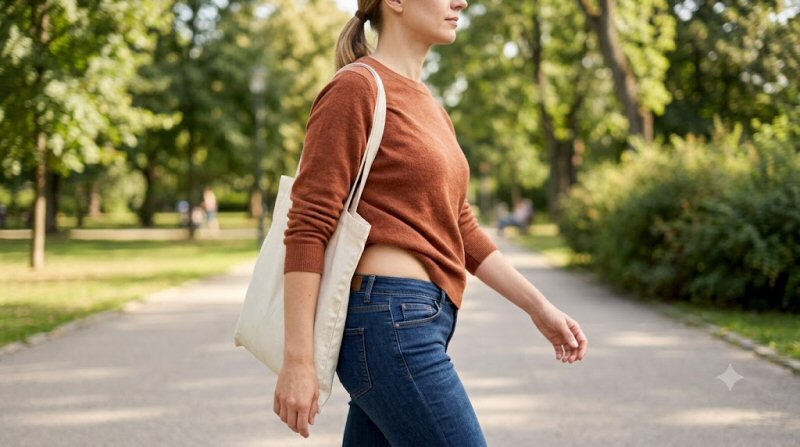
The bag is the clearest modern side load, and it is usually the wrong kind. A tote on the same shoulder every day asks one QL to hike and hold while the opposite side never gets the job. The load is static. Ancestral carrying moved: the bundle changed hands, the child shifted hips, the path forced a new step. A commute strap does not. Vladimir Janda’s imbalance model fits the pattern clinicians still see: a gripping QL beside a sleepy gluteus medius, so the waist hikes the hip instead of the lateral hip muscles holding the pelvis level.
Then the weekend arrives. Groceries in one hand, a suitcase up a curb, a child who wants to be carried on the usual hip. The QL is asked for a strong, repeated hip hike after days of near-isometric shortening. The fibers protest. Shirley Sahrmann’s movement-system work describes this as a hip-hike pattern: the side waist does a job the hip abductors were meant to share. The pain is real. The tissue is usually irritated, not torn.
Breathing joins the story on long desk days. The QL fixes the twelfth rib. If the breath stays high and the belly is braced against a waistband, that rib barely moves. The muscle holds a shorter length while it also stabilizes a slumped lumbar spine. People who already know the breath was never meant only for seated life often find the side waist is part of the same picture.
What This Ache Feels Like
A typical QL complaint is a deep, one-sided ache above the iliac crest. It can feel like a stitch that never quite leaves. Rolling over in bed, standing from a low seat, coughing, or side-bending toward the tight side often sharpens it. Side-bending away may pull. Walking can ease it after a few minutes, then a hill or a curb brings it back.
Referred ache is common. Travell mapped QL points into the sacroiliac area and the upper buttock, so people often blame the joint or the sciatic nerve. True nerve pain usually travels below the knee with numbness, tingling, or weakness. A QL ache more often stays in the waist, crest, and upper buttock, and it changes when you press the muscle or change the hike.
It is also easy to confuse with a kidney ache. Kidney pain tends to sit higher in the flank, may come with fever, urinary change, or waves of deep pain that do not care how you bend. Muscle pain cares a lot about position. If the story is only “worse when I hike that hip, better after I walk evenly,” the side waist is the likelier source.
Hidden Triggers
The obvious ones are the bag, the wallet, and the crossed leg. A few quieter ones matter as much.
A soft mattress that lets the pelvis drop when you side-sleep can leave the downside QL compressed and the upside QL stretched all night. A pillow between the knees often calms that more than a harder stretch in the morning.
Holding a phone between ear and shoulder hikes the whole side, including the waist, even though the complaint shows up in the neck first. Driving with one arm on the window and the trunk slightly bent does the same for an hour.
Shoes with a worn outer heel, or always standing with the weight on one leg in a queue, train a small hitch. The lower back that still expects a hinge and a walk is doing extra side work the hinge never asked for.
Stress shows up here too. A braced belly and a held breath stiffen the lower ribs. The QL cannot lengthen on the exhale if the rib it holds never drops. People describe it as “my side locks when I am rushed,” which is a fair description of a stabilizer that has been asked to clench.
When to Worry
Most side-waist aches after sitting and one-sided carrying settle over days if the load is shared and walking returns. Some patterns should not be waited out.
Seek urgent care for side or back pain with fever, vomiting, blood in the urine, fainting, chest pain, or pain after a fall or car accident. New weakness, numbness in the groin, or loss of bladder or bowel control needs emergency assessment, not a stretch.
Ask for a routine check if the ache wakes you and does not change with position, if it spreads below the knee with pins and needles, if one side stays hiked and you cannot stand straight after a week, or if you have unexplained weight loss. Pregnancy-related pelvic pain, a recent infection, or pain that is clearly getting worse rather than shifting with posture also deserves a clinician, not another bag on the same shoulder.
Myths vs Facts
Myth: A one-sided low back ache always means a disc.
Fact: Discs can refer pain, but a load-sensitive waist ache that you can press on, and that changes with hip hike and side bend, is often the QL or the obliques. Bogduk and McGill both argued for matching the pain to the tissue that is actually working.
Myth: You should stretch a tight QL hard every morning.
Fact: Aggressive side bends on a cold, short muscle often irritate it. A short walk, a gentler lengthening after you are warm, and fewer hours in a hitched posture usually do more.
Myth: One-shoulder bags are fine if the strap is padded.
Fact: Padding changes skin pressure. It does not share the hip hike. Alternating sides, or using a backpack for heavier loads, changes the demand. The core that still expects you to carry things was built for loads that moved, not a permanent hitch.
Myth: If it hurts to side-bend, the muscle is weak and needs isolation drills first.
Fact: It is often overworked in a short range and underused through a full one. Capacity comes back with varied carries and walking, not with daily max side planks on day one.
How to Give It the Side Load It Missed
Start with the setup, because the muscle cannot unlearn a hitch it repeats for eight hours.
Empty the back pocket. Uncross the legs every time you notice them. Put the screen in front of the chest, not off to the writing-hand side. If you stand at a counter, switch the standing leg on a timer you will actually hear. These are small. They are the hours.
Alternate the bag. If the tote has to stay on one shoulder for a minute, change shoulders at the next corner. For anything heavier than a laptop and a bottle, a backpack or a hand-to-hand carry beats a permanent strap. A suitcase carry — weight in one hand, ribs tall, pelvis level — is closer to the old job than a shrugged shoulder.
Walk before you stretch. Ten to twenty minutes on ordinary ground lets the pelvis level and the twelfth rib move. Then, if the side still feels short, try a gentle lengthener: stand with the sore side’s hand reaching overhead only as far as the waist allows without a sharp pull, or side-lie over a thin pillow under the waist for a minute, breathing low. Stop at a mild pull. A stab means you have gone past useful.
Rebuild the share with the hip. Side-lying leg lifts with the pelvis stacked, or a short standing hip-hike drill done slowly and evenly, remind the lateral hip that it can hold the pelvis without the waist doing all of it. McGill’s side-support progression is useful once walking is easy: knees-down side plank for a few breaths, not a heroic hold. Pain that spreads or lingers past the next day is a signal to regress.
Pair it with the obliques. A light carry while you walk, and an easy twist to put a bag in the back seat, use the side wall the way a twist-and-carry day would have. The QL should not be the only guy-wire on duty.
When to See a Doctor
See a clinician if the ache follows trauma, comes with urinary or fever symptoms, includes leg weakness or groin numbness, or has not eased after two to three weeks of shared loads and walking. A physical therapist can check whether you are hiking, whether one gluteus medius is late, and whether the twelfth rib is stuck. Imaging is rarely the first step for a clear postural side ache. It matters when the red flags above are present, or when treatment is not changing the story.
FAQs
Why does only one side of my waist hurt after sitting?
The chair is rarely even. A wallet, crossed legs, a shifted screen, or always unloading onto one leg shortens one QL and leaves the other relatively quiet. The short side announces itself when you stand and ask it to lengthen.
Can the quadratus lumborum mimic sciatica?
It can ache into the upper buttock and sacroiliac area, which feels neural. Classic QL referral, as Travell mapped it, usually stays above the knee and changes with pressure and side bend. Pain below the knee with numbness or weakness needs a different check.
Should I foam-roll the side of my waist?
Light rolling on the soft wall, not the ribs or the spine, can ease a guarded muscle after a walk. Hard rolling on a cold, angry QL often flares it. If pressing the spot reproduces a sharp line of pain, skip the roller and change the bag and the pocket first.
Does a side plank fix this?
A side support can restore the stabilizing job McGill measured, once you can walk and carry without a hitch. Starting with long, painful holds usually repeats the overload. Short holds with a level pelvis are enough at first.
Why is it worse in bed?
Side-sleep lets the pelvis drop, compressing the downside QL for hours. A pillow between the knees, and sometimes a thin one under the waist, keeps the side wall nearer neutral. Morning stiffness that eases with walking fits a postural muscle more than a joint that is failing.
Is this the same as a side stitch?
A side stitch during hard breathing sits higher, often under the ribs, and fades when the effort stops. QL ache sits at the waist crest, lasts after the activity, and cares about hip hike and carrying. They can overlap on a long uphill with a pack, but they are not the same complaint.
Conclusion
The quadratus lumborum still expects a hip hike, a changing one-sided carry, and ground that is not perfectly flat. Chairs, wallets, and a bag on the same shoulder give it a short, static job, then a grocery curb asks for the old one all at once. Share the load, walk before you stretch, and let the lateral hip take part of the hike. Most side-waist aches are a mismatch you can feel with your hand, not a spine that has suddenly failed.


