
The iliacus still expects a high step and a swinging thigh. Chair days keep it short and quiet, then stairs make the front of the hip ache.
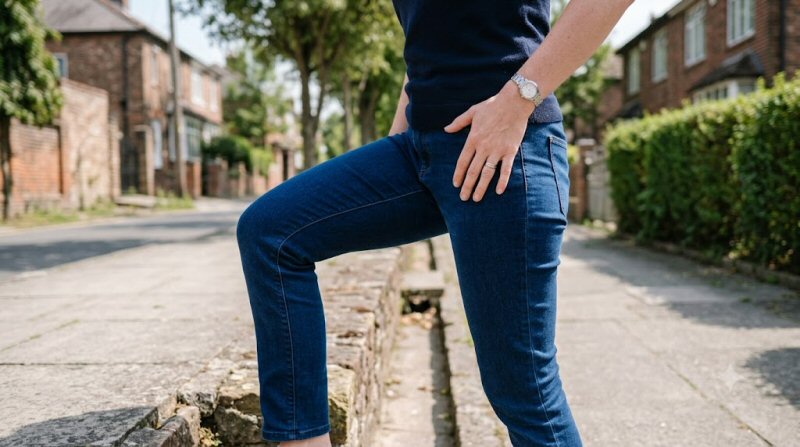
The first stair after a long meeting is the giveaway. The front of the hip, just inside the bony crest, pulls as the knee lifts. It is not a sharp joint click. It is a deep, dull tug that eases once you have climbed a flight and the thigh has remembered the job. Sitting had kept that same hip bent for hours. The muscle lining the inside of the pelvis had almost nothing to do. A high step is the demand it still expects.
That muscle is the iliacus. It is not famous the way the quads are. It does not show on a sleeve. It is a broad sheet on the inner bowl of the ilium, joining the psoas tendon on the lesser trochanter of the femur. Together they are iliopsoas, the main lifter of the thigh once the hip is already bent. Walking on flat ground uses it in a short burst at the end of stance. Stairs, a curb, a high bus step, and getting the foot up onto a bike pedal ask for more. Modern days are full of the bent position and short on the lift.
What This Ache Feels Like
People describe a deep ache in the groin crease or just below the front of the hip bone, often on the side they lead with on stairs. It can show up as stiffness when you stand after a film, a pull when you bring the knee toward the chest to tie a shoe, or a tired front-of-hip feeling on the walk home after a seated shift. It usually warms up. A few minutes of ordinary walking often settle it.
It is easy to mix up with neighboring tissues. A pinch at the very end of bringing the knee high, especially with the thigh turned in, can be the ball of the hip meeting the socket rim rather than the muscle belly. A band of ache down the front of the thigh is more often the quads that still expect the floor. A sharp outer-hip snap is a different story. Iliacus fatigue sits deeper, closer to the fold, and tracks the act of lifting the thigh.
Both sides can ache after a day of sitting, then one side louder if you always cross the same leg or always lead with the same foot on stairs. The pattern that fits this muscle is delayed and mechanical: quiet through the chair hours, vocal on the first high steps, quieter again once the steps continue.
What the Iliacus Was Built to Do
The iliac fossa is a broad shallow bowl. The iliacus carpets it and funnels into a tendon that shares the lesser trochanter with psoas major. Nikolai Bogduk and colleagues mapped how that shared tendon crosses the front of the hip. Scott Delp’s moment-arm work showed why the lift gets harder, not easier, as the hip bends further: past about a right angle, iliopsoas is the muscle with the leverage to keep raising the thigh. The quads are busy at the knee. The glutes are lengthened and less helpful for flexion. The iliacus is the high-step specialist.
In gait it is a swing starter, not a standing strut. Jacquelin Perry’s gait descriptions and the intramuscular recordings of Eva Andersson, Lars Oddsson, and Alf Thorstensson place iliopsoas activity late in stance and early in swing, the moment the trailing limb has to come forward. John Basmajian’s earlier EMG work had already shown the hip flexors quiet in easy standing and busy when the thigh must be lifted. A day of foraging, climbing, and stepping over uneven ground was a day of repeated brief contractions through a long range. The muscle expected to shorten hard, then lengthen again on the next stride.
It also tilts the pelvis forward when the feet are fixed. That is a real action, and it is why a slumped sit can leave the front of the hip feeling short. It is not proof that a “tight iliacus” is the cause of every low-back ache. The link is often oversold. The fair claim is narrower: hours in flexion leave the muscle unused at short length, and the next high step is a sudden return to its old job.
Why a Chair Retires It
A typical chair holds the hip near 90 degrees. The iliacus is neither fully stretched nor asked to lift anything. Daniel Juker, Stuart McGill, and colleagues recorded intramuscular EMG during common exercises and postures and found iliacus and psoas relatively quiet in supported sitting compared with any task that raised the thigh. Andersson’s group saw the same pattern: the muscle is a swing and climb worker, not a postural clamp.
So the mismatch is not that the iliacus is clenched all day. It is that it is parked. Length-tension drifts toward the bent position. The nervous system stops rehearsing the late-stance burst. Blood flow through a still hip crease is ordinary, not the pump of repeated swing. Then the train platform, the attic stair, or a toddler who has to be lifted asks for a large flexion moment from a muscle that has fired almost nothing since morning.
The hip flexors that still expect a long stride cover the walking half of this story. Iliacus is the steeper half. Flat-ground walking may not be enough to wake it if the stride stays short and the knee never rises. A curb is a clearer signal than another lap of the office corridor.
Why the First High Step Hurts
Eccentric and concentric load after disuse is a familiar muscle story. The iliacus must shorten against body weight as the knee lifts, then control the thigh as the foot comes down. If the first repetitions are also the hardest of the day, the ache is the same family as next-day soreness after a new hike, only it shows up in the groin crease rather than the calf.
A second reason is the socket. Christopher Lewis, Shirley Sahrmann, and colleagues have shown that iliopsoas force can raise anterior hip-joint load. In a hip that already sits close to the rim in deep flexion, a sudden high step can pinch as well as pull. That pinch is sharper, catches at a specific angle, and may click. Muscle fatigue is duller and spreads with repeated steps before it settles. Both can coexist after a still day. Stretching aggressively into the pinch usually irritates the rim. Easy range, then a few controlled lifts, is kinder.
The sartorius that still expects a high step crosses the same crease and can ache in parallel, especially if you step high and out, tailor-style. Iliacus is deeper and more concerned with pure lift. If the ache is only on the inner knee after a wide step, sartorius or the pes anserinus is the likelier culprit.
Common Modern Triggers
Long meetings with ankles crossed keep one iliacus shorter than the other. Car commutes do the same, especially the right hip on the accelerator if the seat is low. Soft sofas that dump the pelvis back hold both hips flexed and the low back rounded. Standing desks help only if you actually shift and step. Locked standing is not a high step.
Weekend patterns amplify it. Five desk days, then a Saturday of trails, stadium stairs, or carrying boxes up a porch. The volume is ancestral. The preparation was not. High-heeled shoes and very cushioned shoes with a short stride reduce the swing demand further, so the muscle gets even less rehearsal before the one big lift.
Sleep position can add a morning version. Curled on the side with both hips flexed is comfortable and common. The first steps to the kitchen may feel tight in the crease until the thigh has swung through a few strides. That morning tug that fades is the parked-length story, not an injury.
Less Common but Serious Causes
Most front-of-hip ache after sitting is mechanical and benign. A few patterns are not. A hot, swollen hip, fever, or pain that will not let you bear weight needs urgent care. An iliacus hematoma is uncommon but real in people on anticoagulants or after a fall: severe groin pain, the hip held flexed, sometimes numbness on the front of the thigh if the femoral nerve is compressed. That is not a stair warm-up.
Right-sided pain with nausea, a fever, or pain that starts around the navel and settles low can be appendicitis or another visceral problem. Hip muscle ache does not move there from the belly, and it should relate to lifting the thigh. Groin pain with a lump that appears on coughing can be a hernia. Catching, giving way, or pain that blocks deep flexion after a twist can be a labral tear or hip impingement, worth a clinician if it persists beyond a few weeks of sensible loading.
Numbness, burning down the thigh, or weakness lifting the foot is nerve, not simple iliacus fatigue. Night pain that wakes you unrelated to position, unexplained weight loss, or a history of cancer also falls outside the desk-and-stairs story.
Myths vs Facts
Myth: a tight iliacus is the cause of most low-back pain. Fact: the muscle can tilt the pelvis, and long sitting can leave it short, but back pain has many drivers. Forcing a deep lunge stretch is not a proven cure, and end-range hip extension that arches the low back can irritate the spine instead.
Myth: if it aches, it needs rest until the ache is gone. Fact: complete rest returns it to the parked state that started the problem. Easy walking and a few pain-free knee lifts usually beat a week on the sofa.
Myth: sitting “deactivates” the iliacus forever. Fact: EMG shows it quiet in the chair and promptly active when the thigh must rise. The system is inhibited by the task, not deleted. A high step is the reactivation.
Myth: only athletes get this. Fact: the clearest mismatch is the person who sits all week and then climbs. Athletes who train hip flexion usually have the opposite problem, overload, which feels similar but follows hard sessions rather than meetings.
How to Give It the Step It Expects
Break the parked position before it lasts all afternoon. Stand and take twenty steps, or march in place with an easy knee lift, every half hour if the day is chained to a chair. The lift does not need to be dramatic. Thigh parallel to the ground is plenty. Hold a counter if balance is shaky.
Use real steps when you have them. One flight of stairs at a controlled pace, leading with each leg, rehearses the late-stance burst Perry described. A curb on the walk to lunch does the same. If stairs pinch at the top of the lift, shorten the step and slow down rather than bouncing into the catch.
After long sitting, a gentle hip-extension rest is useful if it does not pinch the front of the joint or arch the low back. Half-kneeling with the pelvis tucked slightly, a small shift forward, ten slow breaths. Pain at the rim means you have gone too far. The goal is to let the muscle lengthen, not to force a split.
Strength can be simple. Standing knee lifts for two short sets, slow on the way down. A few step-ups onto a low stair, quality over height. McGill’s work is a reminder that the iliacus responds to lifting tasks, not to bracing in a chair. Skip aggressive sit-ups that yank the hip flexors if the crease already aches.
Shoes and seats are small levers. A seat height that lets the feet rest flat without the knees above the hips reduces the parked flexion a little. A stride that actually swings, rather than shuffles, gives the muscle its gait burst even on flat ground.
When to See a Doctor
See someone promptly for fever, a hot joint, inability to bear weight, a groin lump, pain after a fall especially on blood thinners, or numbness and weakness. See someone in the next week or two if the crease ache lasts more than a few weeks despite walking and easy lifts, if it catches and locks, or if one side is clearly weaker. A clinician can separate muscle overload from impingement, hernia, and the rare hematoma. Imaging is not the first step for a warm-up ache that tracks stairs and settles.
FAQs
Why does the front of my hip ache only on the first flight of stairs? The iliacus has been quiet at short length for hours. The first high steps are its largest demand of the day. Blood flow and coordination catch up within a flight in most people, so the tug fades if you continue rather than stop.
Is this the same as a hip-flexor strain? A strain follows a clear overload, such as a sprint or a slip, and hurts to lift the knee even on level ground. The mismatch ache is milder, tied to desk days, and eases as walking continues. Both live in the same neighborhood. A strain that limits walking deserves a check.
Should I stretch my hip flexors every day? A short, pain-free extension rest after sitting is reasonable. Long aggressive lunges that pinch the groin can bother the labrum and are not required. The missing input is usually the lift, not another stretch.
Can sitting cross-legged make one side worse? Yes. The top hip stays more flexed and turned, so that iliacus spends even longer at short length. Alternating the cross, or uncrossing on a timer, evens the parked position. It will not replace a real step.
Does a standing desk fix it? Only if you step, shift, and occasionally lift a knee. Standing still with hips locked is a different under-use, not the high-step job. A short walk outperforms a static standing desk for this muscle.
When is front-of-hip pain not the iliacus? A catch at a specific angle, a click with giving way, pain with coughing and a bulge, fever, or thigh numbness points elsewhere. Pain that ignores movement and arrives with belly symptoms needs medical care, not a stair rehearsal.
Conclusion
The iliacus still expects a high step and a swinging thigh. Chairs give it the bent shape of that step and none of the work. The first stair is the body collecting a debt, not a joint failing. Give the crease a few honest lifts through the day, take the flight slowly, and save the urgent visit for fever, weakness, a lump, or a pinch that will not warm up. The muscle is old equipment. It still works when the day includes a curb.


