
The genioglossus keeps your tongue forward and your airway open. Modern soft diets, mouth breathing, and screen posture leave it under-used, which can feel like a heavy tongue or easier snoring.
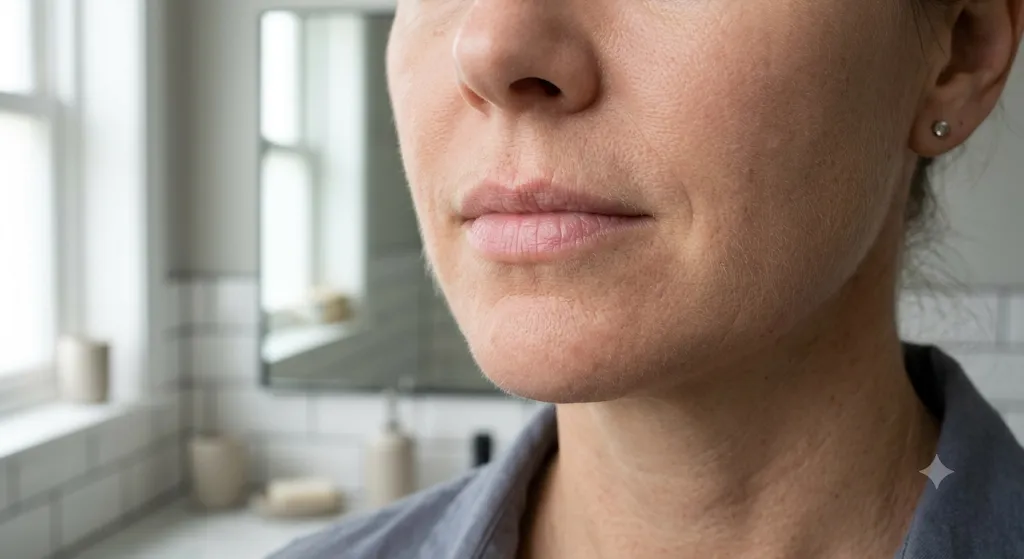
You finish a long call and notice your tongue feels thick, or you wake up with a dry mouth and the sense that something sat too far back in your throat. Nothing dramatic, just a quiet heaviness that was not there when you were younger and spent more time chewing and talking outdoors. That sensation often tracks back to the genioglossus, the broad fan-shaped muscle that forms most of the tongue body and is meant to hold the tongue gently forward against the palate at rest.
In ancestral settings the tongue stayed busy. Tough plant fibers, occasional meat, and frequent conversation kept the genioglossus in low-level tone. Today soft meals, prolonged mouth breathing, and forward-head screen posture reduce that daily demand. The muscle still expects the forward resting position it evolved to maintain.
What the Genioglossus Actually Does
The genioglossus originates from the inner surface of the mandible and fans upward and backward into the tongue. Its longitudinal fibers protrude the tongue; its vertical and horizontal fibers help depress the body and pull the base forward. At rest it maintains a low tonic activity that keeps the tongue from collapsing into the airway, especially when you lie down. Studies of genioglossus electromyography by researchers such as Bailey and colleagues have shown this tonic background activity in both upright and supine positions in healthy adults, rising phasically with inspiration.
When the muscle is under-active, the tongue sits lower and farther back. You may notice a heavier feeling in the mouth, more frequent mouth breathing, or a slight increase in snoring. The same under-use can contribute to the scalloped tongue edge some people see in the mirror, as the tongue rests against the teeth instead of the palate.
Why Modern Life Leaves It Under-Worked
Soft, highly processed foods require less forceful protrusion and less sustained tongue elevation than the tougher ancestral diet. Chewing studies have long noted that reduced masticatory demand changes oral muscle activity patterns. At the same time, many people spend hours with the mouth slightly open while concentrating on screens; the genioglossus receives fewer cues to stay engaged against the palate. Forward head posture, common at desks, also alters the resting length of the suprahyoid and tongue muscles, making the preferred forward seal harder to maintain.
Related articles on the site explore adjacent pieces of the same oral system: why your tongue still expects the roof of your mouth, why your lips still expect a resting seal, and why your jaw still expects a small resting gap. Together they form the quiet postural habit the genioglossus was built to support.
The Evolutionary Mismatch
Human infants begin with a forward tongue posture that supports breastfeeding and nasal breathing. As the face grows, the same muscle continues to provide internal scaffolding for the upper jaw and a stable airway. In environments where food required real chewing and people spent most of the day upright and talking, that scaffolding stayed active. Climate-controlled rooms, liquid calories, and sedentary screen work remove those inputs. The genioglossus does not atrophy overnight, but its resting tone can drift lower, exactly as other under-used postural muscles do.
Sleep researchers have documented that genioglossus activity falls during sleep, particularly in REM, and that further reductions in people with obstructive sleep apnea allow the tongue to fall back. The same muscle that quietly supports daytime posture is the one whose tone is critical at night.
Common Everyday Triggers
- Hours of screen work with the mouth slightly open
- Soft, low-chew meals and frequent sipping of liquids
- Allergies or nasal congestion that push breathing to the mouth
- Forward head posture at a desk or in a car
- Habitual low tongue rest position after years of thumb-sucking or mouth breathing in childhood
When the Feeling Is Probably Benign
A mild sense of tongue heaviness after a long talking day, or noticing that your mouth falls open more easily when you are tired, is usually just under-use. It tends to improve with brief posture resets and a few minutes of deliberate nasal breathing. Occasional light snoring in a side-sleeping position after a late meal is common and not automatically a sign of disease.
When to Pay Closer Attention
See a clinician if you have loud, frequent snoring with witnessed pauses in breathing, morning headaches that do not resolve with better sleep, or persistent dry mouth and dental changes despite good hygiene. Sudden new tongue weakness, slurred speech, or difficulty swallowing are not typical of simple under-use and need prompt evaluation. Persistent scalloping of the tongue edges together with jaw pain or tooth mobility also warrants a dental or myofunctional assessment.
Myths Versus Facts
Myth: A heavy tongue means you need to cut salt or see a neurologist immediately.
Fact: Most mild cases track to resting posture and breathing pattern, not systemic disease.
Myth: You should force the tongue hard against the palate all day.
Fact: Light, sustained contact is enough; forceful pushing can fatigue the muscle and irritate the palate.
Myth: Only children need tongue-posture work.
Fact: Adults retain the ability to retrain resting tone, though changes are slower than in growing faces.
Practical Ways to Give the Muscle What It Still Expects
- Check resting posture a few times a day: lips closed, teeth lightly apart, tongue tip and mid-body gently on the palate, breathing through the nose.
- Chew a few bites of firmer food (raw vegetable, whole-grain bread) at one meal so the tongue has to stabilize and reposition the bolus.
- Practice a few slow nasal breaths with the tongue in place before sleep; this reinforces the same pathway used during quiet respiration.
- Reduce prolonged open-mouth screen time; a small chin tuck and lip seal every 20–30 minutes is enough for most people.
- Address nasal congestion so mouth breathing is not the default; a simple saline rinse or allergy management often helps.
These are low-load habits, not exercises that require special equipment. They restore the intermittent, low-level demand the genioglossus evolved to meet.
FAQs
Does a forward tongue posture really affect sleep?
Yes. The same tonic activity that keeps the tongue forward during the day continues, at a lower level, at night. When baseline tone is already reduced, the further drop that occurs in sleep makes airway narrowing more likely. Side sleeping and nasal breathing both support that residual tone.
Can I feel the genioglossus working?
Most people cannot isolate it the way they feel a biceps curl. You notice it indirectly: the tongue feels lighter and higher when posture is correct, and heavier or farther back when it is not. EMG studies confirm continuous low-level activity even when you are unaware of it.
Is tongue posture training only for people with sleep apnea?
No. Mild under-use is common in people who simply have soft diets and long screen hours. The same habits that improve daytime comfort also support nighttime airway stability, whether or not formal apnea is present.
How long before resting posture feels natural again?
Most adults notice easier lip seal and less tongue heaviness within two to four weeks of consistent light practice. Full remodeling of facial muscles takes longer, similar to other postural retraining.
Should I see a specialist?
If simple posture resets and nasal breathing do not reduce the heaviness or snoring after a month, a dentist familiar with airway or an orofacial myofunctional therapist can assess tongue strength, resting position, and any contributing dental factors. Severe snoring or daytime sleepiness should be evaluated for sleep apnea first.
Conclusion
The genioglossus is not a muscle you think about until its absence becomes noticeable. It evolved to keep the tongue forward with almost no conscious effort, supported by chewing, talking, and nasal breathing. Modern life quietly removes those supports. Restoring a light forward resting posture, closing the lips, and giving the tongue occasional real work is usually enough to bring the sensation of heaviness back down. The muscle still expects that forward position; the habits that satisfy it are small and available every day.


