
Your finger extensors evolved for opening the hand during varied tool use and carrying. Hours of closed grips on keyboards and phones leave them underused, contributing to forearm tightness and stiff fingers.
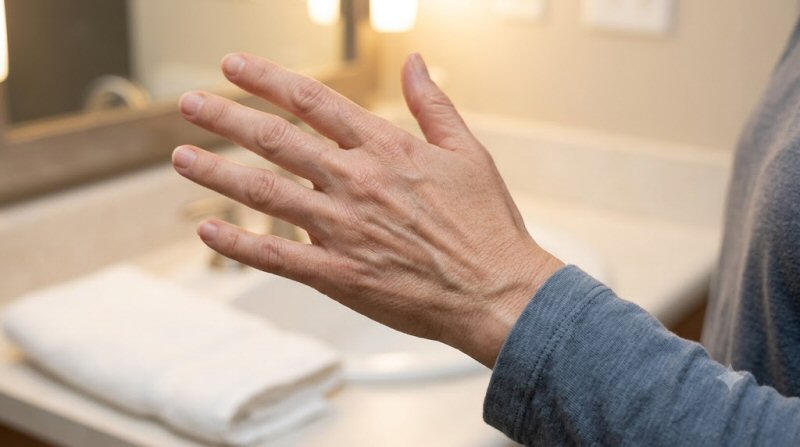
You finish a long stretch of typing or scrolling and notice your fingers feel a little stiff when you try to straighten them fully. Or your forearm feels tighter on the top than the bottom. That quiet resistance often comes from the extensor digitorum, the muscle on the back of your forearm that lifts and spreads the four fingers. It still expects the occasional full extension that came with opening a hand around a tool, releasing a grip, or positioning fingers for a precise hold. Modern closed-hand postures leave it mostly idle.
What This Muscle Actually Does
The extensor digitorum (sometimes called extensor digitorum communis) arises from the lateral epicondyle of the humerus via the common extensor tendon and sends four tendons across the back of the wrist into the extensor expansions of the index, middle, ring, and little fingers. Its primary job is extension at the metacarpophalangeal joints and, with help from the interossei and lumbricals, at the interphalangeal joints as well. It also assists wrist extension and helps separate the fingers as it lifts them.
Electromyography work by researchers such as John V. Basmajian showed that the muscle is active when the hand opens and when the fingers move into extension against even light resistance. Functional anatomy descriptions by I. A. Kapandji emphasize that coordinated extension is what lets the hand release an object cleanly and then reshape itself for the next grip. Without regular extension, the flexor muscles on the palm side stay relatively shortened while the extensors lose the habit of full length and force production.
Why Ancestral Hand Use Built in Extension
For most of human evolutionary history the hand moved through a wide repertoire of positions. Power grips around branches or tools required the fingers to close firmly, then open again to release or adjust. Precision grips needed the fingers to extend and abduct slightly so the pads could approach an object from the right angle. Carrying, climbing, throwing, and shaping materials all involved repeated cycles of flexion and extension. Studies of hand evolution by researchers including Mary Marzke and Randall Susman highlight that the ability to open the hand efficiently was as important as the ability to close it; the two actions balanced each other.
In that setting the extensor digitorum received frequent, varied loading—sometimes quick openings, sometimes sustained holds with the fingers partly extended while stabilizing an object. The muscle and its tendons stayed conditioned for those demands. Today the same muscle often spends hours with the fingers held in mild flexion over a keyboard, mouse, or phone. The flexors work continuously in a narrow range; the extensors do little more than maintain a resting tone. Over time the imbalance can show up as a feeling of tightness when you finally try to straighten the fingers fully, or as a vague ache along the back of the forearm after a desk day.
This pattern sits alongside other modern hand mismatches. The intrinsic muscles that spread the fingers, for example, also expect occasional abduction that typing rarely supplies—see why your interossei still expect occasional finger spreading. Prolonged static postures can also contribute to the tingling some people notice after long typing sessions, covered in is it normal for your fingers to tingle after typing all day.
Common Everyday Triggers
- Hours of keyboard or mouse work with fingers resting in slight flexion
- Prolonged phone use with the hand closed around the device
- Driving with a steady grip on the steering wheel
- Any task that keeps the hand closed or half-closed without periodic full opening
- Sleeping with the hands loosely clenched
None of these are harmful in isolation. The issue is the lack of the opposite movement—full finger extension and brief spreading—that the muscle still anticipates.
Hidden Contributors
Desk setup matters. A keyboard that is too high or a mouse that forces the wrist into extension can alter how the forearm muscles share load. Low ambient temperature can make tissues feel stiffer, so the same under-used muscle complains more. Fatigue from overall poor sleep or high stress can lower the threshold at which mild imbalance becomes noticeable. Previous minor strains to the common extensor tendon (sometimes called tennis elbow) can leave the region more sensitive to prolonged static postures even after the original irritation has settled.
When the Feeling Is Probably Benign
A mild sense of stiffness that eases after you open and close the hands a few times, or a light ache that disappears with a short break and some movement, is usually just the muscle reminding you it has been quiet. Tenderness that stays localized to the muscle belly or the extensor tendons and improves with gentle activity is common and not a sign of damage.
When to Pay Closer Attention
- Sharp pain at the outer elbow that worsens with gripping or lifting, especially if it persists for weeks
- Numbness or tingling that travels into the fingers and does not clear quickly after changing position
- Weakness that makes it hard to open the hand or to extend the fingers against even light resistance
- Swelling, warmth, or visible change in the forearm or hand
- Symptoms that interfere with sleep or daily tasks and do not improve with simple movement breaks
These patterns warrant a check with a clinician to rule out tendon irritation, nerve compression, or other issues. Most everyday stiffness does not fall into this category.
Myths Versus Facts
Myth: Finger stiffness after typing means you have early arthritis.
Fact: Temporary stiffness from under-used extensors is far more common and resolves with movement. True joint changes usually produce longer-lasting symptoms and other signs.
Myth: You need heavy strengthening exercises to “fix” the muscle.
Fact: Frequent light extension and spreading throughout the day usually restore comfortable range more effectively than occasional intense sessions.
Myth: Resting the hand completely is the best remedy.
Fact: Complete rest can leave the imbalance in place. Gentle, frequent opening of the hand is usually more helpful.
Practical Ways to Give the Muscle What It Still Expects
Short, regular interruptions work better than long stretching sessions. Every 30–45 minutes, simply open the hand fully, spread the fingers, and hold the extension for a few seconds. A few slow repetitions are enough. When you stand up from the desk, shake the hands loosely or reach the arms forward and open the palms. These small actions restore the length and activity the extensor digitorum is built for.
You can also vary grip during the day: hold a pen or tool with a lighter, more open hand when possible, or switch which hand does a task. Warm water on the hands in the morning can make the first full extensions feel easier if overnight stiffness is noticeable. None of this requires equipment or special time; it simply reintroduces the movement the muscle still anticipates from a life of varied hand use.
If forearm tightness is a regular companion to desk work, the same principle of occasional loading applies to other regions. The wrists, for instance, still expect occasional extension under light load rather than a fixed neutral posture—related patterns are discussed in articles on wrist and forearm expectations throughout the site.
Frequently Asked Questions
Why do my fingers feel stiff mainly after a long day at the computer?
The flexor muscles stay in a mildly shortened position for hours while the extensor digitorum does almost no work. When you finally try to straighten the fingers, the under-used muscle and its tendons offer a little resistance until they are moved through their range again.
Does typing actually weaken the finger extensors?
It does not cause true weakness in most people, but it removes the regular stimulus of full extension. The muscle simply becomes less accustomed to that position, so full straightening can feel effortful until the habit is restored with brief, frequent openings of the hand.
Should I do specific exercises for the extensor digitorum?
Light, frequent extension and finger spreading throughout the day is usually sufficient. If you enjoy more structured movement, slow finger extensions against a light rubber band or simply opening the hand while the forearm rests on a table can reinforce the pattern. Heavy resistance is rarely needed for everyday comfort.
Can this tightness contribute to outer-elbow pain?
Prolonged static postures can increase load on the common extensor tendon at the lateral epicondyle. Occasional full finger extension and varied hand positions often reduce that cumulative stress. Persistent outer-elbow pain with gripping still deserves professional assessment.
Is it normal for the back of the hand to look more “veiny” or tight after a desk day?
Mild prominence of the extensor tendons or a feeling of tightness across the back of the hand is common when the muscle has been quiet and then suddenly lengthened. It usually settles quickly once you move the fingers through their full range a few times.
Conclusion
The extensor digitorum is a straightforward muscle with a clear job: open the fingers and help shape the hand for whatever comes next. Ancestral life supplied that job regularly through tool use, carrying, and varied grips. Modern closed-hand hours remove most of those opportunities, so the muscle can feel stiff or under-responsive when you finally ask it to work. Brief, frequent full extensions—simply opening the hand and spreading the fingers—restore the movement it still expects. Most of the everyday tightness people notice after typing or phone use is this mild mismatch, not a sign of damage, and it responds well to the small interruptions that bring the hand back through its natural range.


