
Your breathing and steps naturally lock together when you walk. Modern sitting removes that rhythm, which can leave respiration feeling less efficient.
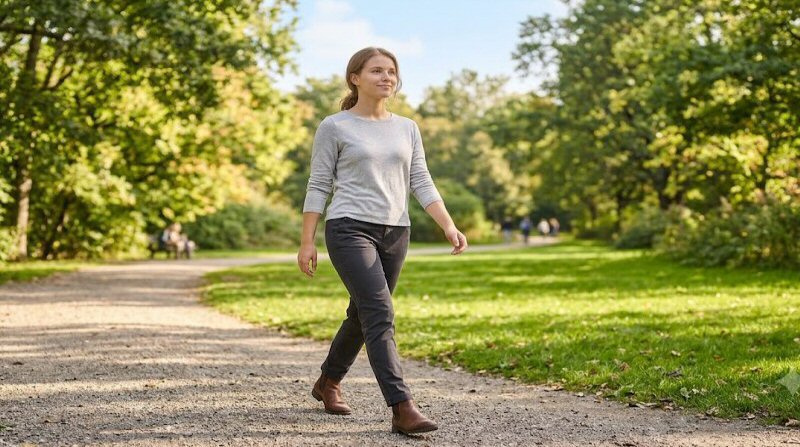
Notice how easy your breathing feels on a long walk compared with sitting at a desk for hours. Many people find that after a stretch of stillness their breath seems shallower, more conscious, or simply less automatic. That shift is not random. Human breathing and stepping have a built-in tendency to lock together—an arrangement researchers call locomotor-respiratory coupling. Your respiratory system still expects the rhythmic push and timing that walking provides.
What This Coupling Actually Is
When you walk at a steady pace, your steps and breaths often fall into a stable ratio. Common patterns are two steps per breath or four steps per breath, though other ratios appear. The link is not perfect or mandatory the way it is in a galloping horse, but it is reliable enough that most people slip into it without thinking.
Dennis Bramble and David Carrier documented this in a 1983 paper in Science. They showed that running mammals, including humans, phase-lock breathing with locomotion. Later work by researchers such as Laurent Juvin, Didier Morin, and others has mapped the neural pathways: sensory signals from the limbs feed into the brainstem respiratory centers, and the two central pattern generators (one for stepping, one for breathing) influence each other directly. The result is a quieter, more efficient exchange of air while the body is moving.
Why Walking Makes Breathing Easier
Several mechanical and neural factors cooperate:
- Each footstrike and the swing of the opposite arm create small pressure changes in the chest and abdomen that assist the diaphragm.
- The natural rotation of the rib cage and the counter-swing of the arms open the thorax in a rhythm that matches inhalation and exhalation.
- Limb proprioception resets the respiratory rhythm so the two cycles stay aligned, reducing the work of the breathing muscles.
Studies that deliberately break the preferred coupling (for example by forcing people to walk at non-preferred step rates) show higher oxygen cost and less stable ventilation. In short, the system is tuned for the pairing.
What Modern Stillness Removes
For most of human history, daily life involved long periods of walking—foraging, carrying, traveling between camps. The respiratory centers received a steady stream of locomotor input. Today many people spend the majority of waking hours seated. The step-related signals disappear. The diaphragm and intercostals must then manage ventilation without that rhythmic assistance.
This is the same mismatch that appears in other movement systems. Your diaphragm still expects an upright breath and your spine still expects you to walk more than you sit. When those inputs are missing for hours, breathing can feel more effortful even though nothing is medically wrong.
Common Everyday Effects
People often notice:
- A tendency to hold the breath or breathe very shallowly while concentrating at a screen.
- A sudden sense of needing a deeper breath after standing up and walking a few steps.
- Mild air hunger or sighing more frequently during long sedentary stretches.
- Easier, quieter breathing once a walk begins and the rhythm re-establishes.
These sensations are usually benign. They reflect the temporary loss of a coordinating signal rather than a primary lung or heart problem.
When the Pattern Deserves Attention
Occasional awareness of breathing after sitting is common. Seek medical review if you also have:
- Shortness of breath that appears at rest or with minimal effort and does not improve with walking.
- Chest pain, dizziness, or swelling in the legs.
- A new or worsening cough, wheeze, or inability to complete sentences.
- Breathing that becomes labored only when lying flat.
These signs point to other issues (cardiac, pulmonary, or metabolic) that need proper evaluation. Simple rhythm loss from sitting does not produce them.
Myths vs Facts
Myth: You must consciously count steps and breaths to get the benefit.
Fact: The coupling is largely automatic. Most people re-establish a comfortable ratio within a minute or two of steady walking.
Myth: Only runners show locomotor-respiratory coupling.
Fact: The same phase-locking occurs during ordinary walking. Running simply makes the mechanical effects more obvious.
Myth: If your breathing feels off after sitting, you have “bad posture” or weak lungs.
Fact: The main missing ingredient is the locomotor signal itself. Restoring short bouts of walking usually restores the ease.
How to Give Your Breathing the Rhythm It Expects
Small, repeatable habits restore the input without requiring long workouts:
- Stand and walk for two to three minutes every 45–60 minutes of sitting. Even a slow indoor loop is enough to re-engage the coupling.
- When you do walk, let the arms swing naturally. The counter-rotation helps the rib cage and diaphragm.
- If you notice shallow breathing at the desk, stand, take five or six unhurried steps, and let the breath fall into whatever ratio feels easy.
- Outdoor walks add the extra benefit of changing visual flow and temperature, but the core effect comes from the steps themselves.
These brief interruptions do not replace cardiovascular exercise, yet they keep the respiratory centers from spending entire days without their expected partner signal.
Frequently Asked Questions
Is it normal for my breathing to feel different after a long meeting?
Yes. Hours without stepping remove the locomotor drive that normally assists ventilation. A short walk usually restores the easier pattern.
Should I try to force a specific breath-to-step ratio?
No. The nervous system finds a stable ratio on its own. Forcing an unnatural count can increase effort rather than reduce it.
Does this coupling disappear with age?
The tendency remains, although overall respiratory reserve and step length may change. Regular walking continues to support the coordination.
Can sitting all day permanently change how I breathe?
The immediate effect is reversible. Chronic very low activity can reduce overall fitness and diaphragmatic endurance, but the basic coupling mechanism stays intact and responds quickly once walking resumes.
Why do some people sigh more when they work at a computer?
Sighs help re-expand alveoli and reset breathing rhythm. They become more frequent when the normal step-driven resets are missing.
Conclusion
Your breathing system evolved alongside a body that walked for much of the day. The neural and mechanical links between steps and breaths are still present; they simply receive less traffic in a seated routine. Restoring even brief periods of walking re-engages that old partnership, often making respiration feel quieter and less effortful within minutes. The change is not dramatic, yet it is one of the simpler ways to give a fundamental rhythm back to a system that still expects it.


