
Are smart rings better than smartwatches for health tracking? Explore research on accuracy, sleep monitoring, recovery, fitness, and medical value.
Imagine waking up after what felt like a full night's sleep, only to discover your fitness tracker says you slept poorly. Later that day, your smartwatch congratulates you for reaching your activity goal, but you still feel unusually tired. Which signal should you trust—your body or your wearable device?
This question is becoming increasingly common as millions of people rely on wearable health technology to monitor sleep, heart rate, activity levels, stress, and overall wellness. For years, smartwatches dominated the wearable health market. But recently, a new contender has gained attention: the smart ring.
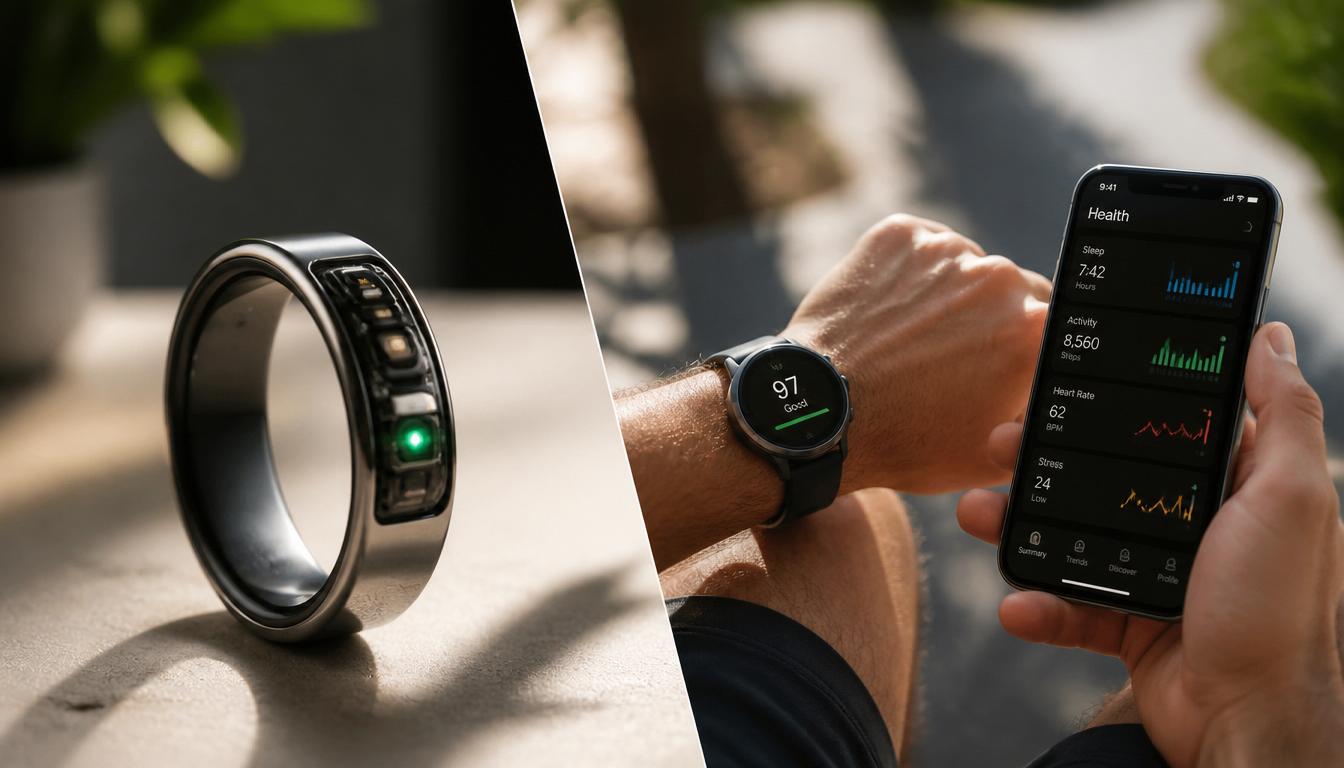
These compact devices promise many of the same health-tracking capabilities as smartwatches while being lighter, less intrusive, and often more comfortable to wear around the clock. Companies developing smart rings claim that their finger-based sensors may even provide more accurate measurements for certain health metrics than wrist-worn devices.
But are smart rings truly better than smartwatches for tracking health? Or are they simply the latest gadget trend? More importantly, what does scientific research actually show about their accuracy, usefulness, and impact on health outcomes?
In this comprehensive guide, we'll explore the science behind smart rings and smartwatches, examine current research, compare their strengths and limitations, and help determine which device may be better suited for different health-monitoring needs.
Understanding Wearable Health Technology
Wearable health devices have evolved dramatically over the past decade. What began as simple step counters has transformed into sophisticated health-monitoring systems capable of collecting millions of data points daily.
Modern wearables can monitor:
- Heart rate and heart rate variability
- Sleep duration and sleep stages
- Physical activity and exercise
- Body temperature trends
- Blood oxygen saturation
- Stress indicators
- Respiratory rate
- Recovery and readiness metrics
- Menstrual cycle patterns
- Potential irregular heart rhythms
The goal of these technologies is not merely data collection. Their broader purpose is to help users better understand their health, identify changes early, and encourage healthier lifestyle behaviors.
What Is a Smart Ring?
A smart ring is a wearable electronic device designed to be worn on a finger while continuously collecting physiological and behavioral data.
Unlike traditional jewelry, smart rings contain miniaturized sensors, processors, batteries, and wireless communication systems within a ring-shaped form factor.
Popular smart rings focus primarily on:
- Sleep tracking
- Recovery monitoring
- Heart rate measurement
- Body temperature trends
- Stress assessment
- Activity tracking
Most smart rings connect to smartphone applications that analyze collected data and generate personalized health insights.
What Is a Smartwatch?
A smartwatch is a wrist-worn wearable computer that combines health monitoring with communication and productivity features.
In addition to health tracking, smartwatches commonly provide:
- Notifications
- Messaging
- Phone calls
- GPS navigation
- Music control
- Contactless payments
- Third-party applications
Many smartwatches also incorporate advanced health features such as electrocardiograms (ECGs), fall detection, medication reminders, and emergency response systems.
As a result, smartwatches serve a broader role than smart rings, functioning as both health devices and mini-computers.
The Science Behind Health Tracking Sensors
To understand whether smart rings are better than smartwatches, it's important to examine how these devices collect health data.
Photoplethysmography (PPG)
The most common sensor technology used in both smart rings and smartwatches is photoplethysmography, often abbreviated as PPG.
This technology works by shining light into the skin and measuring how blood flow changes affect light absorption and reflection.
Each heartbeat causes changes in blood volume beneath the skin. Sensors detect these changes and calculate metrics such as:
- Heart rate
- Heart rate variability
- Blood oxygen saturation
- Respiratory rate estimates
Accelerometers and Motion Sensors
Wearables use accelerometers and gyroscopes to measure movement patterns.
These sensors help estimate:
- Steps taken
- Distance traveled
- Physical activity intensity
- Sleep movements
- Exercise type
Temperature Sensors
Many modern smart rings include skin temperature sensors.
Although these sensors do not measure core body temperature directly, they can identify meaningful trends that may reflect illness, recovery, hormonal changes, or sleep quality.
Why the Finger May Have an Advantage
One reason smart rings have attracted scientific interest is the location of their sensors.
The finger contains numerous small blood vessels and receives substantial blood flow. This can improve signal quality for optical sensors.
Researchers have found that finger-based measurements often provide stronger photoplethysmographic signals than wrist-based measurements.
Because the wrist experiences more movement during daily activities, smartwatch sensors may sometimes encounter greater motion-related interference.
This advantage is particularly relevant for:
- Resting heart rate measurement
- Heart rate variability monitoring
- Sleep tracking
- Recovery assessment
However, advantages in one area do not automatically mean superior overall performance.
What Studies Show About Smart Ring Accuracy
Scientific investigations into smart rings have increased significantly in recent years.
Several validation studies have compared smart ring measurements against clinical-grade equipment.
Heart Rate Monitoring
Research generally shows that high-quality smart rings can accurately measure resting heart rate.
During sleep and periods of low movement, smart rings often demonstrate excellent agreement with medical reference devices.
Errors are typically small enough to be clinically meaningful for wellness monitoring.
However, accuracy may decrease during vigorous exercise because rapid hand movements can affect sensor readings.
Heart Rate Variability
Heart rate variability (HRV) reflects variations in time between heartbeats and is commonly used as an indicator of recovery and autonomic nervous system function.
Studies have found that certain smart rings perform surprisingly well when measuring overnight HRV.
Because sleep provides relatively motion-free conditions, smart rings can collect stable signals that closely resemble laboratory measurements.
This has made smart rings popular among athletes and individuals interested in recovery optimization.
Sleep Tracking
Sleep tracking is one area where smart rings frequently receive positive evaluations.
Multiple studies have demonstrated reasonable accuracy in estimating:
- Total sleep duration
- Sleep efficiency
- Sleep timing
- Wake periods
However, distinguishing specific sleep stages remains challenging.
Even advanced wearables struggle to match the precision of polysomnography, the gold-standard sleep study performed in specialized sleep laboratories.
Body Temperature Monitoring
Smart rings have shown promise in identifying subtle temperature changes.
Researchers have investigated their use for:
- Illness detection
- Recovery monitoring
- Menstrual cycle tracking
- Fertility awareness
Temperature trend monitoring appears more useful than relying on individual temperature readings.
What Studies Show About Smartwatch Accuracy
Smartwatches have undergone more extensive scientific evaluation due to their longer presence in the market.
Heart Rate Monitoring
Modern smartwatches generally perform well for heart rate measurement.
Many studies report high accuracy during both rest and moderate exercise.
Premium smartwatches often use multiple optical sensors and sophisticated algorithms to improve performance.
Exercise Tracking
Smartwatches usually outperform smart rings during exercise tracking.
This advantage exists because smartwatches often incorporate:
- GPS sensors
- Advanced motion sensors
- Exercise-specific algorithms
- Real-time workout monitoring
For runners, cyclists, hikers, and endurance athletes, these features can provide valuable performance metrics unavailable in many smart rings.
Electrocardiogram Capabilities
Several smartwatches include ECG functionality that can detect potential irregular heart rhythms such as atrial fibrillation.
Clinical studies have shown promising results in identifying certain arrhythmias.
While these devices cannot replace medical diagnosis, they have contributed to earlier detection of some cardiac abnormalities.
Blood Oxygen Monitoring
Many smartwatches estimate blood oxygen saturation using optical sensors.
Accuracy varies considerably between devices and measurement conditions.
Importantly, smartwatch oxygen readings should not be considered equivalent to medical-grade pulse oximeters used in healthcare settings.
Sleep Tracking: Smart Ring vs Smartwatch
Sleep tracking is often considered the strongest area for smart rings.
Many users find rings more comfortable to wear overnight compared with watches.
This comfort advantage may improve compliance and result in more consistent data collection.
Potential advantages of smart rings for sleep include:
- Less bulky design
- Minimal sleep disruption
- Better overnight wear consistency
- Strong finger-based sensor signals
Smartwatches remain effective sleep trackers, but some users remove them at night because of discomfort, battery charging requirements, or personal preference.
In practice, the best sleep tracker is often the one a person consistently wears.
Exercise Tracking: Smartwatch vs Smart Ring
Exercise tracking represents one of the clearest advantages for smartwatches.
Most smartwatches provide:
- Real-time workout metrics
- Pace monitoring
- Distance tracking
- GPS mapping
- Workout coaching
- Exercise-specific performance analysis
Smart rings typically focus more on overall activity trends rather than detailed workout analysis.
For individuals whose primary goal is sports performance, smartwatches generally offer greater functionality.
Recovery and Readiness Scores
One area where smart rings have become particularly popular is recovery monitoring.
Recovery scores typically combine multiple physiological signals:
- Heart rate variability
- Resting heart rate
- Sleep quality
- Temperature trends
- Activity levels
These metrics aim to estimate whether the body is well-rested or under physiological stress.
While recovery scores can provide useful insights, experts caution against treating them as definitive indicators of health status.
Human health is complex, and no single algorithm can fully capture readiness or recovery.
Can These Devices Detect Disease?
One of the most intriguing areas of wearable technology research involves early disease detection.
Studies suggest that changes in physiological signals may precede noticeable symptoms.
Researchers have investigated whether wearables can identify:
- Respiratory infections
- Influenza
- COVID-19
- Stress-related conditions
- Cardiac abnormalities
Changes in resting heart rate, temperature patterns, sleep quality, and activity levels sometimes appear before individuals realize they are becoming ill.
However, wearables currently cannot reliably diagnose disease.
They may provide early warning signs that encourage users to seek medical evaluation.
Regulatory Approval and Medical Status
Most consumer smart rings and smartwatches are wellness devices rather than medical devices.
This distinction is important.
Wellness devices are designed to support healthy lifestyle decisions but are not intended to diagnose, treat, cure, or prevent disease.
Some smartwatch features, particularly ECG functions and certain arrhythmia detection systems, have received regulatory clearances in various countries.
Such approvals indicate that specific features met established standards for safety and performance.
Nevertheless, regulatory approval for one feature does not mean every health metric on the device has been medically validated.
Limitations of Smart Rings
Despite their advantages, smart rings have important limitations.
Limited Display Capability
Most smart rings lack screens, meaning users must rely on smartphone apps to review data.
Fewer Exercise Features
Detailed workout tracking remains limited compared with advanced smartwatches.
Sizing Challenges
Accurate fit is crucial for sensor performance.
Finger size may fluctuate because of temperature, hydration, or swelling.
Battery Constraints
The small size of rings limits battery capacity and hardware complexity.
Limitations of Smartwatches
Comfort Issues
Some users find smartwatches uncomfortable during sleep.
Motion Artifacts
Wrist-based sensors may be more susceptible to movement-related measurement errors.
Battery Life
Many advanced smartwatches require frequent charging.
Removing the device for charging can create data gaps.
Information Overload
Constant notifications and alerts may increase stress for some users.
Do Wearables Actually Improve Health Outcomes?
This is perhaps the most important question.
Tracking health data is valuable only if it leads to meaningful improvements in behavior or outcomes.
Research suggests wearables can encourage:
- Increased physical activity
- Better sleep awareness
- Improved exercise adherence
- Greater engagement with personal health
- Enhanced motivation
However, benefits vary widely among individuals.
Some users become more active after adopting wearable devices, while others lose interest after the novelty wears off.
Health improvements typically result from behavioral changes rather than the device itself.
A smart ring cannot improve fitness on its own. A smartwatch cannot improve sleep independently. These technologies provide information, but users must act on that information.
The Psychological Side of Health Tracking
Wearables are not universally beneficial.
For some people, excessive monitoring can increase anxiety.
This phenomenon is sometimes called "health data anxiety" or "orthosomnia" when individuals become overly obsessed with sleep metrics.
Potential concerns include:
- Constant self-monitoring
- Stress from fluctuating scores
- Overreliance on algorithms
- Misinterpretation of data
- Reduced trust in bodily sensations
Experts recommend viewing wearable data as helpful context rather than absolute truth.
Cost Considerations
Cost remains an important factor when comparing smart rings and smartwatches.
Prices vary significantly depending on features and brand.
Factors affecting cost include:
- Sensor quality
- Battery life
- Software capabilities
- Subscription requirements
- Research and development investments
Some smart rings require ongoing subscriptions to access advanced analytics, which can increase long-term ownership costs.
Smartwatches may have higher initial costs but sometimes include broader functionality without recurring fees.
Future Developments in Wearable Health Technology
The next generation of wearables is expected to become more sophisticated and medically useful.
Researchers are exploring technologies capable of monitoring:
- Blood pressure trends
- Hydration status
- Stress biomarkers
- Glucose patterns
- Cardiovascular risk indicators
- Mental health signals
Artificial intelligence is likely to play a growing role in interpreting wearable data.
Future systems may identify subtle physiological patterns that are difficult for humans to detect.
However, rigorous scientific validation will remain essential before such technologies can be trusted for clinical decision-making.
Who Should Choose a Smart Ring?
A smart ring may be an excellent choice for people who prioritize:
- Sleep tracking
- Recovery monitoring
- Comfort during overnight wear
- Minimalist design
- Long-term wellness tracking
- Reduced screen distractions
Individuals interested primarily in understanding sleep quality, recovery trends, and overall wellness may find smart rings particularly appealing.
Who Should Choose a Smartwatch?
A smartwatch may be better suited for people who want:
- Comprehensive fitness tracking
- GPS-based exercise monitoring
- Real-time workout feedback
- Communication features
- ECG functionality
- Multi-purpose wearable technology
Active individuals and athletes often benefit from the broader feature set offered by smartwatches.
Are Smart Rings Better Than Smartwatches?
The answer depends on what "better" means.
If the primary goal is comfortable, continuous monitoring of sleep, recovery, resting heart rate, and overall wellness, smart rings may have meaningful advantages. Their finger-based sensors often provide strong physiological signals, and their unobtrusive design encourages consistent wear.
If the goal is comprehensive fitness tracking, exercise performance analysis, communication, navigation, and advanced smartwatch functionality, smartwatches remain the more versatile option.
Scientific studies do not support the idea that smart rings are universally superior. Instead, evidence suggests that each device excels in different areas.
Smart rings appear particularly strong for sleep and recovery monitoring, while smartwatches continue to lead in exercise tracking and broader health-related features.
Conclusion
Smart rings and smartwatches represent two distinct approaches to personal health monitoring. Both use sophisticated sensors and algorithms to provide insights into heart rate, sleep, activity, and physiological trends. Research shows that modern smart rings can deliver surprisingly accurate measurements for resting heart rate, heart rate variability, sleep duration, and recovery metrics, partly because the finger is an advantageous location for optical sensing.
At the same time, smartwatches maintain important advantages in fitness tracking, ECG capabilities, GPS monitoring, and overall versatility. Neither technology replaces professional medical evaluation, laboratory testing, or clinical diagnosis. Their greatest value lies in increasing awareness of health behaviors and physiological patterns.
For many people, the best wearable is not necessarily the most advanced one—it is the device they consistently wear and use meaningfully. Whether that device is a smart ring or a smartwatch depends on personal goals, comfort preferences, lifestyle, and the specific health metrics that matter most.
As wearable technology continues to evolve, future generations of both smart rings and smartwatches will likely become more accurate, more personalized, and potentially more useful in preventive healthcare. Until then, consumers should view wearable health data as a helpful guide rather than a definitive medical verdict, using it to support healthier decisions while recognizing its limitations.