
Silent kidney disease often develops without obvious symptoms. Learn the early warning signs, hidden triggers, red flags, myths, and natural ways to support kidney health.
Introduction: Imagine feeling a little more tired than usual, noticing your shoes seem tighter by evening, or waking once or twice at night to urinate. Most people blame stress, aging, or drinking too much water. Yet the kidneys can lose a large portion of their function before obvious symptoms appear. That is why chronic kidney disease is often called a silent disease. This article explains the subtle warning signs, why they occur, common harmless explanations, serious causes, hidden triggers, red flags, myths, and natural ways to support kidney health.
What this symptom feels like
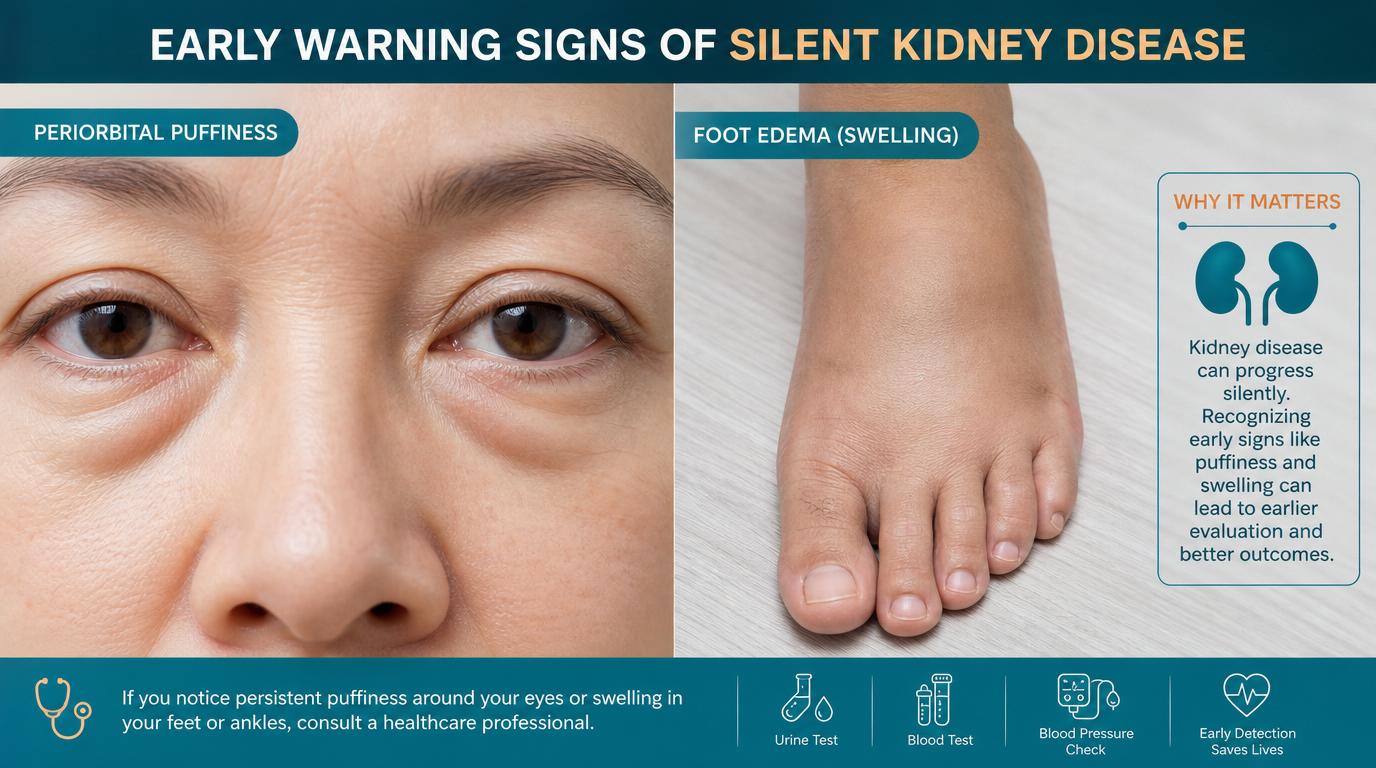
Early kidney disease rarely causes pain. Instead, people may notice persistent fatigue, swelling around the ankles, puffiness around the eyes, changes in urination, itchy skin, muscle cramps, poor appetite, difficulty concentrating, or mild nausea. Each symptom alone may seem insignificant, which is why they are frequently overlooked.
Common causes that are not always serious
- Dehydration
- High salt intake causing temporary fluid retention
- Heavy exercise leading to temporary protein in urine
- Poor sleep and stress causing fatigue
- Normal aging
Less common but serious causes
- Chronic kidney disease
- Diabetes-related kidney damage
- High blood pressure
- Glomerular diseases
- Inherited kidney disorders
- Autoimmune diseases affecting the kidneys
Hidden triggers people ignore
- Long-term uncontrolled blood sugar
- Poorly controlled blood pressure
- Smoking
- Obesity
- Frequent dehydration
- Excessive use of over-the-counter pain relievers
- High sodium diets
Why this happens in your body
Your kidneys contain about one million tiny filtering units called nephrons. They continuously filter blood, remove waste, regulate fluid balance, control electrolytes, help produce red blood cells through erythropoietin, activate vitamin D, and contribute to blood pressure regulation. When nephrons become damaged, healthy nephrons initially compensate. This remarkable reserve means blood tests and symptoms may remain nearly normal for years. Eventually compensation fails, waste products accumulate, fluid balance changes, hormone production declines, and symptoms become more noticeable.
When to worry (Red flags)
- Blood in urine
- Persistent swelling of legs or face
- Foamy urine that does not resolve
- Very high blood pressure
- Marked decrease in urine output
- Persistent nausea and vomiting
- Shortness of breath with swelling
- Severe fatigue without explanation
Myths vs Facts
- Myth: Kidney disease always causes severe pain.
Fact: Most chronic kidney disease develops without pain. - Myth: Normal urination means healthy kidneys.
Fact: Kidney damage can exist despite normal urine volume. - Myth: Only older adults get kidney disease.
Fact: Diabetes, hypertension, autoimmune disease, and genetics can affect younger adults. - Myth: Drinking huge amounts of water cures kidney disease.
Fact: Adequate hydration supports health but cannot reverse established kidney damage.
When to see a doctor
Arrange medical evaluation if symptoms persist for more than a few weeks, especially if you have diabetes, high blood pressure, cardiovascular disease, obesity, or a family history of kidney disease. Routine blood and urine tests often detect kidney problems long before severe symptoms develop.
How to manage or reduce the risk naturally
- Stay adequately hydrated.
- Limit excess salt and highly processed foods.
- Maintain healthy blood pressure and blood sugar through lifestyle.
- Exercise regularly.
- Avoid smoking.
- Maintain a healthy body weight.
- Avoid unnecessary long-term use of pain medicines unless advised by a healthcare professional.
- Schedule regular health checkups if you are at higher risk.
Conclusion
Silent kidney disease earns its name because the kidneys can continue working despite substantial damage. Mild swelling, unexplained tiredness, changes in urination, or persistent itching are often dismissed, yet together they may provide important clues. Most of these symptoms have harmless explanations, but persistent or worsening changes deserve attention. Early detection offers the best opportunity to slow progression through healthy lifestyle choices and timely medical evaluation.